Buyer Guides
How Much Does a Tiny House Cost in 2026? The Real All-In Numbers
What a tiny house actually costs all-in in 2026 — $28K to $185K depending on path. Line-item breakdowns, real case studies, and financing math from PERCH.

On this page
If you've spent more than ten minutes researching tiny houses, you've already been lied to. Not maliciously, just structurally. The number you see on a builder's homepage, a Pinterest pin, or a YouTube thumbnail is almost never the number you actually pay to live in the thing. It's the factory gate price, the shell price, or the "starting at" price that assumes you already own land, already have utilities at the property line, already have a permit in hand, and already have a truck capable of hauling 14,000 pounds across three state lines.
I run PERCH out of Atlanta. We're the marketplace for modular and tiny homes, the Autotrader-meets-Zillow lane for builders and buyers who are tired of guessing. This guide is the one I wish existed when I started underwriting these deals. Every number below is sourced from real 2026 quotes, real freight invoices, and real permit fees we've seen come across the platform. No fluff, no affiliate math, no "starting at $19,999" theater.
Why the Sticker Price Is a Lie
Tiny house pricing has the same problem RV pricing had in 2008 and modular home pricing has today. The builder quotes you the unit. The dealer quotes you the unit plus a markup. The marketer quotes you the unit minus the kitchen, minus the appliances, minus the loft railing, minus delivery beyond 100 miles. By the time you've added back what a normal human assumes is included, you're looking at a 1.5x to 2.5x multiplier on the headline number.
- Headline price: shell only, factory pickup, base trim, no appliances
- "Turnkey" price: unit complete but you provide land, foundation, utilities, permits
- All-in price: what you actually write checks for to sleep in the thing legally
A $55,000 THOW from a reputable builder in North Carolina turns into $94,000 by the time it's parked, leveled, and hooked up in Georgia. That's not a scam, that's just how the cost stack works. The scam is pretending the $55,000 number is the whole story.
The Four Real Paths and What They Actually Cost
| Build path | Sticker range | All-in 2026 range | Code / certification | Best for |
|---|---|---|---|---|
| DIY shell + self-finish | $12K–$28K | $28K–$55K | None or ANSI 119.5 | Hands-on buyers with land and time |
| THOW turnkey (RVIA) | $55K–$95K | $75K–$135K | RVIA / NOAH certified | Mobility, RV-park living, off-grid |
| IRC foundation-built | $85K–$140K | $110K–$185K | IRC Appendix Q | Permanent residency, financing, resale |
| Park model RV | $48K–$78K | $68K–$110K | ANSI 119.5 | Resort/community lots, short-stay rentals |
| Small modular (400–600 sq ft) | $72K–$125K | $98K–$170K | HUD or IRC | Permanent home, full mortgage eligibility |
The gap between "sticker" and "all-in" widens as you move down the table. Park models and modular units come with more infrastructure assumptions baked in — foundation, utility hookups, permanent connection — and those costs don't disappear just because they aren't on the invoice.
The Line-Item Breakdown Nobody Shows You
| Cost line | DIY shell | THOW turnkey | IRC foundation |
|---|---|---|---|
| Kit, shell, or factory unit | $18,500 | $72,000 | $118,000 |
| Freight & delivery (avg 600 mi) | $2,800 | $4,400 | $6,200 |
| Foundation or trailer prep | $1,200 (trailer) | included | $14,500 (slab + piers) |
| Site work (clearing, grading, pad) | $3,200 | $2,800 | $9,500 |
| Utilities hookup (water/sewer/power) | $4,800 | $5,200 | $11,800 |
| Septic or holding tank | $0–$8,500 | $0–$8,500 | $7,500 |
| Permits & impact fees | $450 | $1,200 | $3,800 |
| Interior finish-out (DIY labor) | $9,500 | $0 | $0 |
| Appliances & fixtures | $4,200 | $2,500 | $4,800 |
| Skirting, decking, stairs | $2,800 | $3,400 | $4,200 |
| Sales tax (avg 6.5%) | $1,200 | $4,700 | $7,700 |
| All-in median | $48,650 | $96,200 | $181,000 |
Three numbers stand out. Utilities hookup is the silent killer — buyers consistently underestimate it by $5,000 to $10,000. Site work swings wildly based on slope, tree cover, and soil. And permits are wildly regional — Texas counties might charge $400, while Georgia metros routinely break $3,500.
Three Real 2026 Case Studies
Case 1: The Hands-On Buyer, North Georgia — $42,800 all-in
A 28-year-old welder bought 1.2 acres outside Dahlonega for $19,000 cash. He ordered a 24-foot DIY shell kit from a Tennessee builder, hauled it himself with a borrowed F-350, and spent eight months finishing the interior with reclaimed materials and a friend who's a licensed electrician.
- Shell kit: $21,400 · Trailer (used, 8.5x24 gooseneck): $4,800 · Self-haul fuel + tolls: $380
- Foundation pad and tie-downs: $1,400 · Septic (small ANSI 41 system): $6,200
- Well already existed: $0 · Electrical service drop: $2,800
- Finish materials (DIY labor): $5,400 · Appliances (mixed used/new): $1,800 · County permits: $620
All-in: $42,800. He financed nothing. Only possible because he had cash, time, skills, and a well already on the property.
Case 2: The Empty-Nester Couple, Central Texas — $108,500 all-in
A couple in their late 50s sold their 2,800 sq ft house in suburban Austin, bought five rural acres an hour east, and ordered a 32-foot THOW from a Hill Country builder with RVIA certification.
- THOW turnkey unit (RVIA cert): $84,500 · Delivery (180 mi): $2,200
- Site pad and gravel pull-through: $4,100 · Septic (engineered, rocky soil): $9,800
- Well already drilled: $0 · Electrical 200A service: $4,400 · RV-spec utility pedestal: $1,800
- Decking and covered porch: $5,200 (DIY) · Permits: $480 · Sales tax: $5,400
All-in: $108,500. They paid cash and have no monthly housing cost beyond utilities and property tax.
Case 3: The Young Family, Outside Atlanta — $172,400 all-in
A 32-year-old couple with one kid bought a 0.6-acre infill lot in a Cherokee County subdivision that allows IRC Appendix Q tiny homes. They ordered a 480 sq ft IRC-code modular from a North Carolina builder.
- IRC modular unit: $124,000 · Crawlspace foundation: $16,200
- Site work and grading: $11,400 · Utilities (city water/sewer tie-in): $9,800
- Crane set and finish-attach: $3,800 · Permits and impact fees: $4,200
- Sales tax: $8,400 · HVAC ductless mini-split: $4,600
All-in: $172,400. They put 10% down ($17,240) and financed $155,160 at 7.1% for 30 years. Monthly P&I: $1,043. Real mortgage on a real house with real resale value.
The Amazon and Home Depot Kit Trap
You've seen the headlines. "$15,000 tiny house on Amazon!" "Home Depot prefab cabin under $20K!" The math doesn't work. (More detail in our Amazon prefab kit teardown and Home Depot cabin reality check.)
The kit is a shell. Sometimes literally just walls and a roof, no floor, no insulation, no wiring rough-in, no plumbing rough-in, no windows that meet egress code. By the time you add the $14,000 in materials and $18,000–$25,000 in labor to make a $19,000 kit livable, you're at $52,000–$58,000 all-in for a structure most counties won't permit.
Financing: What Monthly Payments Actually Look Like
| Path | Financed amount | Term | Rate | Monthly P&I |
|---|---|---|---|---|
| DIY shell (personal loan) | $35,000 | 7 yr | 11.5% | $608 |
| THOW (RV loan, 10% down) | $86,500 | 15 yr | 9.4% | $903 |
| THOW (RV loan, 20% down) | $76,900 | 15 yr | 8.9% | $774 |
| IRC modular (conventional, 10% down) | $155,160 | 30 yr | 7.1% | $1,043 |
| IRC modular (conventional, 20% down) | $137,920 | 30 yr | 6.8% | $899 |
| Park model (RV loan, 15% down) | $76,500 | 12 yr | 9.7% | $836 |
The THOW monthly is higher than the IRC modular monthly in the 20%-down scenario, even though the IRC home costs almost twice as much. That's the 30-year amortization doing work, and it's why people who can clear the IRC-permitting hurdle almost always come out ahead long-term — lower monthly, real equity, real resale market.
Hidden Costs Almost Everyone Forgets
- Insurance. A THOW costs $850–$1,400/yr to insure. An IRC tiny home costs $1,100–$1,800/yr.
- Property tax. THOWs are usually titled as RVs (annual registration only). IRC homes get assessed like any other real property — typically 0.7%–2.1% of appraised value annually.
- Skirting and tie-downs. $1,800–$4,200 depending on climate zone and wind rating.
- Surveying. $600–$1,400 if you're placing on undeveloped land.
- Soil testing and perc test. $400–$900 before septic engineering can proceed.
- Driveway. $3,500–$12,000 for gravel; $18,000+ for paved.
Budget another $8,000–$15,000 contingency on top of your line-item total.
PERCH · Home made for your land.
Want all-in numbers, not factory-gate theater?
Join the PERCH waitlistRelated guides
The weekly brief for modern modular living.
Design concepts, zoning workarounds, and market strategies — the specific ones the 22 million families in the missing middle actually need.
Under 3 minutes. Every Friday afternoon. Unsubscribe with one click.
Frequently asked questions
What's the cheapest legal way to own a tiny house in 2026?
Can I get a 30-year mortgage on a tiny house?
How much does a tiny house on wheels cost in 2026?
Are prefab tiny houses cheaper than custom builds?
How much does it cost to live in a tiny house monthly?
Why do Amazon and [Home Depot tiny](/guides/home-depot-tiny-homes-review-alternatives-2026) house kits look so cheap?
What's the resale value of a tiny house after 5 years?
Do I need a permit for a tiny house?
How much does it cost to move a tiny house?
Is a park model cheaper than a THOW?
Join the conversation.
Share your take on this guide.
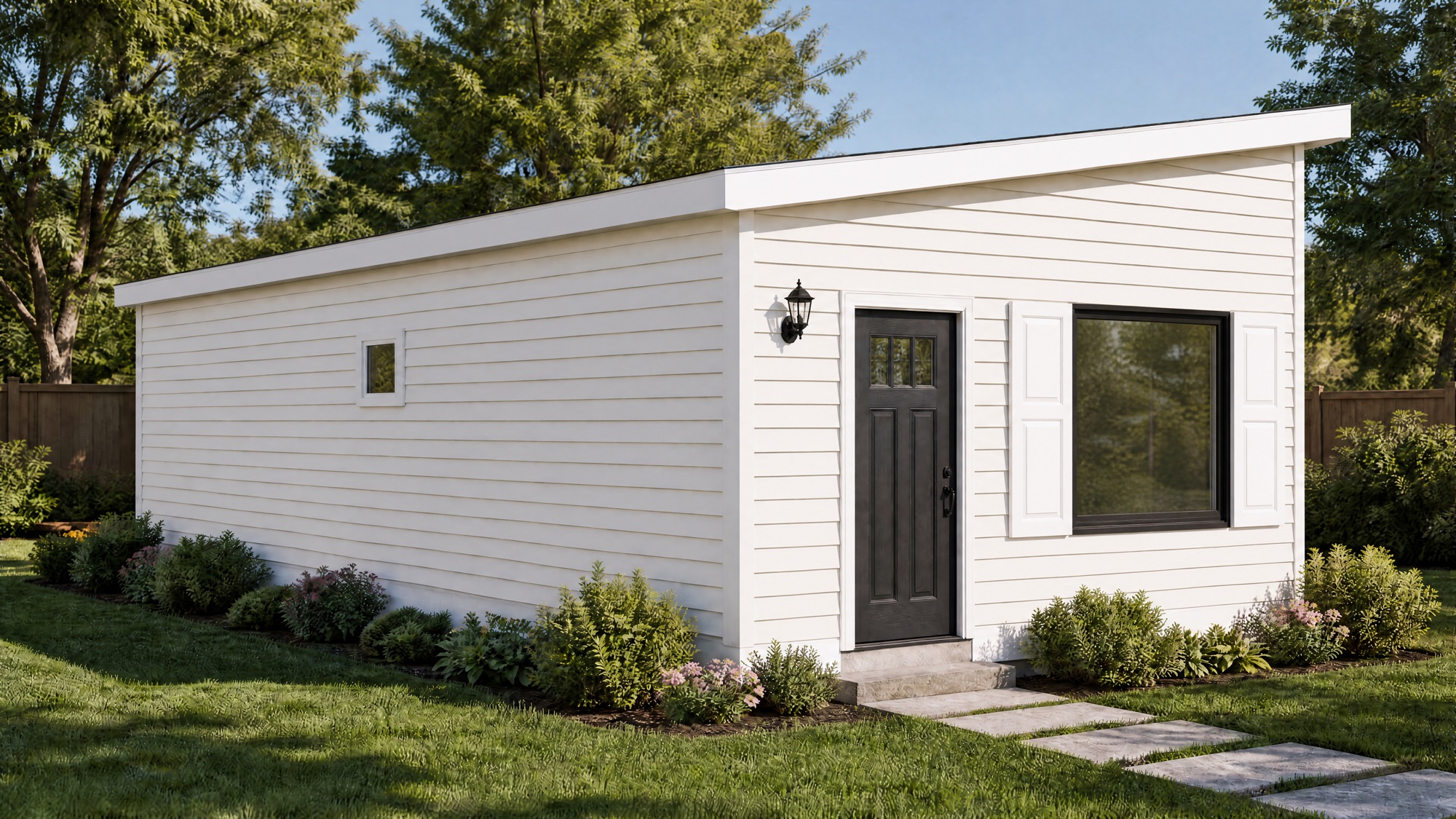 Available now
The Nest
Delivered to your parcel · 60–75 days
- PERCH-designed
- Escrow with proof
Refundable within 7 days.