Buyer Safety
Home Depot Tiny Homes: Honest 2026 Review and Better Alternatives
Home Depot tiny homes are third-party drop-shipped kits, not Home Depot products. What that means for your delivery experience, the realistic all-in cost, and the alternatives that actually work for a primary residence.
On this page
If you've typed "home depot tiny homes" into a search bar in the last six months, you've probably scrolled past Allwood cabin kits, ESCAPE prefab units, and a handful of $40K-looking studios that seem almost too easy. Add to cart. Free shipping over $45. Done.
I'm Cameron Jo'van. I run PERCH out of Atlanta — a marketplace for modular and prefab homes — and I've spent the better part of this year talking to buyers who clicked one of those listings and called us six weeks later asking what to do next. This article is the honest version of what Home Depot tiny homes actually are, what the price tag doesn't include, and when a Home Depot listing is the right call versus when it'll cost you a year and a foundation pour to find out it wasn't.
What Home Depot Actually Sells
Walk the tiny home category on homedepot.com and you'll find roughly four product types:
Cabin kits. Allwood is the biggest name here — Scandinavian-style timber kits, usually 100 to 600 square feet, shipped flat-packed on pallets. You build it. Price range: $7,000 to $50,000 for the kit only.
Prefab studios and ADUs. ESCAPE Homes, Plus 1 Homes, and a rotating cast of smaller brands list pre-assembled or semi-assembled units. Price range: $35,000 to $130,000.
Container conversions. A handful of sellers list shipping container homes, sometimes finished, sometimes shells. Price range: $25,000 to $90,000.
Shed-to-home conversions. Larger storage buildings marketed with the word "tiny home" in the title. These are sheds. Some can be converted. Most can't be permitted as dwellings.
Home Depot's role across all four is the same: take the order, coordinate freight, handle returns within the listed window. The brand on the box is who built it and who stands behind it.
The Customer Experience Gap
Here's what trips most buyers up. When you buy a washing machine from Home Depot, the experience is uniform — Home Depot delivers it, Home Depot installs it for a fee, Home Depot's return policy covers you, and the manufacturer's warranty is enforced through Home Depot's customer service line.
A tiny home listing looks identical in the cart. It is not identical after checkout.
Once the crate arrives at your driveway, the relationship shifts to you and the third-party brand. If a wall panel is warped, you're filing a claim with Allwood, not Home Depot. If the unit doesn't match your county's building code, that's your problem to solve before you assemble it. If the freight company drops the pallet and cracks a window, the dispute is between you, the freight carrier, and the manufacturer — Home Depot's involvement usually ends at "we'll refund the order if you refuse delivery."
This isn't Home Depot doing anything wrong. It's the standard marketplace model — the same way Amazon handles third-party sellers. The mismatch is that buyers expect Home Depot-grade service on a product class that doesn't get Home Depot-grade service.
Pricing Reality: What the Sticker Doesn't Cover
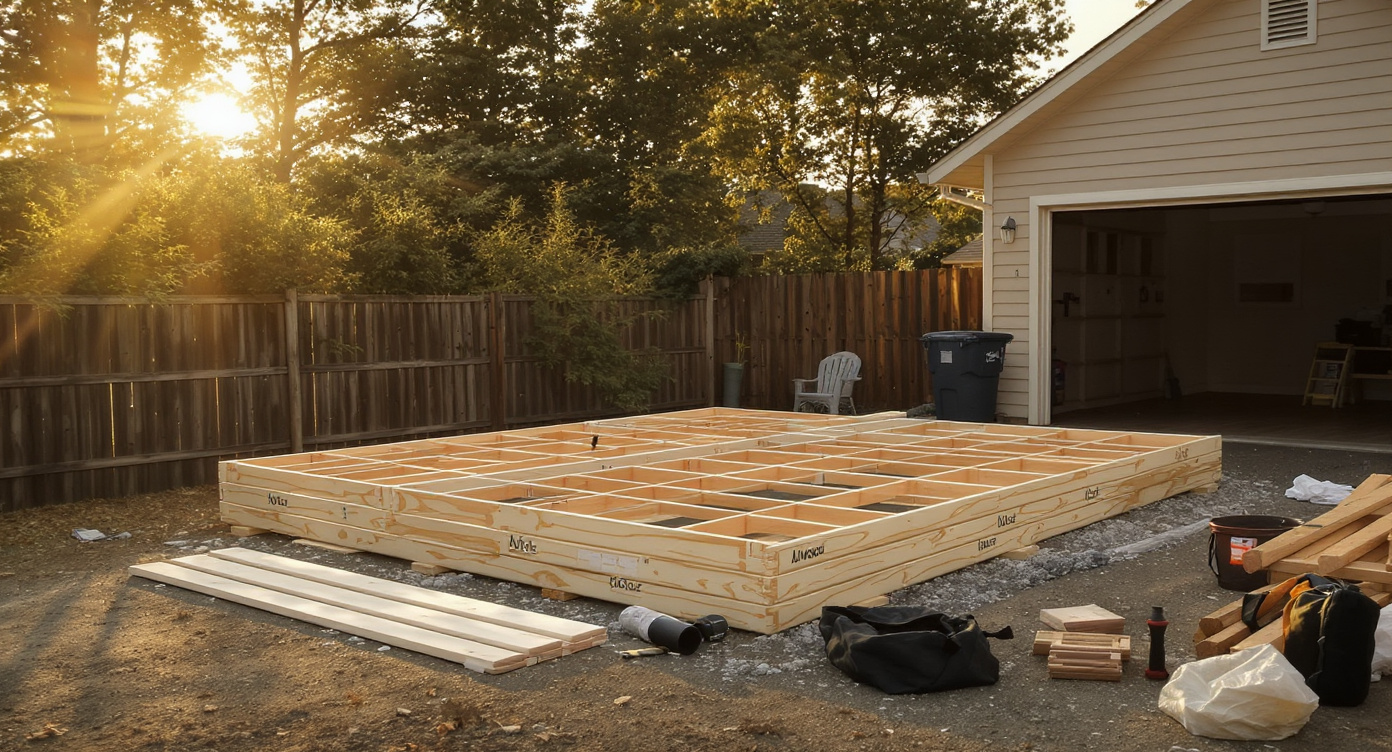
The advertised price on a Home Depot tiny home listing covers the kit or the unit. That's it. Let's walk through what a real 400-square-foot Allwood Eagle Vista cabin actually costs to stand up on a piece of land in, say, suburban Georgia.
Kit price: $47,000
Freight to job site: $2,800 to $4,500 depending on distance from the nearest port or distribution center
Site prep and foundation: $6,000 to $18,000 for a pier or slab foundation, more if grading is involved
Assembly labor: $8,000 to $25,000 if you don't build it yourself — most general contractors will quote this conservatively because the kit's instructions assume an experienced builder
Utility hookups: $4,000 to $20,000 for water, sewer or septic, and electrical, depending on distance to existing service
Permit and inspection fees: $500 to $3,500
Interior finish-out: $5,000 to $15,000 because most kits ship as shells with no plumbing fixtures, no kitchen, no HVAC
Realistic delivered-and-livable total: $73,300 to $133,000 on a $47,000 listing.
That's not the listing's fault. It's that the listing reads like a finished product price and behaves like a materials price. If you're comparing a Home Depot tiny home to a finished US-built modular home from a verified builder, you have to add 50 to 180 percent to the sticker to compare apples to apples.
What's Missing That Matters
A Home Depot tiny home listing typically doesn't include:
Permit support. No one is filing your building permit. No one is confirming the structure meets your local code before it ships.
Financing. Most major mortgage lenders won't finance a kit purchase or a unit that isn't HUD-coded or built to a recognized modular standard.
Real warranty enforcement. The manufacturer's warranty exists, but enforcing it from a homeowner's chair against a brand 1,500 miles away is a different sport than calling Home Depot customer service about a dishwasher.
Title work. Tiny homes on wheels are titled like RVs in most states. Tiny homes on foundations are real property and need to be deeded. Neither happens through the listing.
Pre-purchase inspection. You're buying sight-unseen based on photos and renderings.
Transport coordination beyond freight. Freight drops the crate. It doesn't set the unit on a foundation.
When a Home Depot Listing Actually Works
There are real use cases where a Home Depot tiny home is the right buy:
Backyard office or studio. Under 200 square feet, on a property you already own, no permit required in your jurisdiction, you're handy enough to assemble it or you've already got a contractor lined up. A $12,000 Allwood kit can be a great call.
Off-grid cabin on raw land you own outright. Recreational use, no mortgage, no utility tie-ins, no county telling you what you can and can't build. The kit format makes sense here.
Guest house or workshop conversion. Same logic — you've solved the land, code, and install problems independently, and you just need a structure.
In all three cases, the buyer treats the listing the way they'd treat a lumber order: a materials purchase, not a turnkey home. That's the right mental model.
When It Doesn't Work
Primary residence on financed land. Almost no lender will play. You'll be cash-only or stuck with high-interest personal debt.
Anything requiring a building permit you haven't already validated. If your county won't approve the kit's specs, you've bought a very expensive pile of lumber.
Anyone expecting Home Depot to mediate disputes with the manufacturer past the return window. The retail relationship ends at delivery acceptance.
Buyers who need a finished home and not a project. The labor gap between "crate in driveway" and "I sleep here" is real, and underestimating it is the most common regret I hear.
Better Alternatives
US-built modular via a verified marketplace. This is the Autotrader-meets-Zillow model — what we're building at PERCH. The home is listed with full specs, the builder is verified, you get a financing-options walkthrough so you know what lenders will actually fund the unit, transport and title are coordinated through partners on close, and TourReady 3D tours let you walk the unit before you buy. Concierge support stays with you through delivery. The home is built in a US factory to modular code, which means it's mortgageable and permittable in most jurisdictions.
Dealer-purchased manufactured home. The traditional HUD-coded manufactured home channel. You buy through a licensed dealer, the home is built to federal HUD standards, financing is widely available through manufactured-home lenders, and the dealer handles transport and setup. Less customization than modular, faster timeline, generally cheaper per square foot.
Regional small-modular builders. Local or regional builders who specialize in 400 to 1,200 square foot modular units. You get a real contract, a real warranty, and someone within driving distance who'll answer the phone. Pricing sits between a Home Depot kit and a full custom build.
Side-by-Side
| Home Depot Listing | US-Built Modular via Marketplace | Dealer-Purchased Manufactured | |
|---|---|---|---|
| Who builds it | Third-party seller | Verified US factory builder | HUD-coded factory |
| Mortgage-eligible | Rarely | Usually | Usually |
| Permit support | None | Builder + concierge | Dealer |
| Transport coordination | Freight only | Coordinated via partners | Included |
| Warranty enforcement | Buyer vs. brand | Builder-backed, marketplace-supported | Dealer + manufacturer |
| Title work | Buyer handles | Coordinated via partners on close | Dealer handles |
| Realistic all-in cost | Sticker + 50-180% | Quoted close to all-in | Quoted close to all-in |
| Best for | Backyard / off-grid / DIY | Primary residence buyers | Budget-conscious primary buyers |
PERCH · Home made for your land.
If you're shopping for a real home and not a weekend project —
join the PERCH waitlistRelated guides
The weekly brief for modern modular living.
Design concepts, zoning workarounds, and market strategies — the specific ones the 22 million families in the missing middle actually need.
Under 3 minutes. Every Friday afternoon. Unsubscribe with one click.
Frequently asked questions
Are Home Depot tiny homes actually made by Home Depot?
Can I get a mortgage on a Home Depot tiny home?
Does Home Depot handle the permit process?
What's the real cost of a Home Depot tiny home once installed?
Are Home Depot tiny home customer reviews reliable?
Can I return a tiny home to Home Depot?
Are Home Depot tiny homes worth it?
What's a better alternative for a primary residence?
Join the conversation.
Share your take on this guide.
 Available now
The Nest
Delivered to your parcel · 60–75 days
- PERCH-designed
- Escrow with proof
Refundable within 7 days.