Atlanta Skyline

AtlantaModular homes for the developers building it.

Send a site plan. Get back only the standard homes that fit, priced through delivery and set.

Send your site plan

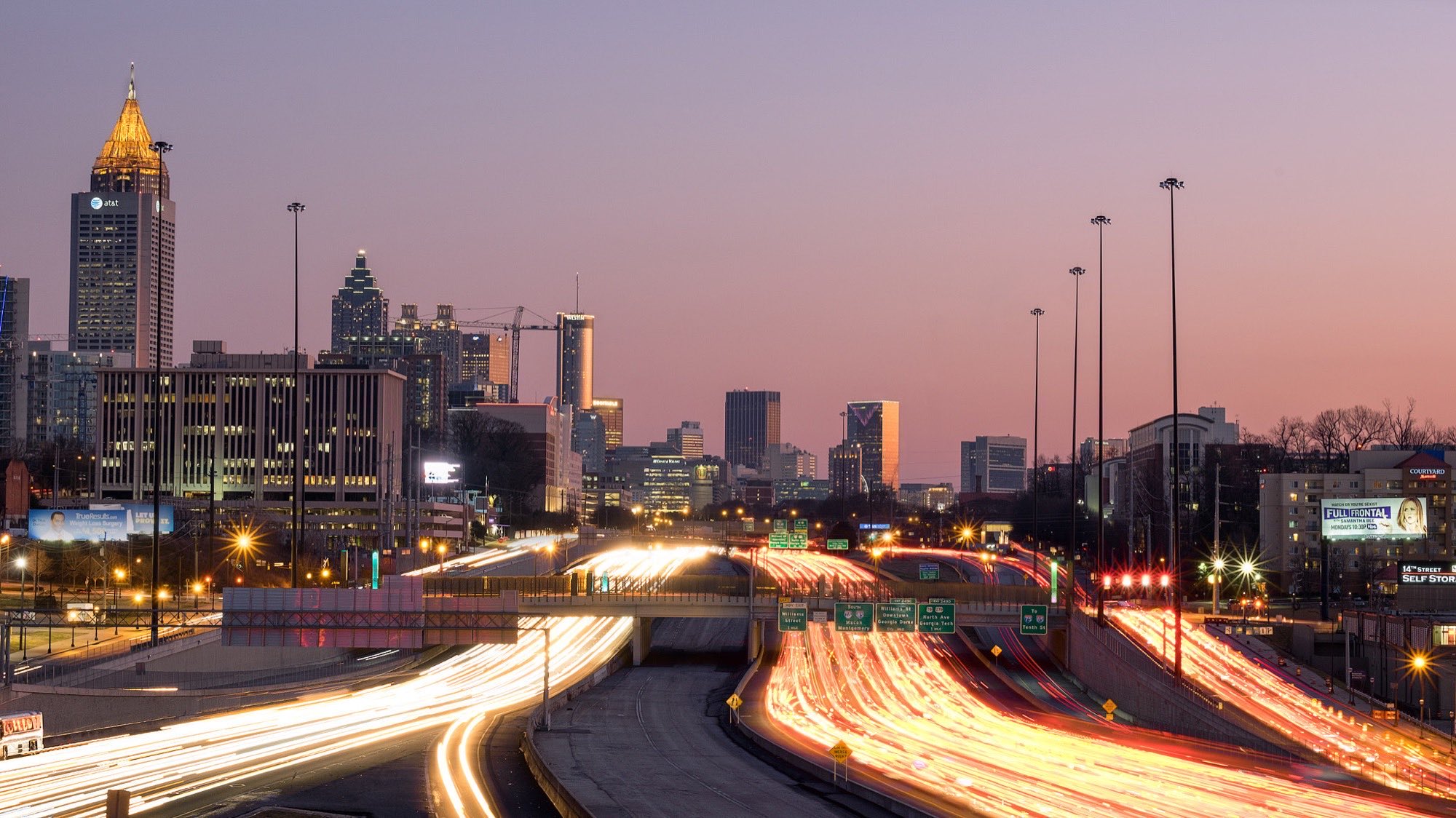
Photo: Alex Gray, CC BY 3.0

The downtown Atlanta skyline rising behind the Jackson Street Bridge and the Downtown Connector
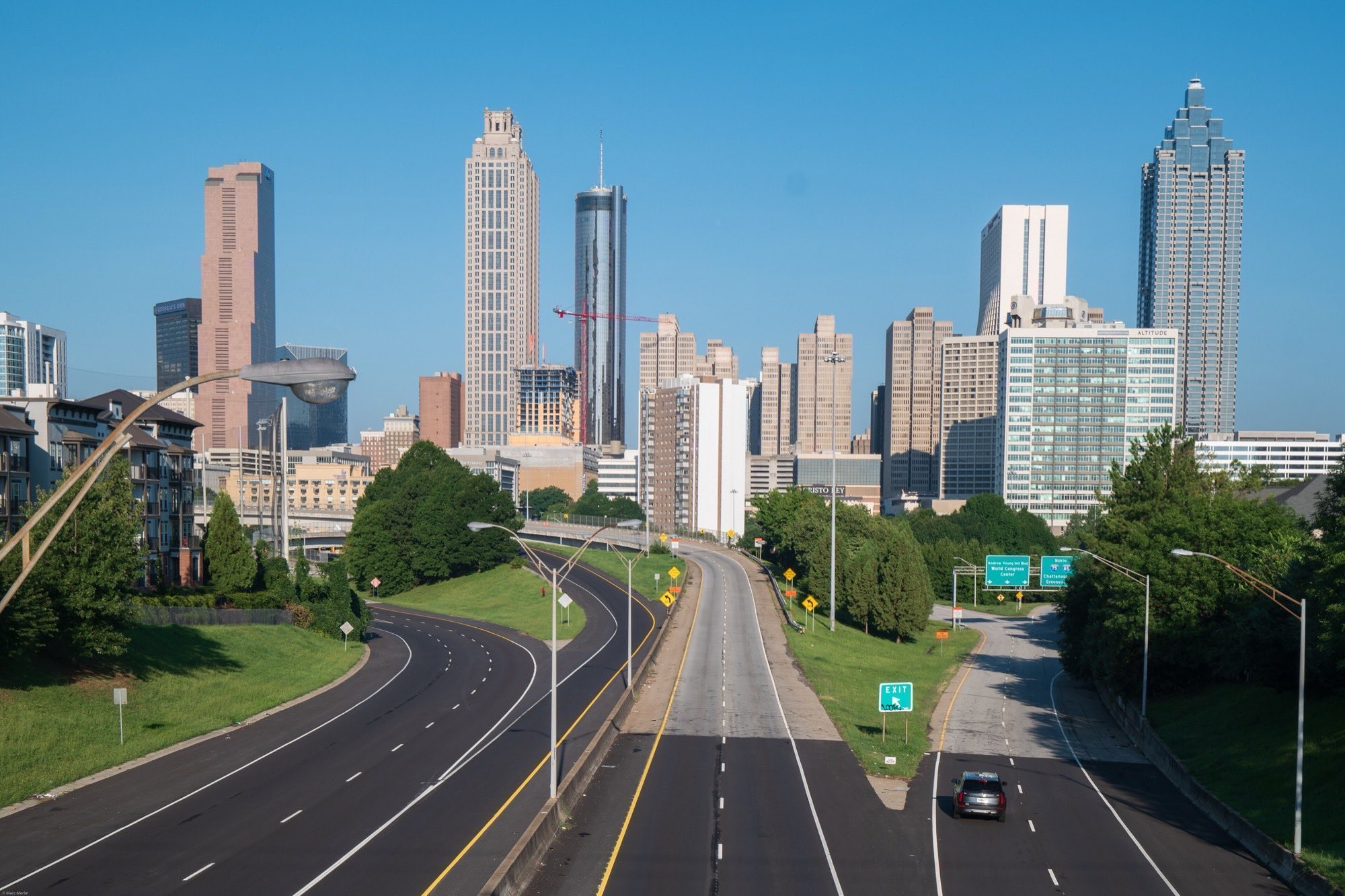
Downtown Atlanta from the Jackson Street Bridge. Photo: Marc Merlin, CC BY-SA 4.0

The region

A region that keeps absorbing people.

The 11-county Atlanta region added 53,690 residents1 between April 2025 and April 2026, taking it to 5,339,164 people1. Growth has slowed from its 1990s pace, but it has not stopped, and Fulton County, which holds the City of Atlanta, grew fastest of all at 1.9 percent1 in that year.

For a developer, that is the whole case for absorption here: demand arrives every year, and the constraint sits on the supply side.

“Metro Atlanta continues to grow and thrive.”

Andre Dickens, Mayor of Atlanta and Chair, Atlanta Regional Commission Board, August 2026

In their words

The region is planning for where homes go, not just how many.

The Atlanta Regional Commission's draft regional housing strategy projects that by 2035 roughly three in four residents3 earning under $55,000 a year will have no workable housing option in the region.

  1. “We want to sustain production, but we want to shift the where. Shifting homes toward those job centers, transit areas.”

    Kristin Allin, Housing Specialist, Atlanta Regional Commission · Georgia Public Broadcasting, September 2026

  2. “That is a sobering number. Should be a sobering number to each of us.”

    Anna Roach, CEO, Atlanta Regional Commission, on the 2035 affordability projection · Georgia Public Broadcasting, September 2026

  3. “ARC's annual population estimates give local leaders a clear, current picture of growth across the region.”

    Ann Carpenter, Chief Research and Innovation Officer, Atlanta Regional Commission · Atlanta Regional Commission, August 2026

The gap

The region needs 367,000 more homes2 by 2035.

That figure comes from the Atlanta Regional Commission's draft strategy, which forecasts about 350,000 additional households2 in the 11-county region by 2035 and assumes a healthy five percent vacancy rate on top.

Recent production has roughly kept pace: the region built about 26,300 homes a year2 between 2020 and 2025 against about 24,500 homes a year2 of projected need. Holding that line is the hard part, because construction costs are up about 50 percent since 20192. That is the arithmetic an offsite-built home is answering: a fixed price on the home itself, set in a plant on a schedule, while your site team handles the dirt.

Atlanta housing figures with sources
Homes needed by 2035367,000
Share of that need in Fulton Countyabout 163,000 homes
Vacant and underutilized parcels identifiedmore than 100,000

What the rules say

Georgia already decided this question at the state level.

One state approval, not a fight at every counter

Georgia's Industrialized Building Program is run by the Department of Community Affairs. A manufacturer's systems and quality control are approved by the state, buildings are inspected during manufacture, and an approved building carries a department insignia. DCA's own description is that an approved building is deemed to comply with all local ordinances and laws relating to its construction.4
A residential industrialized building cannot be zoned out for being factory-built

Under O.C.G.A. 8-2-112(b)(1), a building bearing the commissioner's insignia is deemed to comply with the state minimum standards codes and applicable local ordinances, the commissioner's determination of the scope of that approval is final, and counties and municipalities may not exclude residential industrialized buildings from residential districts solely because of their type.5

Local government still owns the site

Zoning, grading, foundations and utility hookups stay with the local jurisdiction. That is the line PERCH works to: the home is approved and priced, and your own site contractor carries the pad, the utilities and the inspections that go with them.4

Where the region wants the homes

The draft regional strategy pushes production toward job centers and transit, and sets a goal of creating homes on 10 percent3 of the region's identified vacant and underutilized parcels. If your lots sit inside that frame, you are building where the plan points.

How it works here

How you build here.

You send a site plan. We come back with the homes that fit, priced through delivery and set.

  1. Send the site plan

    A survey, a plat or a sketch with dimensions. Whatever you already have for the parcel.

  2. We fit and price

    Code and lot geometry decide what fits, not a salesperson. You get back only the homes that do, within 3 business days.

  3. Hold the plant slot

    The capacity fee holds the slot and locks the price on the homes.

  4. Delivered and set

    Your local site contractor pours the foundation and brings utilities. We deliver and set the homes on it.

PERCH is not your general contractor. Site work stays with your local team, and their bid is the price.

Questions

Before you send a plan.

Will an Atlanta-area jurisdiction treat a factory-built home differently from a site-built one?

Not on construction. Georgia approves industrialized buildings at the state level and a building carrying the insignia is deemed to comply with local ordinances about how it was built. The statute also bars a county or city from excluding a residential industrialized building from a residential district solely because of its type.

How many homes does the region actually need?

The Atlanta Regional Commission's draft strategy puts it at 367,000 homes2 by 2035 across the 11 counties, with about 163,000 of them2 in Fulton County under its policy-aligned scenario.

Who does the site work?

Your own local site contractor. PERCH builds the homes in a plant, then delivers and sets them. We do not bid site work and we do not estimate it, so their number is the number.

Does the slowdown in population growth change the case?

Growth slowed to 53,690 residents1 in the year to April 2026, which is below the prior year, and the region's average annual rate since 2020 is 1.2 percent1 against 3.3 percent1 in the 1990s. It is still net absorption every year against a supply side that has not kept up.

Sources (5)
  1. Atlanta Regional Commission, “Atlanta Region Adds 53,690 Residents in Past Year, ARC Population Estimates Show”, 2026-08-12. atlantaregional.org Back to text
  2. Atlanta Regional Commission and HR&A Advisors, “Housing Forward 2035: Connecting Housing, Jobs and Opportunity, First Read Draft for ARC Board Review, pages 9 to 10 and 49”, 2026-08. cdn.atlantaregional.org Back to text
  3. Georgia Public Broadcasting, “Housing Forward 2035 plan tackles Atlanta metro housing affordability crisis”, 2026-09-04. gpb.org Back to text
  4. Georgia Department of Community Affairs, “About the Industrialized Building Program”, 2026. dca.georgia.gov Back to text
  5. Onecle, Georgia Code, “O.C.G.A. 8-2-112, Inspection and Approval of Industrialized Buildings by Commissioner or Local Government, subsection (b)(1)”, 2026. law.onecle.com Back to text
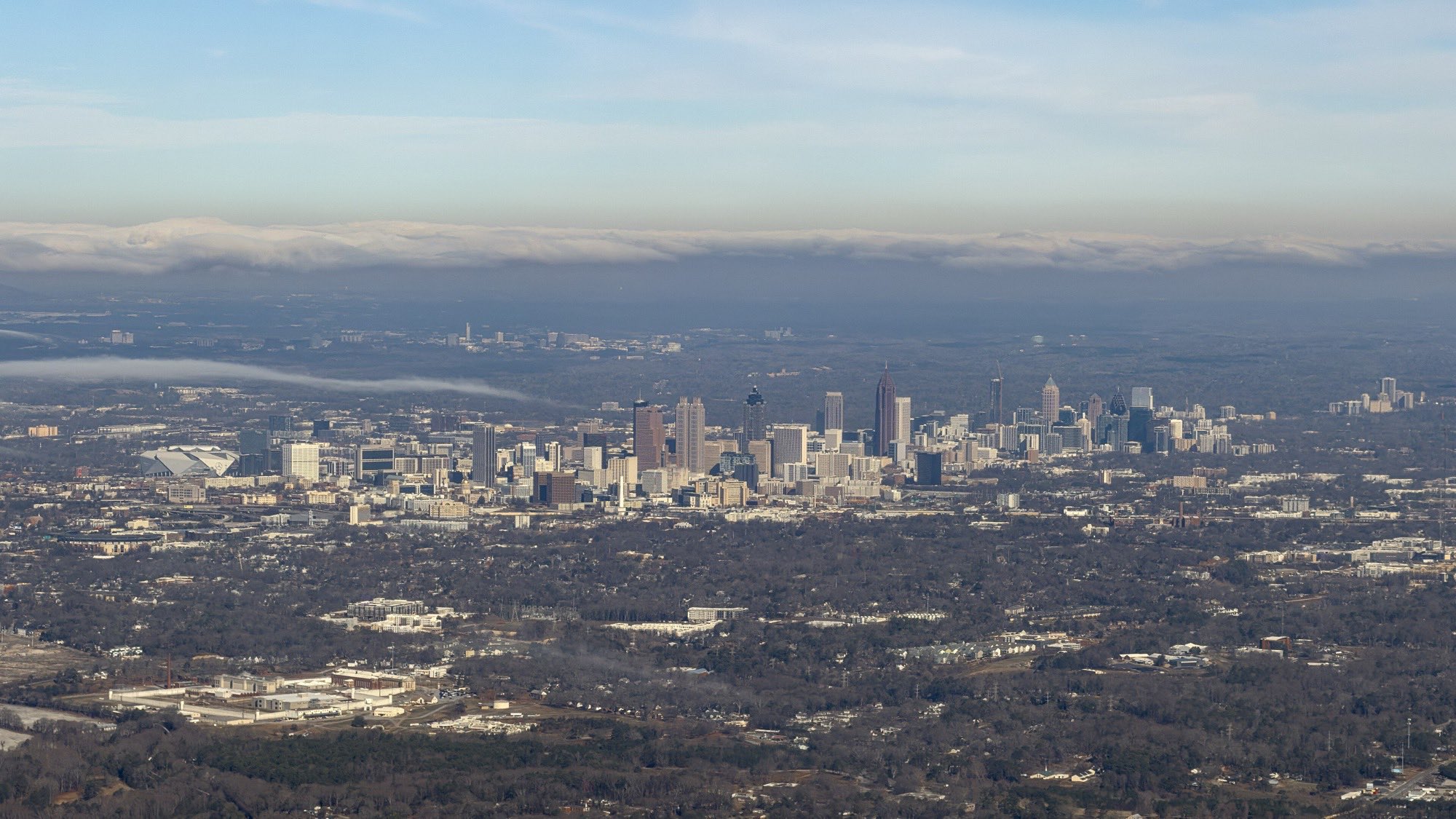
An aerial view across Atlanta showing the downtown and Midtown towers above a wide low-rise tree canopy

Build here.

Send your Atlanta site plan and get back only the homes that fit, priced through delivery and set.

Site plan

Your plan stays private. We reply by email.

Photo: WMrapids, CC0 1.0