Guides
3D-Printed Home vs. Modular Home: The 2026 Comparison
On this page
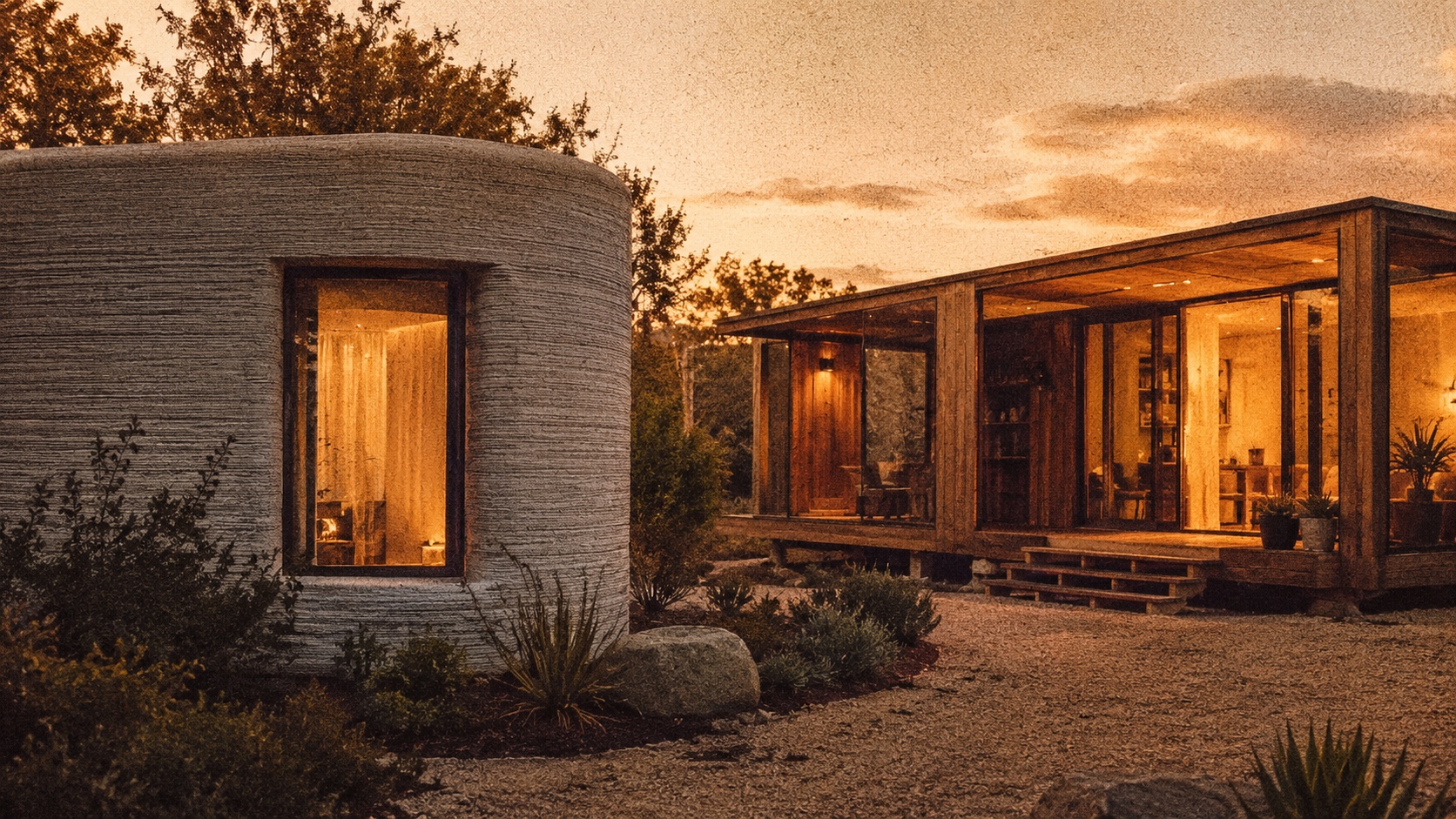
Concrete printed layer by layer, or factory sections trucked to your foundation. Different materials. Similar delivery promise.
3D-printed homes moved from lab curiosity to shipped product between 2020 and 2024. ICON, Mighty Buildings, and others now deliver printed structures in production quantities. Modular has been shipping at scale for decades.
Why this makes sense right now
3D-printed home starts hit ~450 in 2024 per ICON Technology tracking, up 87% from 2023. Modular hit 68,000. 3D-printed is a growing niche; modular is mainstream. The comparison matters because 3D-printed pricing has approached parity with modular in the last 18 months.
The layout — head-to-head
Structural material
- 3D-printed: concrete or concrete composite
- Modular: wood framing (IRC code)
Build process
- 3D-printed: robotic printing (on-site or off-site + assembly)
- Modular: factory framing + finish, on-site setup
Cost per sq ft (2026)
- 3D-printed: $150-$280
- Modular: $180-$280
Build time
- 3D-printed: 2-6 months (structural shell 24-72 hours)
- Modular: 4-9 months
Design flexibility
- 3D-printed: high — curves, custom walls
- Modular: constrained by factory options
Financing
- 3D-printed: portfolio lenders, some conventional
- Modular: standard conventional
Appreciation
- 3D-printed: unknown long-term; early data suggests parity with site-built
- Modular: appreciates like site-built
Insurance
- 3D-printed: standard homeowner's typically; specialty in some jurisdictions
- Modular: standard
Two 3D-printed home builders in 2026: ICON — Austin, community-scale printing, $150-$220/sq ft. Mighty Buildings — panelized print, $200-$280/sq ft. Two modular: Plant Prefab, Method Homes.
Financing math
$250K 3D-printed portfolio loan at 7.5% for 25 years = $1,850/month P+I. $250K modular conventional at 6.5% for 30 years = $1,580/month P+I. Modular wins on monthly by $270 due to financing spread.
Choose 3D-printed if...
- Building in a jurisdiction that welcomes the technology (Texas, California)
- Concrete durability + fire resistance are priorities
- Aesthetic novelty is a positive
- Cash or specialty lender available
Choose modular if...
- Standard financing matters
- Buyer familiarity for future resale matters
- Traditional aesthetic preferred
- Broader builder market matters
The quiet part.
3D-printed homes are a real product with real deliverables. They're also still early enough in the adoption curve that the resale market is thin. Buying a 3D-printed home in 2026 means betting that the buyer pool in 2036 will be substantial. That bet might work; it might not.
Modular is the safer bet. 3D-printed is the more interesting bet. Both bets are real. Pick based on your risk tolerance for a not-yet-mainstream category, not just on the specs.
Join the conversation
Comments
Reader questions get answered. Real names and a working email — that's it.