Buyer Safety
Amazon Tiny Homes: What You Actually Get vs. What's Advertised (2026 Honest Review)
Amazon tiny homes aren't a scam — but the listings systematically understate what you'll actually need to make them livable. The honest 2026 breakdown of specs, gaps, real outcomes, and when a kit makes sense.
On this page
Scroll Amazon for ten seconds and you'll find a $7,900 "expandable container house," a $12,500 "luxury tiny home," and a $19,000 "two-bedroom prefab villa" that looks better than most studio apartments in Atlanta. The photos are clean, the specs are bold, and the reviews are mixed in the exact way that makes a curious buyer want to dig deeper. If you got here by typing "are amazon tiny homes legit" into a search bar, you are already doing the right thing.
This is the honest version. Not a hype piece, not a takedown of Amazon, and not an attempt to sell you anything. PERCH is a marketplace where verified US builders list modular and manufactured homes — Autotrader meets Zillow for the housing category. We don't sell units, we don't manufacture, and we don't have a horse in the Amazon race. What we do have is hundreds of conversations with buyers who showed up to PERCH after an Amazon order went sideways, and a clear picture of what the listings actually deliver.
What's Actually Being Sold on Amazon
The listings fall into three rough buckets.
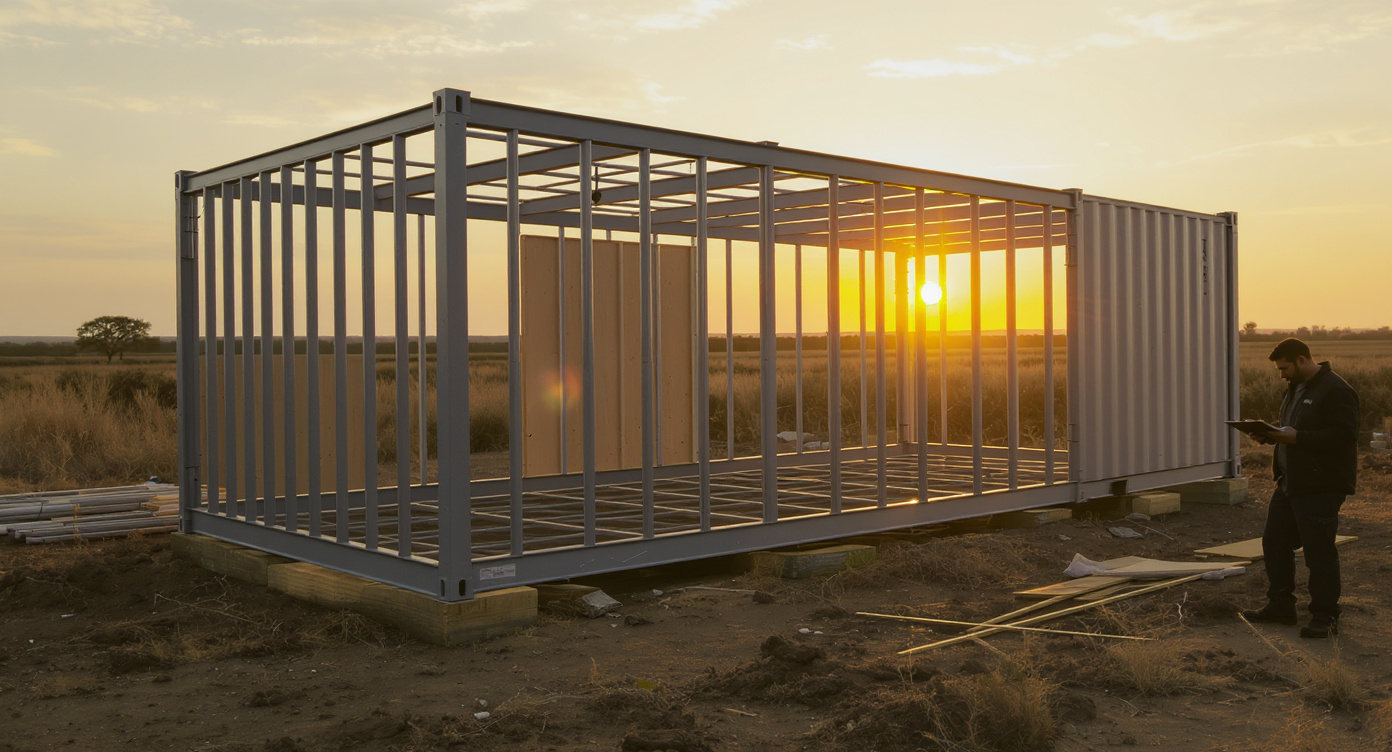
Expandable steel-frame containers. The popular $10K–$30K listings are 20-foot or 40-foot steel boxes that fold or slide open into a 200–400 sq ft footprint. They are manufactured in China, shipped flat in ocean containers, and arrive at a US port six to twelve weeks after order. The seller of record is usually an LLC with a Delaware address and a customer service number that routes to a WhatsApp account.
Flat-pack panel kits. Insulated panels, a frame, hardware, and a printed assembly guide. You provide the foundation, the labor, the plumbing rough-in, the electrical, the permits, and any code work. The kit price is the kit. Everything that makes it a house is on you.
Drop-shipped "prefab villas." These are the listings with the suspiciously good renderings. The product often does not exist as photographed. What ships is a smaller, simpler, steel-frame version of the render, sometimes with different window placement, different roofline, and different square footage than the listing claimed.
Amazon is the storefront. The actual seller is almost always an overseas manufacturer or a US drop-shipper acting as the middle layer.
Advertised Specs vs. What Actually Arrives
Square footage. Listings advertise the expanded footprint and photograph the interior at flattering angles. Delivered units are often 10–15% smaller in usable interior space once you account for wall thickness, the fold mechanism, and the mechanical chase.
Insulation. Listings advertise "fully insulated" or cite an R-value. Delivered units commonly ship with 30–50mm of rock wool or polystyrene in the panels — roughly R-7 to R-13. US code minimum for a habitable structure in most climate zones is R-20 walls and R-38 ceiling. A buyer in Georgia who plans to run AC against a Georgia summer in an R-9 steel box is going to learn about thermal bridging the expensive way.
Fixtures. Listings show full kitchens, real bathrooms, and finished floors. Delivered units often arrive with a kitchenette skeleton, a wet-room bathroom rough-in, and unfinished subfloor. The photos are the option-loaded version. The base SKU is closer to a shell.
Electrical and plumbing. Listings say "pre-wired" and "pre-plumbed." What that means in practice is a Chinese 220V single-phase rough-in that an American electrician will need to rework to meet NEC, and plumbing stubs that need to be connected to a system you are responsible for designing.
The Gaps Nobody Lists in the Listing
This is the part that costs people real money.
No foundation. The kit does not include a slab, piers, or a prepared site. Budget $3,000–$15,000 for proper site work depending on soil, slope, and local frost depth.
No HUD or state code compliance. US manufactured homes carry a HUD tag. US modular homes carry a state modular insignia. Amazon container kits carry neither. That means most jurisdictions will not permit them as a dwelling.
No enforceable warranty. The "10-year warranty" in the listing is enforceable against a Chinese manufacturer through a Chinese arbitration process. Practically, it is not enforceable.
No permit path. Without HUD or modular certification, your local building department has no framework to approve the structure as a residence. Some rural counties will permit it as an accessory structure, storage building, or agricultural shed.
No financing. No US bank will write a mortgage, a construction loan, or a manufactured-home chattel loan against an uncertified import kit. You are paying cash or putting it on a card.
No title work. Manufactured homes get a title. Modular homes get attached to the land title. Amazon kits get a bill of lading from a freight forwarder.
No insurance. Most carriers will not write a homeowner's policy on an uncertified structure. You can sometimes get an outbuilding rider. You cannot get a standard dwelling policy.
Real Customer Outcomes
The pattern from buyers we've talked to is consistent. The order ships. Six to ten weeks pass. The container clears customs — or sits in customs for an additional three to eight weeks while paperwork gets sorted. The buyer pays a customs broker they didn't know they needed. The container arrives at a port and the buyer realizes they are responsible for arranging trucking from the port to their site, which adds $2,000–$6,000.
The unit arrives with shipping damage roughly half the time. The Amazon dispute window has often already closed by the time the unit physically arrives. The seller offers a partial refund of a few hundred dollars and stops responding to messages.
The buyer who planned to make it a primary residence calls the county and learns it cannot be permitted as one. The buyer who planned to finance it learns no lender will touch it. The buyer who planned to resell it learns there is no resale market because there is no title and no comp.
This is not every order. There are buyers who got exactly what they expected, set the unit on private acreage as a hunting cabin, and are happy. But the structural problems with the category are real.
When an Amazon Kit Actually Makes Sense
There is a narrow lane where these kits work.
- A hunting cabin on private acreage where no permit is required
- An off-grid retreat where you control the site and have no inspector
- A remote storage building, workshop, or art studio
- A backyard office in a permissive jurisdiction that allows uncertified accessory structures
- A short-term experimental build where you are paying cash and accept the risk
The common thread: you own the land, you are paying cash, you are not going to live there full-time, and no permit or financing is in the path.
When It Doesn't
- A primary residence anywhere with a building department
- Any purchase that requires a mortgage or construction loan
- Any placement in a city, suburb, or HOA
- Any plan that involves selling the unit later at a recoverable price
- Any climate zone where R-9 walls will fight you for ten years on utility bills
Amazon Kit vs. US-Built Modular vs. US-Built Manufactured
| Factor | Amazon container kit | US-built modular | US-built manufactured (HUD) |
|---|---|---|---|
| Typical delivered cost | $8K–$35K (kit only) | $90K–$250K turnkey | $60K–$150K turnkey |
| Certification | None | State modular insignia | HUD tag |
| Foundation included | No | Yes (or sited) | Yes (pier or slab) |
| Financeable | No | Yes (construction-to-perm) | Yes (chattel or real-property) |
| Permittable as dwelling | Rarely | Yes | Yes |
| Warranty | Effectively none in US | 1–10 yr US-enforceable | 1 yr HUD + structural |
| Insurance | Outbuilding only | Standard dwelling | Standard dwelling |
| Title | None | Real property | Manufactured home title |
| Delivery timeline | 8–20 weeks (sea + customs) | 6–14 weeks | 4–10 weeks |
| Resale market | None | Yes | Yes |
PERCH · Home made for your land.
If you're shopping for a real US-built modular or manufactured home — one that can be permitted, financed, insured, and lived in —
join the PERCH waitlistRelated guides
The weekly brief for modern modular living.
Design concepts, zoning workarounds, and market strategies — the specific ones the 22 million families in the missing middle actually need.
Under 3 minutes. Every Friday afternoon. Unsubscribe with one click.
Frequently asked questions
Are Amazon tiny homes legit?
Is an Amazon tiny home a scam?
Can I get a mortgage on an Amazon prefab home?
Can I put an Amazon shipping container home on my land?
How long does shipping actually take?
What's the real delivered cost of a $10,000 Amazon tiny home?
What's a better alternative if I want a small home?
Does PERCH sell Amazon-style tiny homes?
Join the conversation.
Share your take on this guide.
 Available now
The Nest
Delivered to your parcel · 60–75 days
- PERCH-designed
- Escrow with proof
Refundable within 7 days.