Foundations
Modular Homes Explained: The 2026 Buyer's Guide
A plain-English guide to what modular homes actually are, what they cost in 2026, how they finance, and where they make sense — from an Atlanta operator building the honest market for the category.
On this page
The American housing market broke something simple. A median new site-built home now costs north of $420,000, takes nine to twelve months to deliver, and burns through three contractors before the drywall goes up. Meanwhile, a category that solves most of those problems quietly produces tens of thousands of homes a year in climate-controlled factories — and most buyers still confuse it with a single-wide trailer.
If you have searched "modular homes" in the last week, you are probably trying to figure out three things at once: what they actually are, what they cost in 2026, and whether the financing and resale story is real. This guide answers all three in plain English from an operator who has watched the resale side of this market break in real time.
What a Modular Home Actually Is
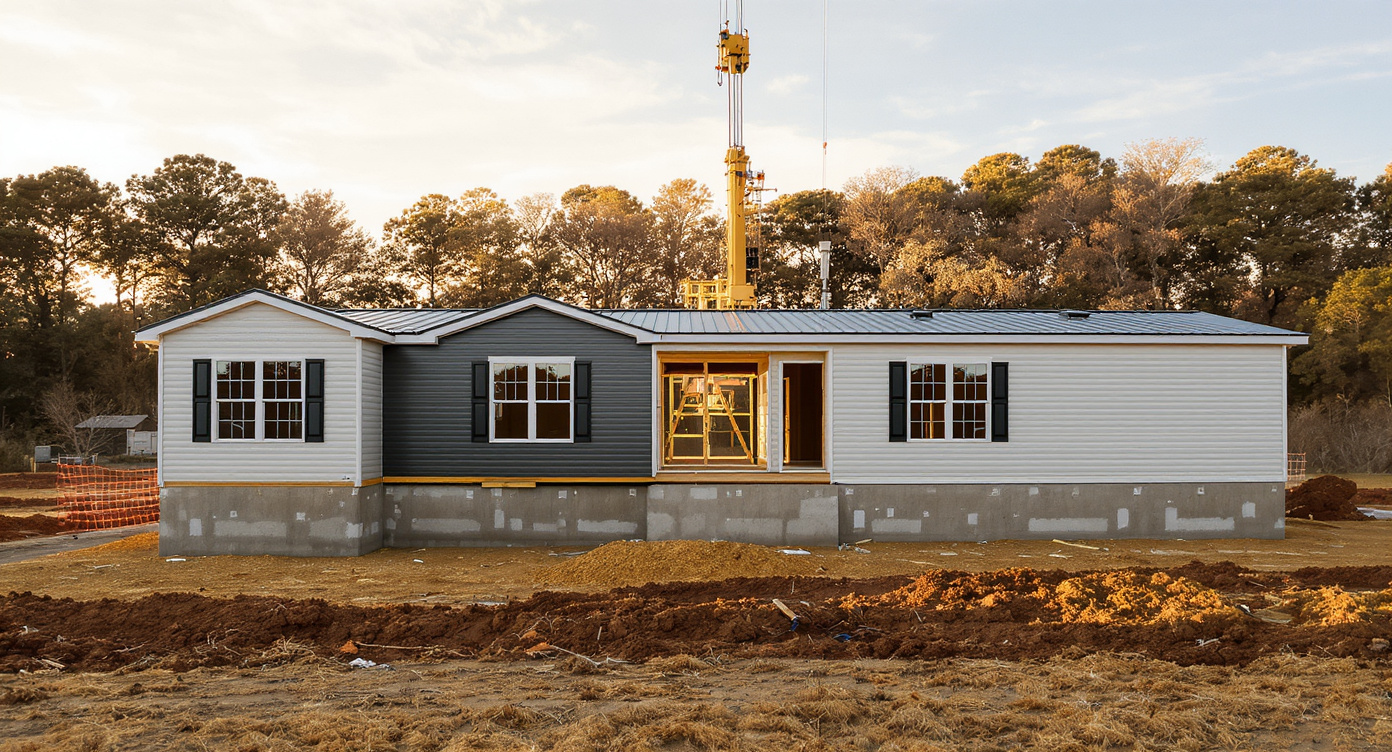
A modular home is a single-family house that happens to be built indoors. The modules (sometimes called "boxes") are framed, wired, plumbed, insulated, drywalled, and often painted inside a factory, then transported on flatbeds to a prepared foundation. A local crew sets them in place, stitches the seams, ties in utilities, and finishes the roof and exterior trim.
Once it is set, you cannot tell it apart from a stick-built home from the street. That is not marketing — that is the building code requirement.
Modular vs. Manufactured vs. Prefab vs. Site-Built
These four terms get blended together constantly, and the differences matter for financing, insurance, resale, and zoning.
- Modular homes are built to the IRC (International Residential Code) and the state and local building code where they are sited. They sit on a permanent foundation (basement, crawlspace, or full perimeter slab), are titled as real property, and finance like any other house.
- Manufactured homes (what most people still call "mobile homes") are built to the federal HUD Code, not state code. They are titled as personal property unless the owner converts the title and permanently affixes them. They finance differently — often as chattel loans at higher rates.
- Prefab is an umbrella marketing word. It covers modular, panelized, kit, and sometimes manufactured. It is not a building category. Treat it as a vibe, not a spec.
- Site-built (stick-built) is the conventional approach: everything happens on your lot, in the weather, in sequence.
The Modular Home Builders Association has a clean primer if you want the trade-group version. For the federal definitions, HUD is the source of truth.
The shorthand I give buyers: if a banker can write you a 30-year conventional mortgage on it without a special program, it is modular or site-built. If they need a manufactured-home loan product, it is HUD-code.
How Modular Homes Are Built
A modular project runs in parallel rather than in sequence. While your site work (clearing, foundation, utilities, septic or sewer tap) is happening on your land, your house is being framed inside a factory two states away. Those two timelines compress what would be a nine-month build into something closer to four to six months from contract to keys.
Inside the factory, modules move down a line: floor decks framed on jigs, walls stood and sheathed, MEP rough-in (mechanical, electrical, plumbing), insulation and drywall, cabinets, fixtures, paint, flooring, wrap, load, ship. Third-party inspectors sign off at each stage on behalf of the state where the home will land. By the time the modules leave the plant, the home has already passed more documented inspections than most site-built houses get in their entire build.
On site, a crane sets the modules in a single day — sometimes two. The button-up crew handles roof ridges, exterior siding seams, porch additions, garage attachment, and any on-site finishes. Final inspection is done by your local building department, same as any house.
This is the part most buyers do not internalize: a modular home is not a kit. It is a code-built house with a different supply chain.
What Modular Homes Cost in 2026
Pricing varies by region, finish level, and how much site work your lot needs, but here are the honest 2026 bands across the Southeast, Midwest, and Mountain West:
- Base home (factory price, set on foundation): $130–$220 per square foot
- All-in delivered (land excluded, with site work, foundation, utilities, permits, finishes): $180–$310 per square foot
- Typical 1,800 sq ft three-bed, two-bath, all-in (no land): $325,000–$560,000
- Land cost: wildly regional — $15,000 raw rural to $300,000+ infill
A reasonable rule of thumb for 2026: take your local site-built builder's per-square-foot number and expect modular to come in 10–20% lower on the structure, with a faster close-out. The savings show up most clearly in labor-tight markets and on smaller homes where factory efficiency dominates.
What is not cheaper: land, site work, septic, well, driveway, utility runs, and impact fees. Those costs are the same whether the house arrives on a flatbed or gets framed in your front yard.
Where the Money Actually Goes
For an all-in $400,000 modular project on $50,000 of rural land, a typical breakdown: land $50,000; site work and foundation $55,000–$75,000; factory home delivered and set $230,000–$260,000; utilities, septic, well, driveway $25,000–$45,000; permits and soft costs $8,000–$15,000; finish-out and contingency $15,000–$25,000.
If a builder quotes you "$180,000 turnkey" and waves at the rest, walk. The rest is where projects die.
Financing a Modular Home
Because modular homes are real property on a permanent foundation, the financing path is closer to a traditional new-construction mortgage than anything exotic.
The three common routes:
- Construction-to-permanent loan. One close, two phases. The lender funds draws to the factory and the site contractor during construction, then rolls into a standard 30-year mortgage at certificate of occupancy. Cleanest path for most buyers.
- Standalone construction loan + end mortgage. Two separate closes. More paperwork, occasionally better rates, but you carry rate risk between closes.
- Cash-to-close on land + mortgage on completed home. If you already own the land outright, some lenders will write a conventional purchase-money mortgage at completion as if it were a resale.
Conventional, FHA, VA, and USDA all finance modular homes. USDA in particular is underused — if your land is in an eligible rural area, USDA can finance the home with zero down. The USDA Single Family Housing Guaranteed Loan Program is the doorway.
PERCH walks buyers through which of these paths fits their situation and connects them to lenders who actually close modular deals. We are not a lender, we do not originate loans, and we do not take a cut of your financing. Our job is to make sure you do not get steered into a chattel loan because someone at a desk does not know the difference between modular and manufactured.
Common Myths, Killed Quickly
"They are just trailers." No. Different code, different foundation, different title, different financing. If someone uses "modular" and "mobile home" interchangeably, they are telling you they do not know the category.
"They do not appreciate." Modular homes appreciate at roughly the same rate as comparable site-built homes in the same neighborhood.
"You cannot customize them." You can customize floor plans, finishes, roof pitch, porch additions, garage attachment, and exterior style. You cannot redesign the structural module mid-build. Most buyers do not need to.
"Insurance is expensive." Standard homeowner's policies. Same rates as site-built in most markets.
"You cannot get a real mortgage." You can. The lender just needs to understand the product. If your first lender says no, find a second.
Where Modular Homes Make Sense
Modular wins hardest in five scenarios: rural and small-town infill where local framing labor has dried up; replacement builds on land that already has utilities and a septic system; multi-generational living where speed-to-occupancy matters; climate-stressed regions where weather delays site-built schedules by months; first-time buyers priced out of the local resale market but who own or can buy raw land.
Where Modular Homes Do Not Make Sense
I get paid to be honest about this part. Tight urban infill with crane access problems, narrow streets, or HOA restrictions on factory-built housing — permitting alone can eat the savings. Heavily custom architectural projects: if you want curves, cantilevers, or a 28-foot great-room ceiling, you are buying site-built. Land with unresolved zoning or utility unknowns — modular does not fix bad land. Solve the land first. Buyers who need to move in 30 days: even at speed, you are four months out.
How PERCH Fits
PERCH is the honest market for modular homes — the Autotrader × Zillow analog for a category that has been hiding behind dealer lots and 1990s websites for too long.
What we do: marketplace listings from vetted modular home builders and resale sellers, with real photos, real floor plans, and TourReady 3D walk-throughs so you can see the home before you drive three states; financing-options walkthrough (educational, not a lender) — we map your situation to the loan products that actually fit and connect you to people who close these deals; transport and title coordination via vetted partners at close — we do not drive the trucks, we make sure the right ones show up; concierge for builders and buyers who would rather text one person than chase ten.
What we do not do: source your land, broker lots, originate your loan, perform in-house title work, run a transport fleet, or inspect the home. We will tell you exactly who does and connect you.
The mission is to house 10 million families in modular homes they actually own. The way we get there is by killing the information asymmetry that has kept this category small.
PERCH · Home made for your land.
Be early to the honest market for modular homes.
Join the PERCH waitlistRelated guides
The weekly brief for modern modular living.
Design concepts, zoning workarounds, and market strategies — the specific ones the 22 million families in the missing middle actually need.
Under 3 minutes. Every Friday afternoon. Unsubscribe with one click.
Frequently asked questions
What is a modular home?
Is a modular home the same as a manufactured home?
How much does a modular home cost in 2026?
Can I get a regular mortgage on a modular home?
How long does a modular home take to build?
Do modular homes appreciate in value?
Can I customize a modular home?
Are modular homes safe in storms?
Where can I find modular homes near me?
Does PERCH sell the homes directly?
Join the conversation.
Share your take on this guide.
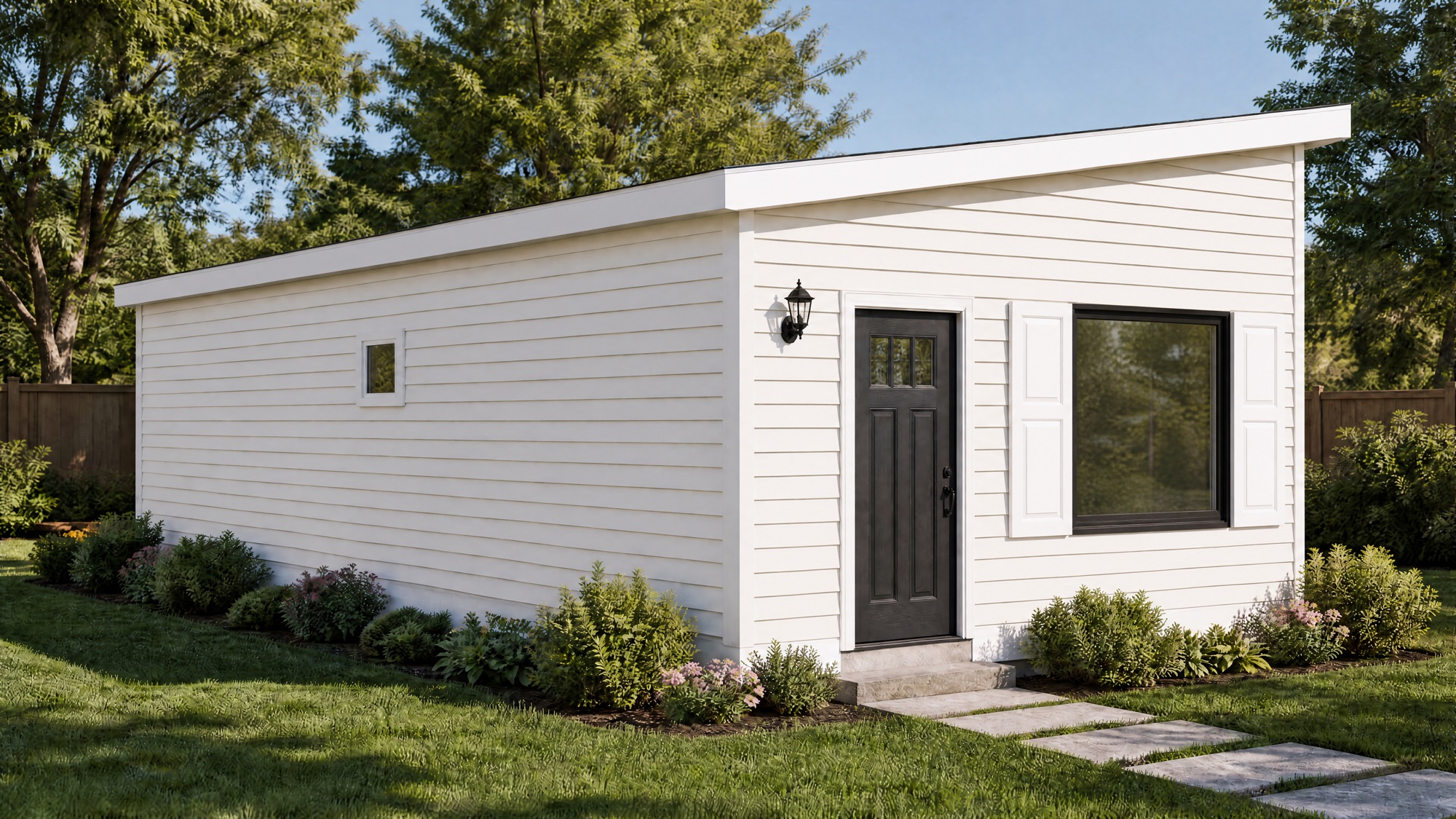 Available now
The Nest
Delivered to your parcel · 60–75 days
- PERCH-designed
- Escrow with proof
Refundable within 7 days.