City Guides
Container Homes in Indiana: The 2026 Buyer's Guide
Indiana container home permits doubled 2022-2024, with growth across Indianapolis, Fort Wayne, Bloomington, and Northwest Indiana. Here's the 2026 cost breakdown and regional market data for one of the most affordable U.S. container markets.
On this page
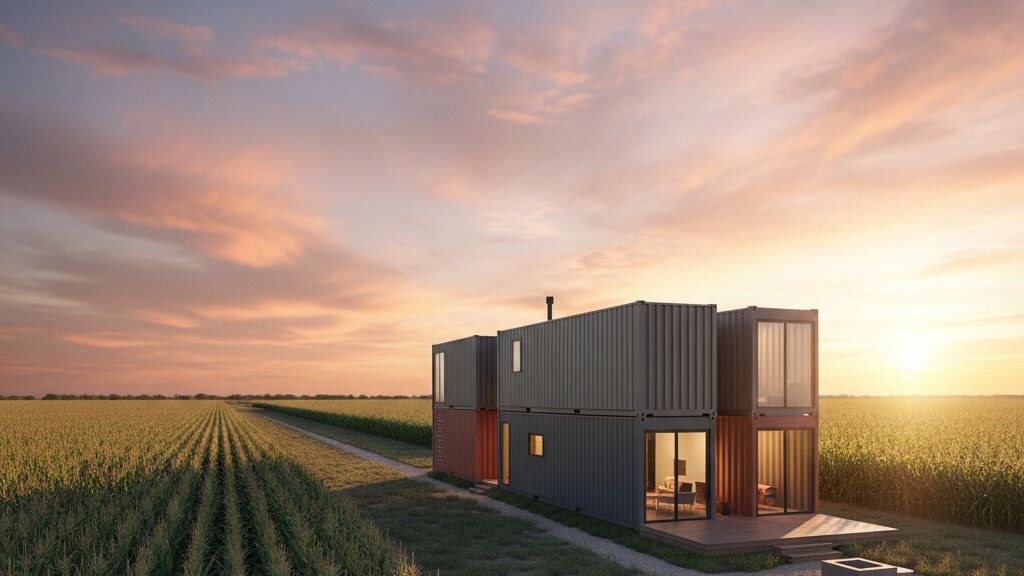
Indiana container home permits more than doubled from 2022 to 2024, with growth concentrated in Indianapolis metro, Fort Wayne, Bloomington (home to Indiana University), and the Lake Michigan-adjacent communities of northwest Indiana. The state's combination of low land costs, generally permissive county-level regulation, and central U.S. location makes Indiana one of the most affordable container home markets in the Midwest. This guide walks through Indiana-specific considerations: climate compliance for the state's continental climate, regional cost variations across major metros, and the configurations that produce strong outcomes.
What an Indiana Container Home Costs in 2026
For a 320 to 640 square foot container home on permanent foundation:
| Cost component | Typical 2026 range |
|---|---|
| Container unit (320-640 sq ft, full finish) | $48,000-$98,000 |
| Delivery from factory | $3,800-$8,500 |
| Crane placement | $2,400-$5,500 |
| Foundation (frost-protected) | $14,000-$26,000 |
| Site prep | $5,500-$14,000 |
| Utility connections | $8,500-$22,000 |
| Permits, plan review | $2,800-$7,500 |
| Continental climate compliance | $4,500-$9,500 |
Delivered all-in: $89,500-$190,500.
By comparison, the median single-family home price in Indianapolis is approximately $245,000; Fort Wayne $215,000; Bloomington $285,000 in mid-2026.
The Four Indiana Regional Markets
Indianapolis metro. The state's largest container home market with strong rental demand from Indianapolis Colts stadium-adjacent submarkets, Mass Ave / Fountain Square, and college-adjacent areas near IUPUI. Estimated 145-180 permits in 2024.
Fort Wayne. Strong manufacturing employment with stable rental demand. Cheapest of the major Indiana metros — typical container ADU all-in $89,000-$135,000.
Bloomington. University of Indiana adjacency creates rental demand from graduate students, faculty, and visiting researchers. Container ADUs on duplex-zoned parcels in walking distance to campus produce strong long-term rental yields.
Northwest Indiana (Crown Point, Valparaiso, Chesterton). Chicago commuter market. Container homes serve buyers priced out of Chicago suburbs but willing to commute via South Shore Line rail.
Indiana Climate Compliance
Indiana's continental climate requires:
- R-49+ roof insulation (R-38 minimum for IECC; R-49+ recommended)
- R-21+ wall insulation with continuous insulation
- Window U-value ≤ 0.30 (low-E coated double-pane; triple-pane recommended for northern IN)
- Frost-protected foundation at 32-36 inch depth depending on county
- Air sealing to 5 ACH at 50 Pa for IECC compliance
The summer humidity load also matters — Indiana summers regularly run 85°F with 70%+ relative humidity. HVAC must include adequate dehumidification capacity.
The Path Most Indiana Buyers Take
- Confirm parcel zoning permits container construction
- Get bids from Midwest-experienced factories with Indiana climate compliance
- Lock factory pricing before site work
- Engage Indiana-licensed general contractor
- Submit permit application with engineering and energy code documentation
- Factory production parallel with site prep
- Delivery, set, finish, inspections, certificate of occupancy
End-to-end timeline: 5-7 months for most Indiana placements.
PERCH was built to surface verified Midwest factories with Indiana climate compliance, real permit timelines by county, and concierge support.
Ready to build a container home in Indiana? Join the PERCH waitlist →.
Related guides
Frequently asked questions
Are container homes legal in Indiana?
What's the typical Indiana container home cost?
Which Indiana market is most affordable?
What insulation rating do I need?
What's the permit timeline?
Can I rent a container ADU in Indiana?
What rental income should I expect?
Keep reading
Join the conversation
Comments
Reader questions get answered. Real names and a working email — that's it.