Resale Wedge
Used Tiny Homes for Sale: Where to Find Them (And Where Not To)
The used tiny-home market is structurally underserved. Where to actually find inventory, where to avoid, the 10-item inspection checklist, and the depreciation math nobody walks you through.
On this page
The used tiny home market is one of the most underserved corners of American real estate. There are roughly 22 million manufactured, modular, and tiny homes in the United States, and a meaningful slice of them change hands every year. Yet if you open Zillow tomorrow looking for a used tiny house, you'll find almost nothing. The MLS doesn't index them properly. Realtor.com treats them like a footnote. Redfin won't touch most of them. The inventory exists, but the infrastructure to find, vet, and buy it does not.
So buyers end up scrolling Facebook Marketplace at midnight, screenshotting Craigslist ads from three states over, and praying the seller is real. That's not a market. That's a scavenger hunt. This guide walks through where used tiny homes actually live online, which sources you can trust, which ones will burn you, and what to inspect before you wire a dollar.
Why the Used Tiny Home Market Is Structurally Broken
Tiny homes, park model homes, and used manufactured homes sit in a regulatory and search gap. The MLS was built for site-built houses on permanent foundations with deeds. A park model on a chassis with a title (not a deed) doesn't fit. A tiny house on wheels is closer to an RV in the eyes of most states. A modular home on owned land sometimes shows up on Zillow, sometimes doesn't, depending on how the agent classified it.
The result: sellers have nowhere centralized to list. Buyers have nowhere centralized to search. Both sides default to whatever free platform is closest, which usually means Facebook Marketplace, Craigslist, or a regional Facebook group with 8,000 members and zero verification.
The category deserves better. The Autotrader × Zillow analog is the right mental model: a real marketplace with photos, specs, history, transport logistics, and financing walkthroughs. That's the gap PERCH is built to fill, and that's the gap a handful of legacy players have been working on for over a decade.
The Trustworthy Sources for Used Tiny Homes
Here's where to actually look. I'll name names, including the legacy players, because being honest about the landscape matters more than pretending PERCH is the only door.
PERCH (ownperch.com). Our marketplace lists used tiny homes, park models, and modular homes nationwide. Every seller is verified before listing goes live. Listings include photos, build year, square footage, current location, title status, and whether the home sits on owned or leased land. We coordinate transport and title transfer through partners on close. We offer TourReady walkthroughs so you can see the home before driving four states to look at it. We do not inspect homes ourselves, and we tell buyers plainly: commission your own inspection.
tinyhouselistings.com. The longest-running tiny home classifieds site. Heavy on tiny-house-on-wheels inventory, lighter on park models and used manufactured stock. Sellers pay to list, which filters out some noise. Verification is limited, so treat it like Craigslist with better photos.
tinyhomebuilders.com. Primarily a builder, but they run a used and consignment section that's worth checking. Inventory is small but quality tends to be higher because it often comes through their builder network.
Builder resale pages. Most reputable modular and tiny home builders maintain trade-in or resale pages. These are often the safest single-seller channels because the home has been through a known shop.
Dealer lots. Modular and manufactured home dealers take trade-ins. Inventory turns slowly, prices are usually higher than private sale, but you get a physical address and a business with a license to lose.
Park model RV dealers. For used park model homes specifically, RV dealers occasionally carry resale inventory. Check NADA pricing before you walk on the lot.
The Dangerous Sources (Where Buyers Get Burned)
This section is the most important one in the article. Save it.
Amazon and AliExpress "tiny homes." Those $15,000 prefab kits shipped from overseas are not livable structures in most US jurisdictions. They fail building code, they fail insulation requirements, they fail electrical code, they cannot be financed, they cannot be insured, and they often arrive damaged with no recourse. They are sheds with windows.
Facebook Marketplace scam patterns. The most common one: photos of a real home (often stolen from a legitimate listing elsewhere), a price 30% below market, a seller who can't meet in person, and a request for a deposit via Zelle or Venmo to "hold" the home. The home does not exist. Reverse image search every photo before you send a dime.
Craigslist deposit-and-vanish. Same pattern, slightly older venue. If the seller will not let you visit the home in person, will not provide a title number you can verify with the state, or pressures you to wire funds before you've seen documentation, walk away.
Unverified Instagram and TikTok sellers. A lot of legitimate tiny home builders use social, but so do scammers. If the only proof of business is a six-month-old account with stock photos, treat it as zero proof.
"Owner financing, no credit check, $500 down" ads. Sometimes legitimate, often a trap where the buyer pays for years and never receives a title because the seller never had clean title to begin with. Title-washed manufactured homes are a real problem. Verify the title with the state DMV or housing authority before any money moves.
The 10-Item Used Tiny Home Inspection Checklist
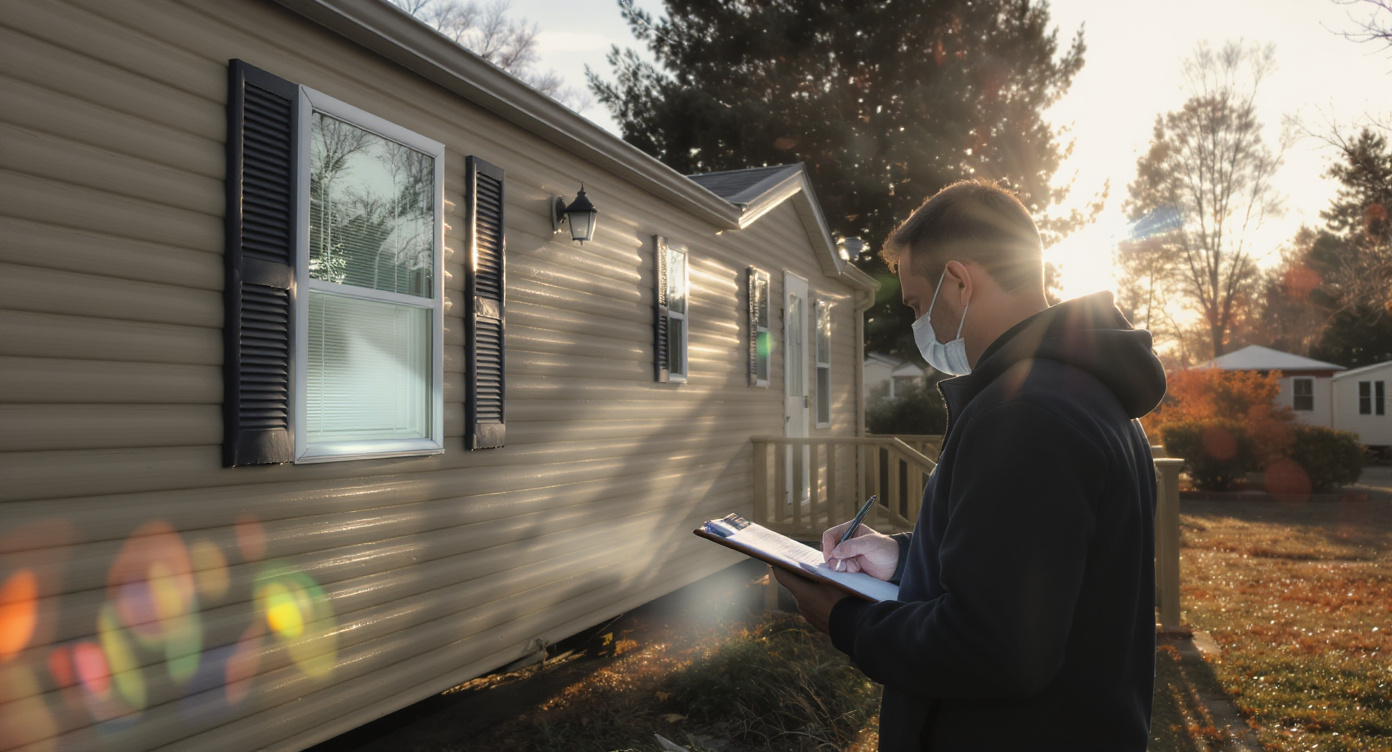
PERCH does not inspect homes. We recommend every buyer commission an independent inspection. This checklist is what to ask them to cover.
1. Frame and chassis. For homes on wheels or steel chassis, inspect every visible weld and crossmember for rust, cracks, or prior repair welds. Ask for the VIN or HUD tag and verify it matches the title.
2. Roof. Look for soft spots, ponding, prior patches. A roof replacement on a used tiny home runs $3,000 to $8,000 and is the single most common deferred-maintenance item.
3. Anchoring and tie-downs. If the home is currently sited, check the anchoring system. In wind zones, manufactured and park model homes require specific tie-down configurations. Missing or corroded anchors mean the home was not installed to code.
4. Electrical system. Open the breaker panel. Look for aluminum wiring (common in 1970s manufactured homes, problematic), double-tapped breakers, scorch marks. Test every outlet with a $15 tester.
5. Plumbing. Run every faucet. Flush every toilet. Check under every sink for soft cabinet bases. PEX is good news. Polybutylene gray pipe is bad news and should be replaced.
6. Title and registration. This is where most deals go sideways. Confirm the title is clean, in the seller's name, and free of liens. Run the VIN through the state's manufactured housing database where available.
7. Age and HUD compliance. Manufactured homes built before June 15, 1976 do not have HUD tags and are not financeable through conventional channels. Many parks will not accept them. Many lenders will not touch them.
8. Water damage. Pull back area rugs. Check the floor near every window, door, and plumbing fixture for soft spots. Look at the ceiling in corners for stains. Mildew is the most expensive hidden problem in a used tiny house.
9. Owner modifications. Document every modification. Unpermitted electrical work and wood stoves without proper clearances are the two that most often kill insurance applications.
10. Transport feasibility. Where is the home now, and where does it need to go? Tiny homes on wheels under 8'6" wide can move on standard permits. Park model homes and double-wides often require oversize permits, pilot cars, and route surveys. Get a transport quote before close.
The Depreciation Math
Manufactured, modular, and tiny homes generally depreciate as physical assets, the way vehicles do. Site-built homes generally appreciate, because the land underneath them appreciates.
The variable that flips the equation is land ownership. A used manufactured home in a leased lot park is almost always a depreciating asset, similar to an RV. Same home placed on a permanent foundation on owned land, with the title retired to real property, often appreciates with the land and tracks closer to a site-built home.
So when you're evaluating a used tiny home or park model, the structure value and the land situation are two different questions. A 2015 park model in good condition might be worth $45,000 to $65,000 as a structure. Sited on a $150,000 piece of owned land, the combined asset behaves like a $200,000 home. Sited in a leased park at $650 a month, it behaves like a depreciating RV with a lot rent obligation.
This is why the resale wedge matters. Used tiny home inventory exists in both lanes, and the price you should pay depends on which lane the home lives in.
PERCH · Home made for your land.
Looking for a used tiny home you can trust?
Join the PERCH waitlistRelated guides
The weekly brief for modern modular living.
Design concepts, zoning workarounds, and market strategies — the specific ones the 22 million families in the missing middle actually need.
Under 3 minutes. Every Friday afternoon. Unsubscribe with one click.
Frequently asked questions
Where is the best place to buy a used tiny home?
Are Facebook Marketplace tiny homes ever legitimate?
How much does a used tiny home cost?
Does PERCH inspect homes before listing?
Do used tiny homes depreciate?
Can I finance a used tiny home?
What's the difference between a park model and a tiny house?
How does PERCH handle transport and title?
Join the conversation.
Share your take on this guide.
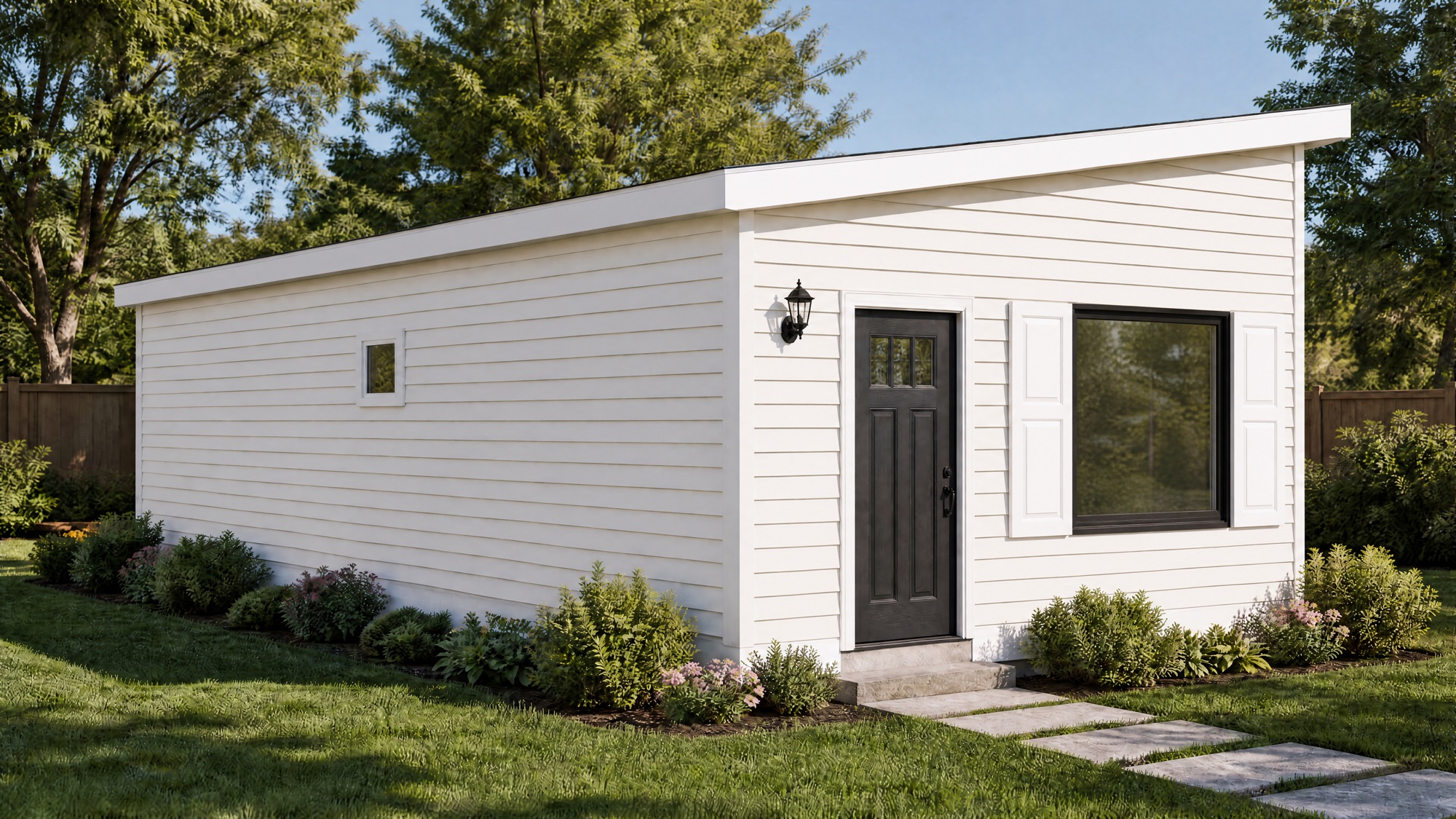 Available now
The Nest
Delivered to your parcel · 60–75 days
- PERCH-designed
- Escrow with proof
Refundable within 7 days.