Guides
How Much Are Container Homes? The 2026 Buyer's Pricing Guide
On this page
"How much are container homes" is the most-asked question in this category and the hardest one to answer honestly without context. The number changes by a factor of ten depending on where you live, what condition container you start with, whether you're building one box or four, and whether you mean the kit price or the price of actually living in the unit.
This is the buyer-decision version of the pricing question. PERCH is the honest marketplace for verified modular and manufactured builders — we don't list import kits and we don't sell containers. The point of this piece is to give you the number you actually need to make a decision, not the number that wins the search snippet.
The Question Behind the Question
Most buyers who type "how much are container homes" are actually asking one of four different questions.
"How much is the container itself?" — $1,500 to $8,500 depending on age and size.
"How much is a flat-pack import kit?" — $7,000 to $35,000 for the kit alone, $25,000 to $60,000 to actually make it habitable.
"How much is a real factory-built modular container home?" — $75,000 to $350,000 delivered and set, depending on size and finish.
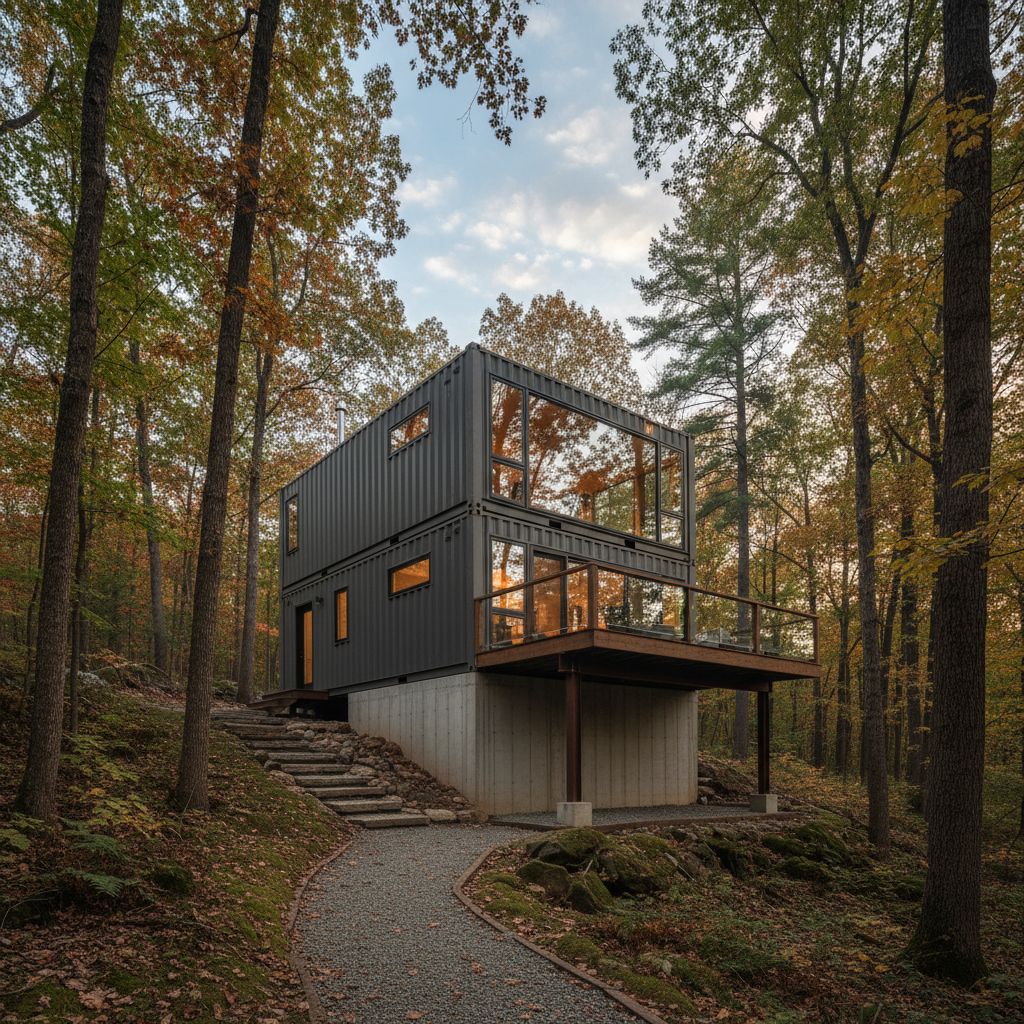
"How much is a custom architect-built container home?" — $130,000 to $500,000+ depending on configuration and finish level.
If your number landed wildly different from the one you were expecting, you were probably asking a different question than the search engine was answering. Knowing which lane you're in is the first decision.
Regional Cost Variance
The same container home costs dramatically different amounts depending on where it's built. Four representative markets.
Texas (Austin, Houston, Dallas, San Antonio metros). Labor costs are moderate, the regulatory environment is friendlier to non-traditional construction than most blue states, and the rural land outside metros is among the most affordable in the country. A two-container architect build runs $130,000 to $220,000 turnkey on a reasonable lot. Add $40,000-80,000 for the lot itself in a desirable rural area. Permits move in 4-10 weeks in most Texas counties. The Texas TDLR runs a competent modular program, which makes factory-built container homes from in-state builders relatively painless to certify.
California (Bay Area, LA, San Diego, Sacramento). Labor is expensive, permits are expensive, and the regulatory layer is heavy. A two-container architect build runs $250,000 to $450,000 turnkey before land. ADU-specific programs in the Bay Area and LA have actually streamlined the permit path for factory-built container ADUs from certified builders — a backyard 40-foot container ADU can come in around $180,000-280,000 installed on a buildable lot. California state modular certification is reciprocally recognized in most other states, which makes California-built containers transportable across the West.
Florida. Hurricane code dominates. Any habitable structure in Florida has to meet the Florida Building Code wind load requirements, which for most coastal counties means a 140-180 mph design wind speed. A two-container build in Florida runs $160,000 to $280,000 turnkey because the structural reinforcement and hurricane-rated openings cost real money. Inland Florida counties are easier than coastal. The trade-off: a properly-built Florida container home is among the most durable products in the residential market.
Midwest (Ohio, Michigan, Indiana, Wisconsin). Cold-climate insulation requirements drive costs up but labor and land are cheap. A two-container build runs $120,000 to $200,000 turnkey. The big variable is the foundation — frost depth in the upper Midwest requires footings 42-48 inches deep, which pushes foundation costs $5,000-12,000 above a southern build. Snow load on the expanded roof of any container variant requires real engineering.
The pattern across regions: total turnkey cost varies more by labor and regulatory environment than by container price. The steel box is the same everywhere. Everything around the box is where the geography shows up.
Used vs New Container Decision
The cheap entry point is a used container. The right answer is rarely the cheapest used container.
Used wind-and-water-tight (the typical "cheap" container): $1,500-4,500 depending on size. Heavy rust at the bottom rails, dents in the corrugation, mystery chemicals in the wood floor, paint that may contain lead, and an unknown history of cargo (occasionally including things you do not want absorbed into your future bedroom walls). Real builders spend $2,000-5,000 in remediation before they even start the conversion — sandblasting, rust treatment, full floor replacement, repainting.
One-trip high-cube (the serious builder's starting point): $5,500-8,500. Made one ocean crossing carrying a sealed dry cargo, sold at the destination port for conversion. Clean, no rust to speak of, no contamination concerns, factory paint intact. The labor saved on remediation pays for the $3,000-5,000 price difference in the first week of the build.
New container ordered direct from a factory: $8,000-15,000 depending on customization. Generally only worth it if you need a non-standard size, color, or specification.
For a habitable build that's going to be permitted and lived in, one-trip is the floor. Used is for hunting cabins, storage buildings, and off-grid retreats where the contamination and rust history don't matter.
Single-Container vs Multi-Container Pricing
Containers are not linear in cost per square foot as you scale up.
Single 20-foot container build (130 usable sq ft after finishing): $35,000-75,000 turnkey. Cost per sq ft: $270-575. The fixed costs of foundation, utilities, permits, kitchen, and bathroom are amortized over a tiny footprint, which kills the per-foot math.
Single 40-foot container (280 usable sq ft): $60,000-130,000 turnkey. Cost per sq ft: $215-465. Better per-foot but still high because of the same fixed-cost amortization.
Two-container 40-foot build (550-600 usable sq ft): $130,000-250,000 turnkey. Cost per sq ft: $215-415. The per-foot cost finally starts to behave because you've spread the kitchen, bathroom, mechanical systems, and foundation across more livable area.
Three to four container build (850-1,200 usable sq ft): $200,000-450,000 turnkey. Cost per sq ft: $235-375. The structural complexity of combining more containers starts to add cost back, so the curve flattens.
The takeaway: container homes don't scale down well. A 130 sq ft container studio costs almost as much in absolute dollars as a 280 sq ft single — because the kitchen, bathroom, MEP, and foundation are nearly identical. If you genuinely want under 200 sq ft, a quality tiny home on wheels is a better product. If you want over 600 sq ft, you're in the lane where containers actually pencil.
What Drives Price Variance Most
Five factors, ranked by impact.
Site conditions. A level urban lot with utilities at the property line versus a sloped rural lot with no septic, well, or power within 500 feet. Swing: $40,000-100,000+ on the same build.
Finish level. Big-box-store finishes versus designer fixtures and custom millwork. Swing: $20,000-80,000 on the interior alone.
Climate zone. A coastal California build versus a hurricane-coast Florida build versus a Minnesota build. Swing: $15,000-45,000 in structural and envelope spending.
Builder type. Owner-managed with subcontractors versus a residential GC versus a high-end design-build architect. Swing: $25,000-100,000 in labor and management fees.
Container quality. Used wind-and-water-tight versus one-trip versus new. Swing: $10,000-25,000 across a multi-container build.
A buyer who understands these five variables can predict their final cost within roughly 15%. A buyer who treats container price as the project price misses by 300-500%.
What the Listings Get Wrong
The $9,000 to $30,000 container home listings on import-facing storefronts and certain online marketplaces describe a product that does not exist in the form the listing suggests. We covered the gap in detail in the Amazon tiny homes review.
In short: the listing price is the kit price. Adding the items required to make it habitable — site prep, foundation, port-to-site freight, customs broker, electrical hookup, plumbing connection, finishing, code work, and the equipment the kit didn't include — typically triples or quadruples the all-in number. The listings are accurate about the box. They're misleading about everything that turns the box into a home.
The Comparable Numbers You Should Know
To know whether a container quote is reasonable, you need the comparable numbers from other categories.
HUD-tagged single-section manufactured home: $70-110 per sq ft delivered and set on most US lots. A 1,000 sq ft home comes in around $70,000-110,000 turnkey before site work. Builders include Clayton Homes, Cavco, and Champion Homes.
Factory-built modular ADU: $200-400 per sq ft installed. A 600 sq ft ADU runs $120,000-240,000 installed. Builders include Abodu, Cover, Dvele, and Connect Homes.
Custom architect-built site-construction: $250-500 per sq ft for a quality build in most markets. A 1,200 sq ft small custom home runs $300,000-600,000 turnkey.
Custom architect-built container home: $250-450 per sq ft. A 1,000 sq ft container home runs $250,000-450,000 turnkey.
Container falls in the same range as modular ADU and custom site-built. It does not undercut HUD-tagged manufactured housing. That's the honest comparison.
Making the Decision
The buyer who lands at "container is the right answer" generally has one or more of these conditions: a strong aesthetic preference for the look, a site where the durability of the steel structure matters (coastal exposure, fire-prone areas, remote locations), a builder relationship in the local market who has done containers before, and a budget that accepts the category sits in the architect-built price range rather than the bargain manufactured range.
The buyer who lands at "container is the wrong answer" generally wanted maximum square footage per dollar, predictable timeline, easy financing, and a clear resale path. That buyer is a manufactured or modular buyer who got distracted by container marketing.
PERCH is the honest marketplace for verified US modular and manufactured builders. We map specs, certifications, code path, and financing options before you sign anything. Closer to Autotrader plus Zillow for the housing category than another lead-gen funnel. If you're shopping container at the high end, we work with certified factory-built container builders. If your real need is maximum livable square footage per dollar, we'll tell you straight when a manufactured option from a builder like Clayton, Cavco, or Champion is the better match — and connect you to one.
Data Sources & Further Reading
The specifics in this guide reference the following authoritative sources — check them directly for the current numbers, program rules, and code text before finalizing a purchase or build decision:
- International Code Council (IRC/IBC)
- HUD manufactured-home construction standards (24 CFR Part 3280)
- CFPB — Manufactured Housing Consumer Finance research
For federal manufactured-housing dispute and repair resources, see HUD's Manufactured Home Dispute Resolution Program. For financing standards on factory-built product, Fannie Mae MH Advantage and Freddie Mac CHOICEHome set the terms most lenders reference.
Join the conversation
Comments
Reader questions get answered. Real names and a working email — that's it.