Legal & Zoning
Tiny House Zoning Laws by State: The 2026 Reality Map
The 2026 reality of tiny house zoning by state — permissive, mixed, restrictive — with the four placement paths that actually work and the IRC Appendix Q lens that decides legality.
On this page
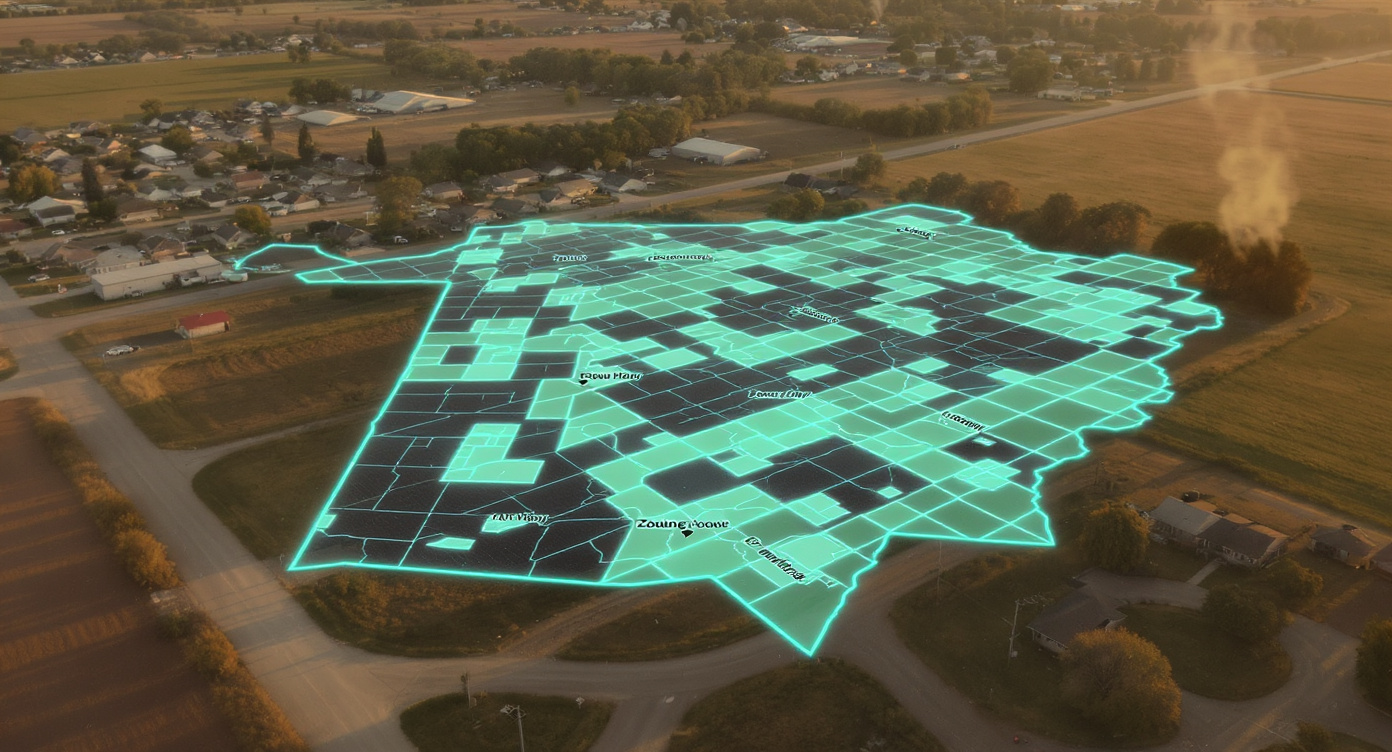
If you've spent more than an hour Googling "where can I legally put a tiny house," you already know the answer most blogs refuse to give you: it depends on the city, the county, the parcel, the foundation type, and whether the inspector ate breakfast. Tiny house zoning in the United States isn't one law. It's roughly 19,000 municipal codebooks layered on top of 50 state building codes, layered on top of a federal model code (the IRC) that most states adopt with their own amendments.
This guide doesn't promise a green light in every state. It gives you the 2026 reality: which states have made tiny living easier, which ones still treat a 320-square-foot home like a code violation, and the four legal placement paths that actually work. I'm Cameron Jo'van. I run PERCH out of Atlanta, where we list modular and tiny homes for resale. We don't lobby zoning. We help buyers find legal homes that fit in legal lanes — and that starts with knowing the lanes.
Why Tiny House Zoning Is So Confusing
Before you can read a state-by-state chart, you have to understand the four overlapping rulebooks.
1. Building code (state level). This decides whether the structure itself is a legal dwelling. Most states adopt some version of the International Residential Code (IRC). The 2018 IRC introduced Appendix Q, which sets safe standards for homes 400 square feet or smaller on a permanent foundation.
2. Zoning (local level). Even if the structure is code-compliant, the city or county decides what can go where. A parcel zoned R-1 single-family residential might have a 1,000-square-foot minimum dwelling size.
3. ADU rules (local, sometimes state-preempted). Accessory Dwelling Unit ordinances let you put a small second home on a lot that already has a primary residence. California, Oregon, and Washington have state-level ADU preemption.
4. RV / park-model rules. A tiny house on wheels is usually classified as a recreational vehicle or a park-model RV under ANSI A119.5. RVs are not legal full-time dwellings in most residential zones.
IRC Appendix Q Explained
The 2018 IRC Appendix Q is the closest thing to a national standard for tiny houses. It addresses the specific problems small homes had under the standard IRC: minimum ceiling heights, loft access, loft guards, and emergency egress from sleeping lofts.
Adoption is the wrinkle. The IRC is a model code published by the International Code Council. States choose whether to adopt it, which edition (2018, 2021, 2024), and whether to include the appendices. As of 2026, more than half of U.S. states have adopted Appendix Q at the state level or as a local option.
State-by-State Tiny House Zoning Reality Map (2026)
The table below uses three labels. Permissive means the state has adopted IRC Appendix Q and has at least one mainstream legal placement path. Mixed means partial adoption or ADU rules that work in some jurisdictions but not others. Restrictive means no statewide Appendix Q adoption, no ADU preemption, and minimum dwelling size rules in most residential zones.
| State | Status | Primary Legal Lane | Notes |
|---|---|---|---|
| California | Permissive | Statewide ADU preemption + Appendix Q | Strongest ADU framework in the country. THOWs as ADUs allowed in several jurisdictions. |
| Oregon | Permissive | Statewide ADU preemption + Appendix Q | Portland and Eugene have explicit THOW-as-ADU pathways. |
| Washington | Permissive | Statewide ADU preemption + Appendix Q | DADU programs in Seattle and Tacoma are tiny-house-friendly. |
| Texas | Mixed | Foundation-built only outside city limits | No statewide zoning. Counties vary wildly. Spur is tiny-house-declared. |
| Florida | Mixed | Park-model and RV park lanes strong | Sarasota County is welcoming. |
| Georgia | Mixed | County-by-county, ADU growing | Atlanta passed ADU reform 2023. Rural counties often have no minimum dwelling size. |
| North Carolina | Mixed | Foundation-built + select communities | Appendix Q adopted at state level. Local minimum size rules common. |
| Colorado | Mixed | Park Model + foundation in many counties | Walsenburg and Park County known for permissive rules. |
| Massachusetts | Restrictive | ADU reform passed but slow rollout | 2024 statewide ADU law in effect. Local resistance still common. |
| Vermont | Permissive | Act 47 ADU reform + small-home culture | One of the easiest Northeast states for legal tiny living. |
| Maine | Permissive | Statewide ADU law (LD 2003) + Appendix Q | Strong owner-builder tradition. Rural counties especially open. |
| New Hampshire | Mixed | ADU statute statewide, local zoning varies | RSA 674:71 allows ADUs statewide; minimum size rules still bite in some towns. |
| Arizona | Mixed | Maricopa and Pima counties tightening, rural open | Cochise County is tiny-house-known. |
| Utah | Mixed | Eagle Mountain and rural counties permissive | Statewide ADU bill HB 82 (2021) helps. |
| New York | Restrictive | Limited ADU progress, NYC excluded | Upstate counties have more flexibility. |
| Idaho | Mixed | Rural counties friendly, no state preemption | Boise tightening, surrounding counties more open. |
| Tennessee | Mixed | No state minimum dwelling size | Local zoning varies widely. Etowah and surrounding areas are friendly. |
| Michigan | Mixed | Briley Township and select areas explicitly allow | No state preemption. |
| Pennsylvania | Restrictive | Limited ADU progress, strict local zoning | Some rural counties open; suburban townships restrictive. |
| Hawaii | Permissive | ADU preemption + Appendix Q | Ohana zoning predates the tiny house movement. |
West Coast
California, Oregon, Washington, and Hawaii form the most permissive cluster in the country. All four have state-level ADU preemption that overrides restrictive local rules, all four have adopted IRC Appendix Q in some form, and all four have active THOW-as-ADU programs in at least one major city. The trade-off is land cost.
Northeast
Vermont and Maine are the bright spots. Vermont's small-home and owner-builder culture predates the tiny house movement by decades, and Act 47 (2023) expanded ADU rights statewide. Maine passed LD 2003 in 2022, which preempts local single-family-only zoning. Massachusetts passed statewide ADU reform in 2024, but local rollout has been slow. New York remains the hardest Northeast state for full-time tiny living.
Mountain West
Colorado, Utah, Arizona, and Idaho are mixed in ways that come down to county. Walsenburg, Colorado is famous for its open-arms tiny house policy. Park County and several Western Slope counties are friendly. Eagle Mountain, Utah has an explicit tiny home village pathway. Cochise County, Arizona has long been an owner-builder haven. Rural Mountain West counties with low population density are some of the easiest places in America to legally place a tiny home on owned land.
Southeast
Florida, Georgia, North Carolina, and Tennessee are mixed but trending more open. Atlanta passed ADU reform in 2023. Sarasota County, Florida has been one of the most welcoming jurisdictions for tiny house communities. North Carolina adopted Appendix Q at the state level. Tennessee has no statewide minimum dwelling size. Georgia's rural counties often have no minimum dwelling size at all.
Midwest
The Midwest is the least-covered region in tiny house writing and one of the most variable. Michigan's Briley Township was one of the first jurisdictions in America to explicitly welcome tiny homes. Iowa, Missouri, and Kansas have rural counties with minimal zoning. There's no Midwest state with California-style preemption.
The Four Placement Paths That Actually Work
Path 1: Your own land, foundation-built, IRC Appendix Q. This is the cleanest lane. You own the lot, your tiny house sits on a permanent foundation, and your state has adopted Appendix Q. You get a real building permit, a real certificate of occupancy, and a real address. The home is taxed and titled as real property.
Path 2: ADU on an existing single-family lot. A primary home already exists on the lot. You add the tiny house as an Accessory Dwelling Unit. In states with ADU preemption (CA, OR, WA, ME, VT, HI), this is largely a by-right process.
Path 3: Tiny house community or village. Purpose-built communities like Spur, Texas; Escalante Village in Durango, Colorado; or Acony Bell in Mills River, North Carolina, are pre-zoned for tiny living. This lane handles THOWs better than the others.
Path 4: RV park as extended stay. A THOW that meets ANSI A119.5 can usually be parked in an RV park, and many parks allow long-term stays. The legal question is whether the park is zoned for full-time occupancy or only seasonal use.
The Owner-Occupancy and Short-Term Rental Wrinkle
The first piece of fine print is owner-occupancy. Most ADU ordinances require the owner to live in either the primary home or the ADU. If you wanted to buy a lot, build a tiny ADU, and rent out both units, that's usually prohibited.
The second is short-term rental restrictions. Cities that have welcomed ADUs in principle have, in many cases, banned or sharply restricted using them as Airbnb-style short-term rentals. Always read the STR ordinance separately from the ADU ordinance.
How to Actually Verify Your Specific Lot
Step 1. Pull your parcel ID from the county assessor's website. Note the zoning designation and any overlay districts.
Step 2. Call the county or city planning department. Not the building department. Ask: "On parcel [ID], zoned [designation], am I allowed to place a single-family dwelling of approximately [square footage], either as a primary residence or as an ADU?"
Step 3. If the answer is yes, ask: "Has this jurisdiction adopted IRC Appendix Q? Is there a minimum dwelling size? Is there a minimum lot size? What are the setback requirements?"
Step 4. Get the answers in writing. Email the planner after the call summarizing what they told you and ask them to confirm.
Step 5. Verify septic and water. A buildable parcel under zoning rules can still be unbuildable in practice if it can't pass a percolation test or doesn't have a water source.
PERCH · Home made for your land.
You don't need a national green light. You need a green light on one parcel.
Join the PERCH waitlistRelated guides
The weekly brief for modern modular living.
Design concepts, zoning workarounds, and market strategies — the specific ones the 22 million families in the missing middle actually need.
Under 3 minutes. Every Friday afternoon. Unsubscribe with one click.
Frequently asked questions
Are tiny houses legal in all 50 states?
What is IRC Appendix Q?
Can I put a tiny house on wheels in my backyard?
Which states are easiest for tiny living in 2026?
Is a tiny house an RV or a house?
Do I need a building permit for a tiny house?
Can I finance a tiny house with a mortgage?
What's the minimum dwelling size in most cities?
Are tiny house communities legal?
Can I rent out my tiny house ADU on Airbnb?
What happens if I place a tiny house illegally?
Does PERCH help with zoning?
Join the conversation.
Share your take on this guide.
 Available now
The Nest
Delivered to your parcel · 60–75 days
- PERCH-designed
- Escrow with proof
Refundable within 7 days.