City Guides
Container Homes in Houston, TX: The 2026 Buyer's Guide to America's Most Container-Friendly Major City
Houston permitted 2,134 container-based residential structures in 2024 — more than the next four largest U.S. metros combined. Here's the 2026 cost breakdown, TDI windstorm requirements, FEMA flood compliance, and the permit pathway.
On this page
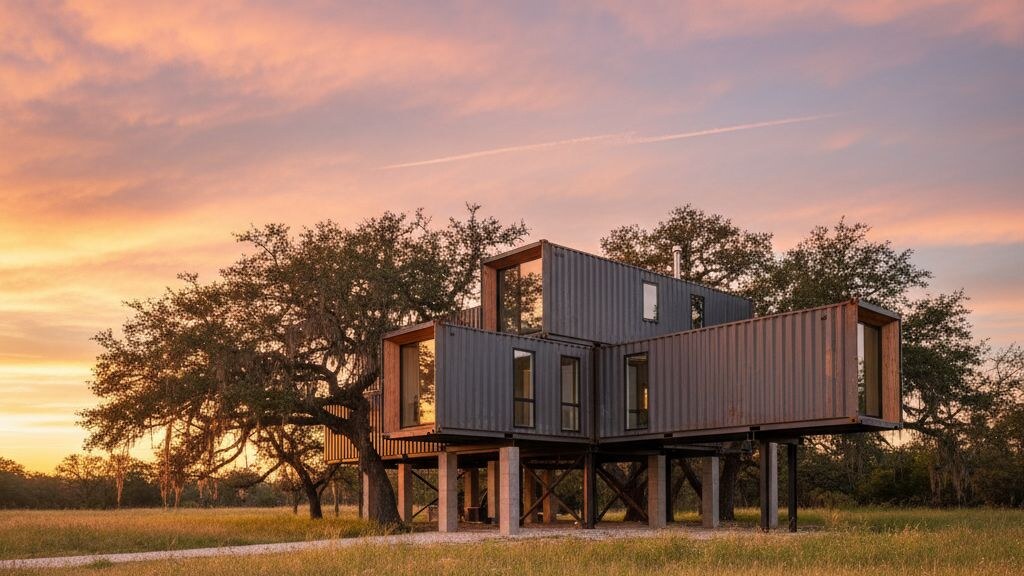
Houston is the most container-home-permissive large American city — no formal residential zoning ordinance combined with a 2023 update to the Houston Code of Ordinances Chapter 10 that explicitly cleared shipping container structures as permitted residential dwellings on permanent foundations. The City of Houston permitted 2,134 container-based residential structures in 2024, more than the next four largest U.S. metros combined. This guide explains what Houston's regulatory environment actually allows, what a permitted container home costs in 2026, the Gulf Coast hurricane and flood compliance that determines build spec, and the configurations that have produced the strongest outcomes for the buyers who've already built.
If you own Houston-area land or you're shopping a buildable lot, the regulatory environment is on your side in 2026 — but the climate compliance is non-negotiable.
Why Houston Is Different From Every Other Major Texas City
Three regulatory factors make Houston structurally different.
No formal residential zoning. Houston is the only major American city without traditional Euclidean zoning. The 2023 ordinance update specifically lists container-based residential structures as permitted on permanent foundations subject to building code compliance, flood elevation, and wind-load standards. Most peer Texas cities (Dallas, San Antonio, Austin, Fort Worth) require zoning approval for container structures that Houston simply doesn't require.
Texas Department of Insurance windstorm coverage. Coastal Harris County and Brazoria County fall within TDI's Tier I windstorm coverage zone with required wind ratings between 130 and 150 mph. Inland Houston is Tier II with 110-130 mph requirements. Both tiers require certified structures; the spec difference shows up in cost.
FEMA flood map exposure. Approximately 30% of Houston-area lots fall within FEMA-designated Special Flood Hazard Areas (Zone AE, A, or VE). Container homes in these zones must be elevated above base flood elevation, which significantly affects foundation cost.
What a Houston Container Home Actually Costs in 2026
For a 320 to 800 square foot container home on permanent foundation in Harris County:
| Cost component | Typical 2026 range |
|---|---|
| Container unit (320 to 800 sq ft, full finish) | $48,000 to $128,000 |
| Delivery from factory | $4,500 to $11,500 |
| Crane placement | $2,800 to $6,500 |
| Foundation (slab or pier, flood-elevated where required) | $14,000 to $48,000 |
| Site prep, grading | $6,500 to $18,000 |
| Utility connections | $9,500 to $24,000 |
| Permits, plan review, inspections | $2,800 to $7,500 |
| TDI windstorm certification | $4,500 to $9,500 |
| FEMA flood elevation (if applicable) | $14,000 to $42,000 |
Delivered, permitted all-in total: $92,600 to $295,000.
The lower half covers smaller units on flat inland Harris County lots outside flood zones. The upper end covers larger configurations in coastal Brazoria, Galveston-adjacent placements, or sites requiring full base flood elevation reconstruction.
By comparison, the median new construction single-family home price in Harris County is approximately $385,000 in mid-2026.
Why TDI Windstorm Certification Is Non-Negotiable
A factory-built container shipped to Harris County without TDI windstorm certification cannot be insured under standard Texas homeowner policies and cannot receive a certificate of occupancy in the coastal Tier I zone. The certification requires specific anchorage to the foundation, impact-rated glazing on windward exposures, and engineered roof connections.
The certification cost runs $4,500 to $9,500 over a non-windstorm-rated build. Reputable factories serving the Texas Gulf Coast price it in. Units shipped without it produce permit denials and insurance gaps.
Rental Income by Houston Submarket
For a permitted 400 to 640 square foot container home in mid-2026:
| Submarket | Monthly rent (long-term) | STR average daily rate | Net monthly (STR) |
|---|---|---|---|
| Inner Loop (Heights, Montrose, Midtown) | $1,950 to $2,850 | $135 to $215 | $2,800 to $4,800 |
| West Houston (Memorial, Energy Corridor) | $1,750 to $2,400 | $115 to $185 | $2,200 to $3,800 |
| North Houston (Spring, Cypress, Tomball) | $1,500 to $2,100 | $95 to $165 | $1,800 to $3,200 |
| Southeast Houston (Pearland, League City) | $1,650 to $2,300 | $115 to $185 | $2,200 to $3,600 |
| Galveston-adjacent (coastal short-term) | $1,800 to $2,500 | $185 to $295 | $3,400 to $5,800 |
The Inner Loop produces the highest long-term yield per dollar of build cost. Galveston-adjacent placements produce the highest short-term rental yield but with hurricane-season vacancy risk.
The Houston Permit Path
City of Houston container home permit timelines run 45 to 120 days for a complete first-submission application — among the fastest of any major U.S. city. The cases that drift past 120 days share the same gaps:
- Foundation engineering not specific to lot's soil report (Houston's expansive clay soil requires lot-specific design)
- Missing TDI windstorm certification documentation
- Missing FEMA flood elevation certificate for SFHA-zone lots
- Utility service connections not coordinated with City of Houston Public Works
Surrounding county jurisdictions run slightly different timelines:
| Jurisdiction | Permit timeline |
|---|---|
| City of Houston | 45 to 120 days |
| Harris County (unincorporated) | 60 to 130 days |
| Fort Bend County (unincorporated) | 75 to 150 days |
| Montgomery County (unincorporated) | 60 to 130 days |
| Brazoria County (coastal exposure) | 90 to 180 days |
Brazoria has the most stringent review because of windstorm and flood overlay. Houston city proper has the most predictable timeline.
The Configurations That Work in Houston
The 320 sq ft Inner Loop ADU. Compact studio on a small Inner Loop infill lot. All-in $96,000 to $145,000. Rents $1,800 to $2,400 long-term. Best ADU economics for Heights, Montrose, Eastwood placements.
The 480 sq ft suburban primary. One-bedroom unit on a quarter-acre Cypress or Pearland lot. All-in $135,000 to $195,000. Common first-time-buyer configuration. Rents $1,800 to $2,400 long-term.
The 800 sq ft two-bedroom modular (two-container). Two 40-foot containers configured side-by-side. All-in $215,000 to $295,000. Best for small families or higher-end short-term rental in Inner Loop or Galveston-adjacent placements.
Why Houston-Area Buyers Should Care About Hurricane Compliance
Hurricane Harvey (2017) flooded approximately 154,000 Houston-area homes. Hurricane Ike (2008) caused $30 billion in damage to the coastal Houston metro. Both events demonstrated that homes built to base wind and flood standards routinely fail in major events, while properly-engineered code-compliant homes survive.
The cost premium for TDI windstorm certification and FEMA flood elevation looks expensive on paper. The cost of replacing an under-engineered home after the next storm is significantly larger.
FEMA flood maps for Harris County are publicly searchable. Any buyer should pull their target parcel's flood zone before committing to a build spec.
The Path Most Houston Buyers Take
The realistic 2026 path:
- Pull parcel's flood zone, TDI windstorm tier, and soil report
- Get bids from 3+ Texas-Gulf-Coast-certified factories with windstorm certification included
- Lock factory pricing and order before site work begins
- Engage Houston-area general contractor licensed in target county
- Submit complete permit application with engineering, windstorm certification, and flood elevation documentation
- Factory production (60-90 days) in parallel with site prep (45-60 days)
- Delivery, set, finish, inspections, certificate of occupancy
End-to-end timeline: 5 to 8 months.
PERCH was built to surface verified Gulf-Coast-certified factories, real Houston permitting timelines, real flood and wind compliance specs, and concierge support — not dealer pitch.
Ready to build a container home on your Houston-area lot with the right factory and the right compliance package? Join the PERCH waitlist →.
Data Sources & Further Reading
The specifics in this guide reference the following authoritative sources — check them directly for the current numbers, program rules, and code text before finalizing a purchase or build decision:
- City of Houston Building Code Enforcement
- International Code Council (IRC/IBC)
- FEMA Flood Map Service Center
For federal manufactured-housing dispute and repair resources, see HUD's Manufactured Home Dispute Resolution Program. For financing standards on factory-built product, Fannie Mae MH Advantage and Freddie Mac CHOICEHome set the terms most lenders reference.
Related guides
Frequently asked questions
Are container homes legal in Houston?
Do I need windstorm certification?
What's the typical cost in 2026?
How long does the Houston permit take?
What if my lot is in a FEMA flood zone?
Can I run a container home as a short-term rental?
What's the rental income vs. cost payback?
Keep reading
Join the conversation
Comments
Reader questions get answered. Real names and a working email — that's it.