Guides
Tiny Home Communities in Tampa: A 2026 Buyer's Map of Where the Movement Actually Lives
Tampa's tiny home market is dominated by 55+ manufactured home communities and a small but growing set of purpose-built tiny home developments. Here's what's real, what's available, and the Florida rules that determine what can land where.

On this page
Tampa's tiny home market operates in the shadow of Florida's manufactured housing dominance — the state has the largest manufactured home stock in the US, and the regulatory apparatus is built primarily around HUD-code homes rather than site-built tiny dwellings. The result is a Tampa market where the most active small-footprint communities are 55+ manufactured home parks, with a smaller but growing set of purpose-built tiny home developments in the outer ring. This guide identifies what's real, what's available, and the Florida zoning rules that determine what can legally land where.
If you're searching for a tiny home community in Tampa in 2026, the real question is not "where can I find one?" — it's "am I looking for a HUD-code manufactured home in an established community, or a site-built tiny home on private land — because Florida's regulatory framework treats these very differently."
Why Tampa's Market Is Manufactured-Home Dominant
Metro Tampa combines conditions that shaped a manufactured-home-first market: Florida has more manufactured homes than any US state, Tampa Bay's median home prices climbed 92 percent between 2015 and 2024, and hurricane building code requirements (specifically wind-load ratings for coastal counties) make site-built tiny homes more expensive to permit than pre-approved HUD-code manufactured units. The result is a Tampa market where the mature small-footprint inventory is in 55+ manufactured communities and RV parks, and site-built tiny home communities remain a small but growing category.
What this means for a buyer in 2026: the tiny home options with the shortest path to occupancy are usually a HUD-code manufactured home in an established community, or a permitted tiny home in one of the smaller purpose-built developments.
The Florida Rules That Determine Everything
Florida's Chapter 320 statutes distinguish sharply between manufactured homes (HUD-code), park trailers (400 square feet or less, not for full-time residency by state definition), and site-built residential structures. Wind-load requirements are Category 4+ in most Tampa Bay coastal counties, which makes any residential permit — tiny or otherwise — more engineering-intensive than in inland Florida.
For accessory dwelling units, Hillsborough County allows one ADU on qualifying single-family parcels with utility connections. City of Tampa passed an ADU-permissive zoning update in 2024. Pinellas, Pasco, and Manatee counties have similar rules with parcel-specific variations.
The Real Tiny Home Communities Within Reach of Tampa
Circle Pond Tiny Homes — Zephyrhills
Circle Pond is a purpose-built tiny home community in Zephyrhills, roughly 40 minutes northeast of downtown Tampa. Homes range from 320 to 640 square feet on permanent foundations. Lots are deeded and homes typically list between $145,000 and $265,000. The community accepts new residents and inventory turns over several times per year.
Orlando Lakefront Tiny Home Community — Near Orlando
Orlando Lakefront, roughly 80 minutes east of Tampa, is one of Florida's most established tiny home communities on permanent foundations. Homes range from 240 to 600 square feet with prices typically between $125,000 and $215,000. Lots run $58,000-$95,000. The community is a functional option for buyers willing to live on the I-4 corridor between the two metros.
Established 55+ Manufactured Communities — Pinellas and Pasco Counties
Along US-19 north of Tampa and throughout inland Pasco County, dozens of established 55+ manufactured home communities offer small-footprint living at price points meaningfully below purpose-built tiny home communities. Homes typically list between $65,000 and $185,000 for units in the 600-1,100 square foot range, with monthly lot rent between $625 and $1,250. Buyers should verify each community's age qualifications and lot-rent structure carefully.
What Living in a Tiny Home Community Actually Costs
The all-in cost of living in a permitted tiny home community within reach of Tampa in 2026 breaks down roughly as follows for a typical 400-square-foot unit on a permanent foundation:
| Cost component | Typical range |
|---|---|
| Unit purchase or build | $125,000 – $235,000 |
| Lot or site fee (if separate) | $58,000 – $110,000 |
| Site prep, foundation, utilities | $22,000 – $48,000 |
| HOA or community fee (annual) | $1,800 – $4,200 |
| Property tax + insurance (annual, hurricane loading) | $2,400 – $5,800 |
The all-in delivered cost of an entry-level unit on a community lot in 2026 typically lands between $175,000 and $315,000. In a 55+ manufactured community, a comparable-sized HUD-code unit runs meaningfully less at $85,000-$195,000 all-in — but with monthly lot rent instead of deeded land ownership.
How Tampa Zoning Actually Works for Tiny Homes in 2026
Three legal pathways for placing a tiny home in metro Tampa:
- Inside a permitted community. The community holds the zoning approval and sites homes under a master plan. Buyers don't negotiate zoning individually.
- As an accessory dwelling unit. City of Tampa and Hillsborough County allow one ADU per single-family parcel meeting minimum size, with utility connections.
- As a primary residence on private land. A permanent-foundation dwelling meeting Florida Building Code (with wind-load compliance) is permitted in most residential zones. Coastal-county wind requirements add meaningful engineering cost.
Why Foundation Type Determines Everything
Across every metro Tampa jurisdiction, a home on a permanent foundation with connected utilities is a residential dwelling. Florida park trailers (under 400 square feet, non-permanent) are not classified as residential dwellings and cannot be used as primary residences under state law — even inside RV parks that allow long-term occupancy. This is a state-level definition, not a local one.
The Path Most Buyers Actually Take
Most Tampa-area families who want a tiny home end up doing one of three things.
The first is to buy a HUD-code manufactured home in an established 55+ community in Pinellas or Pasco County — the fastest path to occupancy and the lowest all-in cost.
The second is to buy into Circle Pond or Orlando Lakefront for a deeded permanent-foundation unit.
The third is to place a permitted tiny-home ADU or a modular or manufactured home as a primary residence on private inland land in Hillsborough, Pasco, or Polk counties.
PERCH was built to be the honest market for both routes. We surface real listings, real comps, and real concierge support.
Ready to find yours — or list one you already own? Join the PERCH waitlist → for nationwide early access.
Related guides
Frequently asked questions
Are tiny homes legal inside Tampa city limits?
What is the closest active tiny home community to Tampa?
Can I park a tiny home on wheels in my Tampa backyard?
What makes Florida's tiny home rules different?
Do I need a special permit for a tiny home ADU in Tampa?
What's the average cost of a tiny home ADU in Tampa?
Can I live in a park trailer full-time in Florida?
Join the conversation.
Share your take on this guide.
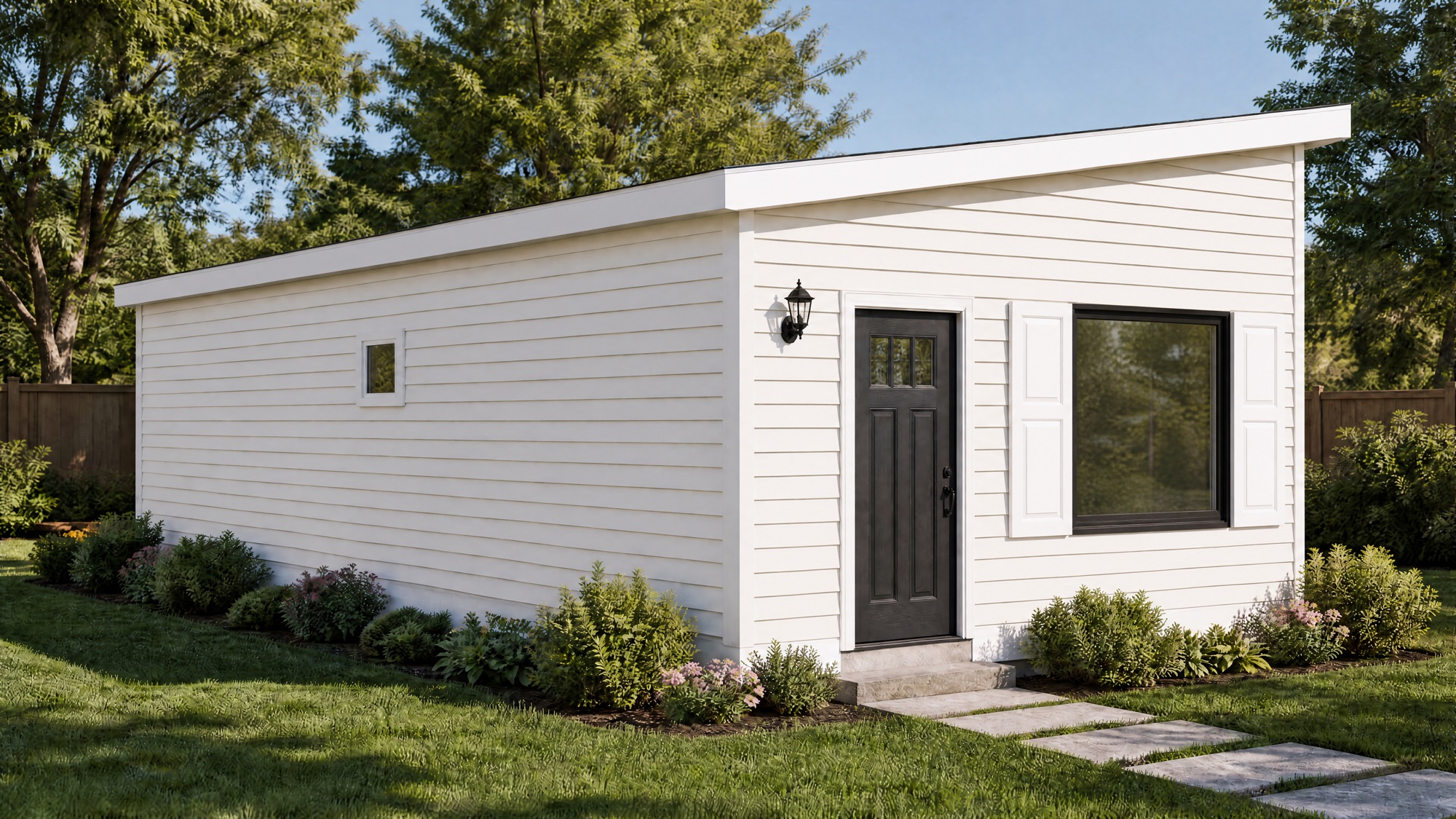 Available now
The Nest
Delivered to your parcel · 60–75 days
- PERCH-designed
- Escrow with proof
Refundable within 7 days.