Guides
ADU vs. Tiny Home: The 2026 Comparison
On this page
Two small houses. Two very different building permits.
The words get used interchangeably in real estate listings and Instagram captions. They shouldn't. An ADU is a legally-permitted second dwelling on a residential lot. A tiny home is a small structure that may or may not be legally habitable depending on how the state, the county, and the appraiser feel that day. Same square footage. Wildly different regulatory paths.
Why this makes sense right now
ADU permits hit 84,000 nationwide in 2024 per ADU Marketplace tracker, up 41% from 2022. California alone permitted 28,000 ADUs in 2024, up from 1,600 in 2016. The regulatory environment is dramatically friendlier than it was five years ago.
Tiny home permits are harder to track because "tiny home" is not a legal category in most jurisdictions. Some states (California, Oregon, Colorado) have added tiny-home-specific code paths. Most states classify tiny homes as either accessory structures (small, no plumbing), ADUs (if plumbed and permitted as habitable), or RVs (if on wheels and titled through DMV).
The financing gap is the deciding factor. ADUs qualify for HomeStyle Renovation, HELOC, and specialty ADU construction loans. Tiny homes qualify for HELOC (if on your primary property), RV loans (if on wheels), chattel (if delivered as a manufactured product), or cash. The ADU financing path is broader and cheaper.
The layout — head-to-head on the 10 things that matter
Legal status
- ADU: separate permitted dwelling on the same parcel
- Tiny home: varies by state — habitable structure, accessory structure, or RV
Size range
- ADU: 400-1,200 sq ft typically
- Tiny home: 200-500 sq ft typically
Building code
- ADU: IRC + local amendments (identical to primary residence code path)
- Tiny home: IRC (if permitted as habitable), ANSI A119.5 (if RV), or accessory structure code (if under threshold size)
Cost turnkey (2026)
- ADU: $180K-$450K
- Tiny home: $60K-$180K
Financing
- ADU: HomeStyle Renovation, HELOC, ADU construction loans, cash
- Tiny home: HELOC, RV loan, chattel, cash
Utility hookups
- ADU: full residential — dedicated meters or sub-metered from primary
- Tiny home: full residential (if permitted as ADU) or RV-style (if not)
Property tax impact
- ADU: adds to primary property tax assessment (typically $2K-$8K/year lift)
- Tiny home: varies — real property if on permanent foundation, personal property if on wheels
Rental potential
- ADU: legally rentable in most jurisdictions
- Tiny home: rentable only if permitted as ADU or Airbnb'd in permissive jurisdictions
Appreciation
- ADU: appreciates with primary property (typically 3-5% annually)
- Tiny home: varies — appreciates as ADU, depreciates as RV
Resale
- ADU: substantial resale premium (typically 60-80% of build cost recovered)
- Tiny home: broad range depending on legal classification
Two builders in 2026 doing purpose-designed ADUs: Villa — California, factory-built backyard ADUs, $180K-$380K. Abodu — California + Pacific Northwest, $200K-$400K. Two doing tiny homes that qualify as ADUs in most jurisdictions: Modern-Shed — 100-400 sq ft, backyard structures, $60K-$180K. Studio Shed — 100-400 sq ft, prefab wellness/office/ADU, $80K-$220K.
Financing — the fork that actually determines the deal
If you already own the primary:
- ADU: HomeStyle Renovation (rolls into refinanced primary mortgage), HELOC, or ADU construction loan
- Tiny home: HELOC (easiest), cash, or specialty tiny-home construction loan
If you're building a tiny home to eventually convert to an ADU:
- Build with permanent foundation from day one
- Meet local ADU code even if permitting as accessory structure first
- Path: accessory structure → later permit conversion → ADU status
If your primary lot doesn't permit ADUs:
- ADU: not an option unless you rezone or move
- Tiny home: may be permitted as accessory structure without ADU classification
Cash-flow math for a $250K ADU vs. a $120K tiny home on the same lot: ADU HomeStyle Renovation at 7% for 30 years = $1,660/month; tiny home HELOC at 8.75% = $875/month interest. ADU is $785/month more expensive to carry — but qualifies for rental income (typically $1,400-$2,200/month in most metros) and adds substantially more to appraised property value.
Choose the ADU if...
- Your jurisdiction permits ADUs by right on your parcel
- You need the space to be legally rentable
- You want the addition to appraise as separate dwelling value
- You have 400-1,200 sq ft of program (bedroom + kitchen + full bath + living space)
- You can access HELOC, HomeStyle Renovation, or ADU construction financing
- Ten-year appreciation matters
Choose the tiny home if...
- You want a smaller space (200-500 sq ft) for a single occupant or couple
- Cost is the deciding factor
- The structure is for you (home office, retreat, occasional guest space) not primarily for rental
- You may want to move the home eventually
- Your jurisdiction doesn't yet permit ADUs but does permit accessory structures
- HELOC is your primary financing option
The quiet part.
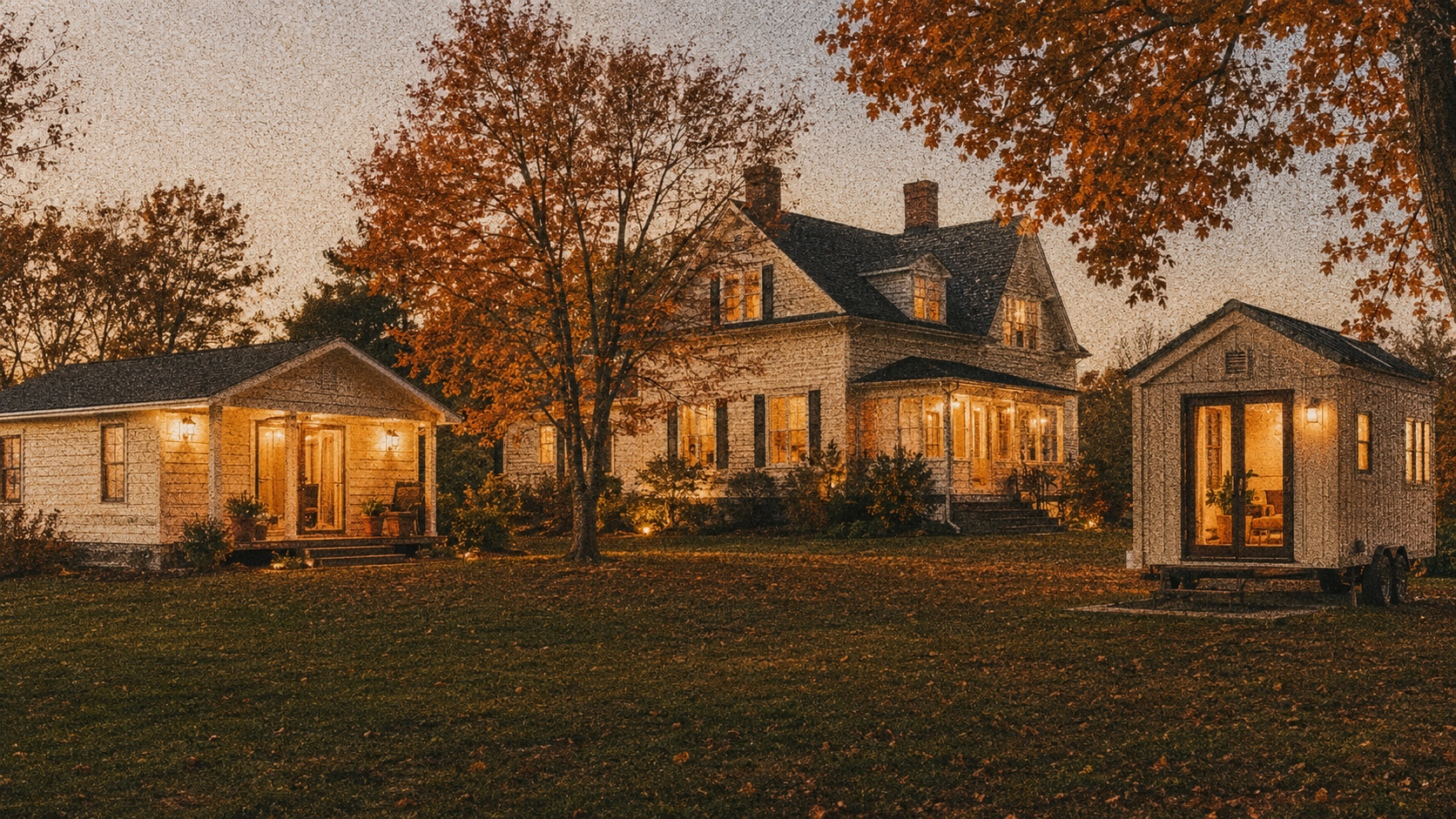
The reason people confuse ADUs and tiny homes is because the marketing looks identical. Both photograph as small, cozy, well-designed structures behind a main house. Both use words like "cottage" and "backyard studio." The regulatory distinction is invisible until permitting starts.
The distinction matters most at the moment of resale. An ADU shows up on the appraiser's spreadsheet as a second permitted dwelling — added square footage, added market value, added rental income capacity. A tiny home shows up as an accessory structure or as personal property. Same photo. Very different appraisal.
Buy the ADU if you're building a long-term family compound or income property. Buy the tiny home if you're building yourself a quiet space and want to spend under $150K. Neither is wrong — but the paperwork decides which one your future self is happy about.
Related guides
- Multi-Generational Living: ADU Design Guide — the two-ADU compound approach
- Tiny Home as Mental-Health Wellness Space — the small-structure use case
- Backyard Cottage vs. Home Addition — the other ADU comparison most families face
Join the conversation
Comments
Reader questions get answered. Real names and a working email — that's it.