Buyer Guides
Small Modular Homes Under 1,000 sq ft: Floorplans, Pricing, and Builders (2026)
The under-1,000 sq ft modular category is the most interesting lane in American housing in 2026. The four floor plans, real 2026 pricing, the builders shipping volume, and the financing path that quietly opened up.
On this page
The small modular home category quietly became the most interesting corner of American housing in 2026. Not the tiny-house-on-wheels novelty. Not the $800K prefab architect flex. The boring middle: 400 to 1,000 square feet, built in a factory, dropped on a permanent foundation, financed like a real house, lived in like a real house.
I run PERCH out of Atlanta. We're a marketplace for modular and manufactured homes — Autotrader's structure crossed with Zillow's discovery layer, pointed at a category the big portals still treat like an afterthought. Builders list, buyers browse, our concierge walks people through financing options and connects them with transport and title partners at close. We don't build the homes and we don't inspect them. What we do see, every day, is which small modular floor plans are getting saved, which builders are quoting, and where the price ceilings actually sit.
Why Small Modular Is Having a Moment in 2026
Three things broke in favor of this category over the last 24 months, and they broke at the same time.
Financing finally caught up. For years, the wall in front of small modular was that lenders treated anything under 1,000 sq ft as a manufactured-home risk, which meant chattel loans, shorter terms, and ugly rates. In 2026, more lenders — including Fannie Mae's MH Advantage program and a growing list of regional credit unions — will write 30-year conventional mortgages on permanently-foundation small modular homes that meet certain design standards (pitched roof, eaves, garage or carport, exterior siding). That single shift moves the monthly payment math from "expensive rental" to "affordable ownership." PERCH walks buyers through which lenders are active in their state, but we are not a lender.
ADU rules opened up. California's statewide ADU reform was the headline, but quieter changes in Georgia, Washington, Oregon, Colorado, North Carolina, and a growing list of metro counties now let homeowners drop a 600-to-900 sq ft modular unit in a backyard with by-right permitting. That created an entirely new buyer: existing homeowners building rental income or housing aging parents, not first-time buyers stretching for a starter.
Downsizing is real. The 55-to-70 cohort selling four-bedroom houses in 2026 is not buying condos. A growing share is buying land — sometimes adjacent to adult children — and putting a small modular on it. The math works: sell the $600K suburban house, buy 2 acres for $80K and a 900 sq ft modular for $220K all-in, pocket the difference.
The Four Floor Plan Archetypes
Across the listings we see on PERCH, small modular under 1,000 sq ft clusters into four shapes. Names vary by builder. Layouts don't.
Studio Loft (380-450 sq ft). A single great-room with a kitchenette along one wall, a 3/4 bath, and a sleeping loft accessed by a ladder or compact stair. Often marketed as a modular cabin or weekend retreat. Best for one person, a vacation use, or a backyard guest unit. Ceiling height is the selling point — most are 12-14 ft to the ridge.
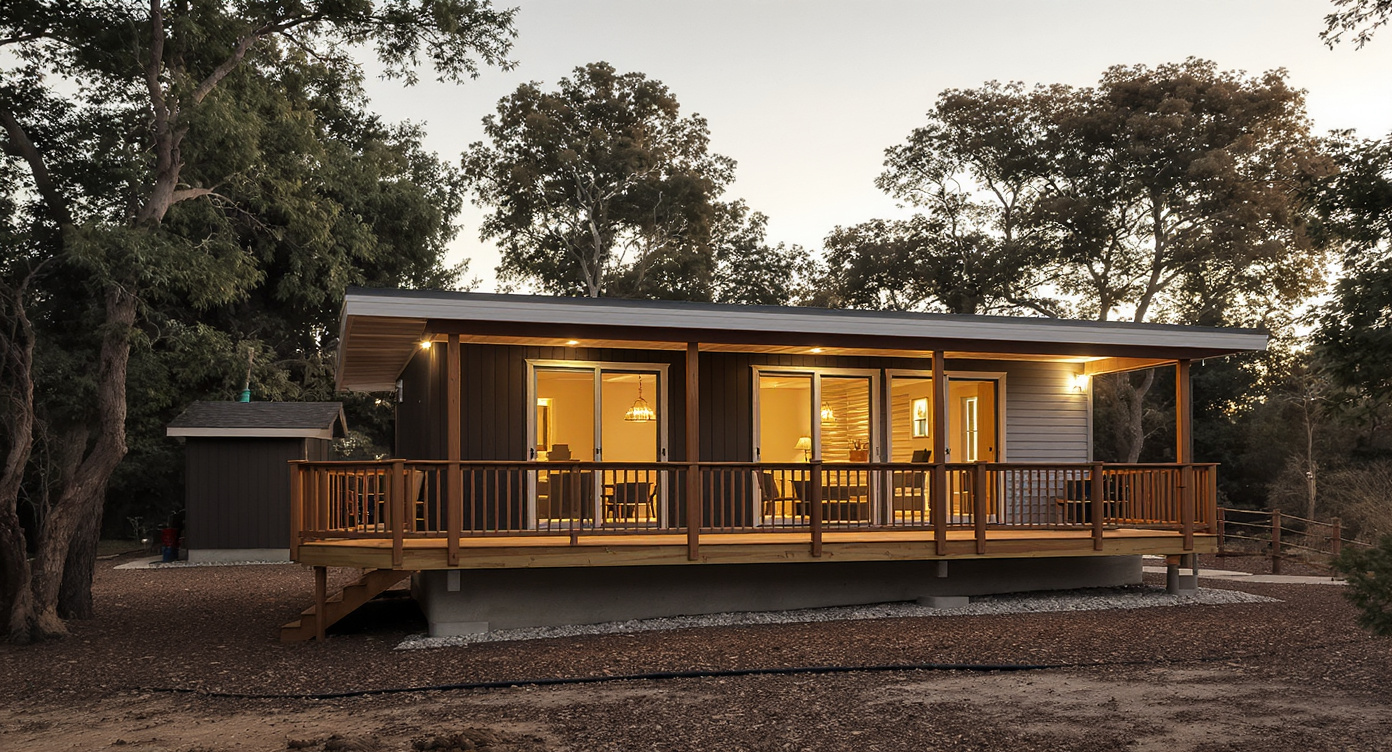
1BR/1BA Cottage (550-650 sq ft). The category workhorse. A separated bedroom, a full bath, a galley or L-kitchen open to a living area, and usually a small covered porch. This is the floor plan that wins as a primary residence for a single person or couple, and it's the dominant ADU shape in California and the Pacific Northwest.
1BR/1BA + Den (750-850 sq ft). Same bones as the cottage with a flex room that functions as an office, nursery, or second sleeping space. If you work from home, this is the entry point.
2BR/1BA (900-1,000 sq ft). Two real bedrooms, one full bath, a combined kitchen-dining-living core. This is the small modular that competes directly with starter single-family homes on price.
| Archetype | Typical Sq Ft | Typical Layout | Factory Price (2026) | Delivered + Installed |
|---|---|---|---|---|
| Studio Loft | 380-450 | Great room + loft + 3/4 bath | $55K-$90K | $110K-$170K |
| 1BR/1BA Cottage | 550-650 | Bedroom + bath + kitchen-living | $80K-$130K | $150K-$220K |
| 1BR + Den | 750-850 | Bedroom + den + bath + living | $110K-$160K | $190K-$260K |
| 2BR/1BA | 900-1,000 | 2 bed + bath + open core | $130K-$180K | $220K-$280K |
2026 Pricing: Factory vs. Delivered + Installed
The number a builder quotes you is almost never the number you write the check for.
Factory price covers the home itself — the box, finished out, sitting on the factory lot. For a small modular under 1,000 sq ft, that's $80K to $180K depending on finish level, brand, and how many options you add.
Delivery is a function of distance from factory to site, plus permits for oversize loads. Budget $3-$8 per loaded mile for single-section modulars. A 600-mile haul is real money — $4,000 to $8,000 — and rural sites with tight access often add a crane day at $2,500-$5,000.
Site work is where projects go off the rails. Clearing, grading, well, septic (or sewer tap), power run, driveway. On a clean rural lot, $25K-$45K. On a tricky lot with rock, slope, or long utility runs, $60K-$100K is not unusual.
Foundation ranges from a $12K pier-and-beam to a $35K full perimeter foundation with crawl space, to $45K+ for a full basement.
Set and finish — the crane day, the button-up, the utility hookups, final inspections — runs $15K-$30K.
Add it up and a 650 sq ft cottage that left the factory at $110K typically lands at $180K-$210K delivered and installed on a clean rural site. The same home in a Bay Area backyard as an ADU? $320K is realistic. The home didn't change. The site did.
The Actual Builders in This Category
A handful of factories actually ship volume in the under-1,000 sq ft lane in 2026. Naming them is not an endorsement — PERCH lists homes from many builders, and we don't inspect any of them. Verify the factory, the warranty, and the dealer yourself before signing.
Clayton Homes (and its subsidiaries — Schult, Karsten). The largest modular and manufactured builder in the US. Their CrossMod line is the one that qualifies for MH Advantage financing and is widely available in the 700-1,000 sq ft range.
Champion Home Builders (Skyline Champion). Strong in the Southeast and Midwest. Their Genesis and Athens Park lines include several sub-1,000 sq ft floor plans built to modular code.
Method Homes (Seattle). Higher-end prefab, often used as ADUs in the Pacific Northwest and California. Their Cabin and Elemental series include 400-900 sq ft units.
Plant Prefab (Rialto, CA). California-focused, ADU-heavy. Their LivingHome series and pre-designed ADU models are common in LA County. Permitting expertise is the value here.
Impresa Modular (multi-state). Network of factories rather than a single plant. Offer custom small modular plans and will quote against your specific lot.
Three or four other regional builders are worth a look depending on where you are — Connect Homes in California, Wheelhaus in the Mountain West, Stillwater Dwellings in the Pacific Northwest. None of these are PERCH companies. We're a marketplace, not a manufacturer.
Permitting and Foundation: Primary Residence vs. ADU
As a primary residence on its own lot, a small modular home is permitted as a single-family dwelling under your local building code. Foundation must be permanent — a pier-and-beam, crawl space, or basement on engineered footings. You'll need a building permit, electrical permit, plumbing permit, septic permit (if no sewer), and a certificate of occupancy at the end. Timeline from permit submission to CO is typically 60-120 days in most jurisdictions.
As an ADU in a backyard, the rules are entirely different and depend heavily on your state and city. In California, statewide ADU law preempts most local restrictions, allows by-right permitting on most single-family lots, and caps fees. In Georgia and most Southeastern states, ADUs are governed entirely by local zoning — some counties allow them, most don't.
Before you put deposit money on a small modular home, get a written letter from your local building department confirming what's allowed on your specific parcel. PERCH's concierge can point you to the right department to call. We can't make the call for you.
Resale Value Math on Small Modular
The old conventional wisdom — that modular and manufactured homes always lose value — is outdated. Two things changed.
First, permanently-foundation modular homes built to state modular code (not HUD code) appraise and resell like site-built homes in most markets. The MLS comp data backs this up: in 2024-2025, modular homes under 1,000 sq ft on owned land in non-urban markets resold at 92-98% of new-build comp value after 5 years.
Second, the ADU resale story is genuinely strong. A primary home with a permitted ADU in the backyard now adds, on average, 25-35% to the primary home's appraised value in markets where ADUs are legal and rentable.
The category that does still depreciate: HUD-code manufactured homes on leased land in a park. Make sure you understand which code your home is built to and whether you own the land underneath it.
PERCH · Home made for your land.
Looking at a small modular home in 2026?
Join the PERCH waitlistRelated guides
The weekly brief for modern modular living.
Design concepts, zoning workarounds, and market strategies — the specific ones the 22 million families in the missing middle actually need.
Under 3 minutes. Every Friday afternoon. Unsubscribe with one click.
Frequently asked questions
What's the cheapest small modular home in 2026?
Can I get a 30-year mortgage on a small modular home?
How long does it take from order to move-in?
Is a modular cottage the same as a manufactured home?
Do I need land before I order?
Can a small modular work as an Airbnb?
What's the resale value after 10 years?
Does PERCH inspect the homes listed?
Join the conversation.
Share your take on this guide.
 Available now
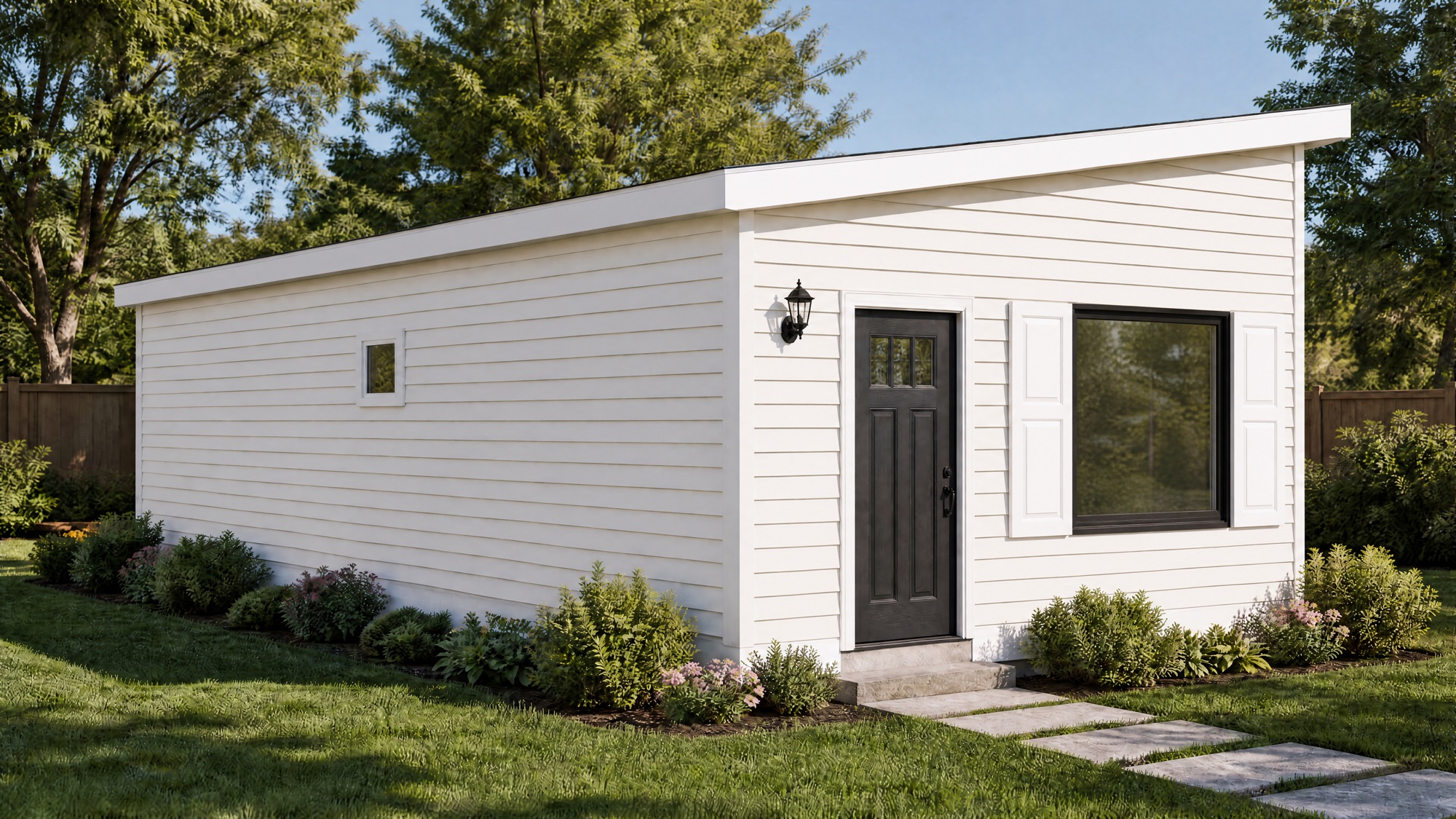
The Nest
Delivered to your parcel · 60–75 days
- PERCH-designed
- Escrow with proof
Refundable within 7 days.