City Guides
Expandable Container Homes in San Diego: The 2026 Affordability and Passive-Income Playbook
San Diego County permits more ADUs than the next three California counties combined — and expandable container homes have taken 18% of the market. Here's why, what they actually cost in 2026, and the rental yields that produce 4-7 year payback.
On this page
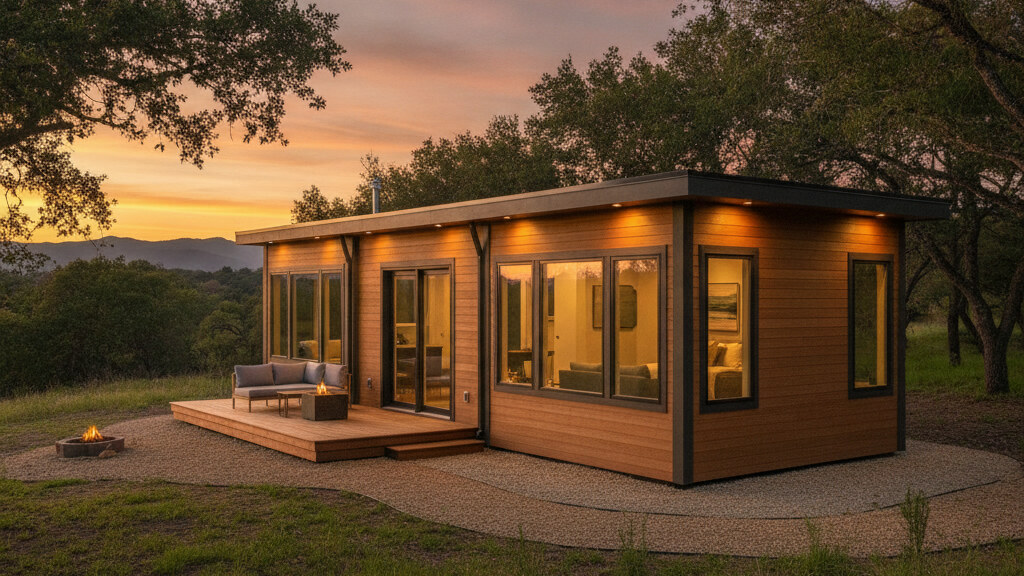
San Diego County has the highest accessory dwelling unit production rate in the United States — 4,847 ADUs permitted in 2024 alone, more than the next three California counties combined — and expandable container homes have captured roughly 18% of that volume. The reason is structural: median single-family home prices in San Diego County crossed $1.04 million in mid-2026, traditional ADU construction averages $385,000, and a fully-permitted expandable container ADU lands between $115,000 and $215,000 all-in. This guide explains why San Diego specifically has become the test market for expandable container ADUs, what the real costs and rental yields look like, and the permit pathway that has worked for the homeowners now collecting $2,800 to $4,600 per month in passive income from a backyard unit.
If you own a parcel in San Diego County and you've watched ADU prices climb without watching the rental yield catch up, this is the operator's view.
Why San Diego Specifically
Three structural factors make San Diego the strongest expandable container ADU market in the country.
Median home prices and rent. San Diego County's median single-family home price of $1.04 million in mid-2026 is the third-highest of any major U.S. metro, and median rent for a one-bedroom unit is approximately $2,475 per month. The gap between rental income and traditional construction cost is wider here than nearly anywhere else.
ADU-friendly state and local policy. California's statewide ADU reform laws, layered with San Diego's own pro-ADU incentives, have made the county the most permissive ADU jurisdiction in America. The City of San Diego's Bonus ADU Program explicitly allows multiple ADUs on single-family parcels where deed-restricted to affordable rent — and even at market rent, the streamlined permit pathway typically clears in 60 to 120 days.
Lot configurations that favor compact footprints. San Diego County's older single-family neighborhoods — North Park, South Park, Normal Heights, City Heights, Encanto — have lot sizes that often cannot accommodate a 1,200-square-foot site-built ADU but easily accommodate a 320 to 640 square foot expandable. The compact footprint clears the setback requirements that would block a larger structure.
What an Expandable Container ADU Actually Costs in San Diego in 2026
| Cost component | Typical 2026 range |
|---|---|
| Expandable container unit (320 to 640 sq ft) | $54,000 to $112,000 |
| Delivery from factory to site | $4,500 to $9,500 |
| Crane placement | $2,800 to $5,500 |
| Permanent foundation with seismic anchoring | $18,000 to $34,000 |
| Site prep, grading, retaining walls if required | $8,500 to $24,000 |
| Utility connections (water, sewer, electric) | $12,000 to $28,000 |
| Permits, plan check, inspections | $4,800 to $11,500 |
| Seismic compliance upgrades (Category D) | $6,500 to $14,000 |
| Title 24 energy compliance | $3,200 to $7,500 |
Delivered, permitted, livable all-in total: $114,300 to $246,000. The lower half of the range covers most North County and inland East County placements; the upper end covers coastal premium neighborhoods, hillside sites requiring retaining walls, and complex utility runs.
Why Title 24 and Seismic Costs Are Non-Optional
California's Title 24 energy efficiency standards require every new residential structure to meet specific insulation, window U-value, HVAC efficiency, and increasingly photovoltaic readiness requirements. San Diego County also sits in Seismic Design Category D under the International Building Code, requiring engineered anchorage and base-shear capacity that exceeds most non-California jurisdictions.
Factory-built containers shipped from mainland or international producers without the California-specific upgrades will not pass plan check. The compliance cost is real and unavoidable — but reputable factories serving the California market price it in. Sellers who don't are selling a unit the county building department will refuse to permit.
The Rental Income Math
For a permitted 400 to 640 square foot expandable ADU on a typical San Diego County lot, current rental income by submarket in mid-2026:
| Submarket | Monthly rent (long-term) | Annual gross | Annual net after expenses |
|---|---|---|---|
| Coastal (La Jolla, Encinitas, Carlsbad) | $3,800 to $5,400 | $45,600 to $64,800 | $38,200 to $54,400 |
| North County inland (San Marcos, Escondido) | $2,600 to $3,800 | $31,200 to $45,600 | $26,100 to $38,200 |
| Central San Diego (North Park, Normal Heights) | $2,800 to $4,200 | $33,600 to $50,400 | $28,200 to $42,300 |
| South Bay (Chula Vista, National City) | $2,200 to $3,200 | $26,400 to $38,400 | $22,100 to $32,200 |
| East County (El Cajon, Lakeside, Santee) | $2,000 to $2,900 | $24,000 to $34,800 | $20,100 to $29,200 |
At median Central San Diego rent of $3,400 per month, a $165,000 all-in ADU pays itself off in approximately 4.8 years before any property appreciation contribution. The structural service life of a properly-maintained code-compliant expandable container is 30+ years.
For short-term rental (Airbnb/Vrbo), coastal and Central San Diego ADUs typically gross $4,500 to $7,800 per month net of platform fees and cleaning. The City of San Diego restricts whole-home short-term rentals through its STRO licensing program, but an owner-occupied primary residence with an ADU rented short-term is generally permitted under the Tier 2 license.
The Permit Path That Actually Works
The 60 to 120 day City of San Diego ADU permit timeline assumes the application is complete on first submission. The cases that drift to 180+ days almost always share the same missing pieces.
The five documents that get an ADU plan check approved on the first review:
- Site plan with all setbacks, easements, and the existing primary residence shown to scale
- Floor plan with code-compliant minimum room sizes and egress
- Structural calculations stamped by a California-licensed structural engineer (required for SDC D)
- Title 24 energy compliance documentation
- Utility service connection plan with separate metering or sub-metering as required
Reputable factories serving California provide #2 through #4 with the unit purchase. The owner's contractor handles #1 and #5. Skipping any of these guarantees a plan correction cycle that adds 30 to 60 days minimum.
Why Expandable, Not Standard Container
Standard 20-foot or 40-foot non-expandable containers can be permitted as ADUs in San Diego, but expandable units typically out-perform them on three metrics that matter to homeowners.
Usable floor area per dollar. A 20-foot expandable opens into approximately 320 square feet of interior space. A non-expandable 20-foot container delivers approximately 160 square feet. The expansion mechanism roughly doubles usable area at roughly 60% additional cost — significantly better dollar-per-square-foot than going to a 40-foot non-expandable.
Setback flexibility. Expandables fit in tighter lot configurations because the shipping footprint is smaller than the deployed footprint. A unit can be craned into a side yard or backyard where a 40-foot non-expandable cannot maneuver.
Resale. ADUs sized 320 to 480 square feet are the most rentable and most resaleable configuration in the San Diego market. The expandable form factor hits that target while preserving the lower factory cost of the 20-foot base unit.
The Real Path for San Diego Homeowners
The most common buyer profile in 2026 is a San Diego County homeowner with $200,000 to $400,000 of home equity who wants to convert a backyard or side yard into a permitted income-producing ADU without taking on a full traditional construction project.
The path that works:
- Pull your parcel's zoning, lot dimensions, and existing improvements from the SanGIS public map
- Confirm with the City or County planning department that an ADU is permitted on your specific parcel
- Get bids from at least three California-compliant expandable container factories
- Select the factory and order the unit before site work begins (factory lead times are 60 to 90 days)
- Engage a licensed San Diego County general contractor for foundation, utilities, and site work
- Submit complete plan check application with all five documents above
- Permit, build, inspect, certificate of occupancy, list for rent
End-to-end timeline from decision to first rent check: typically 5 to 8 months.
PERCH was built to make this entire path transparent — verified factories, real San Diego County permitting timelines, real rental comps, and concierge support for the buyers who want a single accountable partner instead of a dealer maze.
Ready to convert your San Diego County lot into income — without the dealer markup or the permitting guesswork? Join the PERCH waitlist → for nationwide verified inventory and concierge support.
Related guides
Frequently asked questions
Are expandable container homes legal as ADUs in San Diego?
How long does the San Diego ADU permit take?
What's the all-in cost of a San Diego expandable container ADU in 2026?
Can I rent my San Diego ADU short-term on Airbnb?
What's the payback period at median rent?
Why expandable instead of a standard container?
Do I need a California structural engineer?
Keep reading
Join the conversation
Comments
Reader questions get answered. Real names and a working email — that's it.