Resale Wedge
How to Sell Your Modular Home When the Park Just Sold to a REIT
Your park has new owners. Lot rent is rising. Here's the exact 7-step playbook to sell a modular home cleanly when a REIT buys the park — including the title, pricing, and park-approval moves the new operator is counting on you not knowing.
On this page
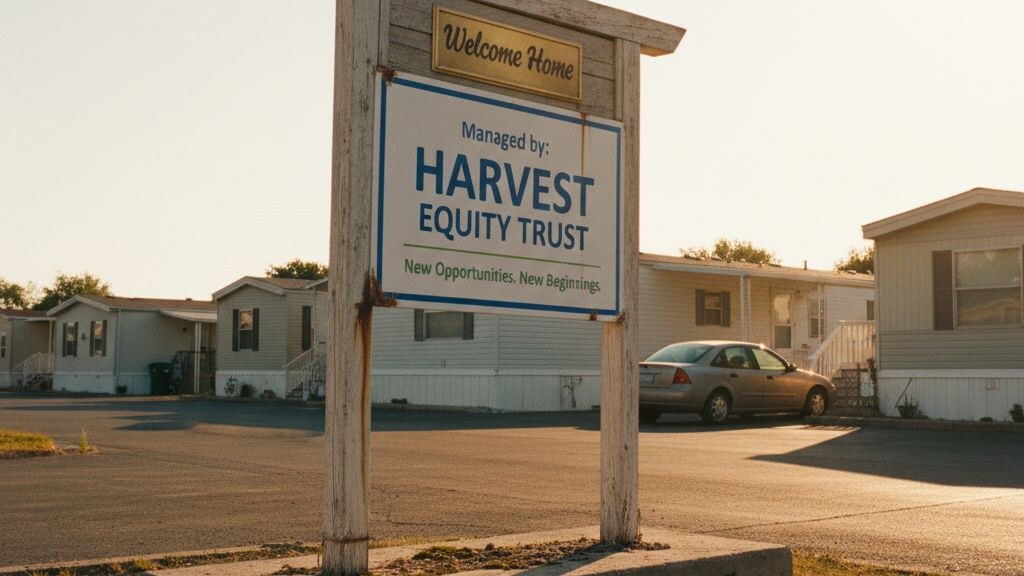
You got the letter. Your park has new owners — a real estate investment trust most residents have never heard of, with a logo that looks like a stock photo. Lot rent is going up. The community manager you trusted is gone. The home you own sits on land you don't, and now the rules are changing.
If you need to sell a mobile home because the park was sold, you are not stuck. You are early. The window to act cleanly is short, but it exists, and the residents who move first almost always recover more value than the ones who wait six months for permission. This guide walks through exactly what to do, in the order to do it, with the specific tradeoffs that the institutional buyer is counting on you not knowing about.
Why a REIT Buying the Park Changes Everything
Mobile home parks have been the highest-margin asset class in residential real estate for almost a decade. Institutional buyers — Sun Communities, Equity Lifestyle Properties, RHP Properties, Yes Communities, and a long bench of private equity rollups — are buying parks at a pace that surprises even the people writing the headlines. The thesis is simple: residents own the homes, the operator owns the land, and the homes are extremely expensive to move. Once the operator owns the rent, the residents have nowhere to go.
When the new owner takes over, three things happen in sequence. Lot rent rises, often within the first 60 days of the takeover window, frequently by 10 to 25 percent the first year. Park rules tighten, usually around guest policies, vehicle storage, exterior modifications, and approval of new buyers. The community manager changes, and the person who used to wave you through the gate is replaced by a property-management company in another state with a tenant portal and a 1-800 number.
The combined effect on your home's resale value is real. A home that was worth $65,000 when lot rent was 425 a month is worth less when lot rent is 550, because the new buyer must qualify for a higher monthly carrying cost on the same depreciating asset. The longer you wait, the worse this math gets — and the REIT is not going to slow down.
Why You Have More Leverage Than the Letter Suggests
The institutional buyer needs the residents who can sell to sell quickly to qualified buyers the park approves, because empty homes hurt occupancy numbers and the operator wants the lot revenue to keep flowing. They are not, in most states, allowed to block your sale arbitrarily. They will try to slow it. They will not, in most cases, succeed if you move fast and document everything.
Step 1 — Find Your Title and Confirm Ownership
The first move is paperwork, not pricing. In most states, a manufactured home is titled like a vehicle — through the state DMV — until it has been permanently affixed to land you own and "converted to real property." Park-owned-land residents almost never complete that conversion, which means your home almost certainly still has a vehicle title.
Find the original title. Check the safe, the file box, the closing folder from when you bought the home. If your home is a double-wide or triple-wide, you need a title for each section. According to HUD's manufactured housing guidance, each transportable section is treated as a distinct unit for titling purposes in most states. Missing one title slows your closing by 30 to 90 days while you request a duplicate.
If you do not have the title in hand, request a duplicate from your state DMV the same day you start this process. The lead time varies by state — some issue duplicates in 7 to 10 days, others take 30 or more. The earliest mistake sellers make is assuming the title will turn up, then losing the buyer when it does not.
What Counts as a Clean Title
A clean title means the home is in your name, with no active liens, no co-owners who did not sign off, and no probate questions if a former owner has passed. If your title shows a lender lien from a loan you've paid off, request a lien-release letter from the original lender — even if that lender no longer exists. If your title is in the name of a deceased spouse or parent, you'll need probate documentation. None of these problems are unusual. All of them take time. Start now.
Step 2 — Get Your Home Inspected and Documented
A $200 inspection is the single best investment a manufactured-home seller makes. It does three things: it gives you a defensible asking price, it removes the buyer's leverage to renegotiate at closing, and it surfaces the small fixes that take $500 to handle now but kill the deal at the contingency stage.
Hire a manufactured-home inspector specifically — not a residential home inspector who works on stick-built houses. The two trades inspect different things. A good manufactured-home inspector checks the chassis, axles (if still present), tie-downs, skirting, plumbing under-floor connections, HVAC ducting integrity, and the roof seam pattern. They will document the home's HUD data plate (the metal label that proves it meets the 1976 federal construction code) and the serial numbers on each section.
Take photographs. Lots of them. The fastest way to lose a sale is for a serious buyer to drive past your home, see one cracked skirting panel, and assume the worst. Show the home cleanly photographed in good light — your listing leads with these.
What to Fix and What to Leave
Fix anything that affects safety, water, or visible damage at the entry. Leave anything cosmetic that the next owner is likely to personalize. The 80/20 rule applies: 80 percent of your inspection report can be left as-is and disclosed, but the 20 percent that involves moisture, electrical, or HVAC needs to be addressed before listing. Disclosed issues do not kill deals. Discovered issues do.
Step 3 — Decide Your Sale Path: Stay in Park vs Move the Home
This is the decision that determines everything downstream. Selling to a buyer who will keep the home on the lot requires park approval of the new resident. Selling to a buyer who will move the home requires a transport quote, a destination, and an exit plan.
Selling in place is faster, easier, and almost always recovers more value, because the buyer is paying for a turn-key situation. The risk is that the new owner of the park has tightened buyer-approval criteria — credit minimums, income multiples, background checks — and your buyer pool just shrank.
Selling for relocation is harder but uncouples you from the park entirely. Moving a single-wide manufactured home typically costs $5,000 to $8,000 over short distances; a double-wide can hit 15,000 to 25,000 once you include the second section, escort vehicles, permits, and the cranes at either end. According to industry transport pricing, hauling rates run $15 to $20 per mile, before crane and permits.
Run both paths in parallel for the first three weeks. The market tells you which one is real.
PERCH · Find yours. Free yours.
Find the homes that fit how you actually plan to buy, place, and live.
Join the waitlistStep 4 — Set a Price That Reflects the New Reality
Pricing a manufactured home in a park that just changed hands is harder than pricing a stick-built home, because the appraisal-comp infrastructure for manufactured housing is broken. According to Fannie Mae's appraisal guidance, appraisers are required to use at least two comparable manufactured-home sales — and in many markets, those comps simply do not exist within a useful radius. The result is that asking prices on similar homes diverge wildly.
Build your price from three inputs. The first is recent sales of similar homes in your park or comparable parks within 25 miles. The community manager often has this data and will sometimes share it. The second is the current MHVillage and Facebook Marketplace listings for your home's footprint, age, and condition — these set the ceiling the market will tolerate. The third is the NADA Manufactured Housing Cost Guide, which is the closest the industry has to a Kelley Blue Book.
Subtract from your top-end number for the lot-rent direction. If lot rent just rose 18 percent, your buyer is carrying that for the next 12 months, and your price needs to compensate. Subtract again for any age-driven financing limits — HUD-code homes built before 1976 cannot be financed with most lenders, and homes older than 20 years face restricted loan options. These constraints shrink your buyer pool and your price.
Two-Price Strategy
List with two prices in mind: the public asking price, and the private floor. The asking price is what shows on the listing. The floor is the number below which you'd rather move the home or hold it. Set your floor in week one and do not change it under pressure. Buyers ask for big discounts at the contingency stage. Sellers who already know their floor do not negotiate from fear.
Step 5 — List Aggressively and on Multiple Channels
The default channel for manufactured-home resale is MHVillage. List there first — it has the highest traffic for active buyers. Then list on Facebook Marketplace (which converts surprisingly well for under-100k homes), Craigslist (still alive for manufactured housing), and any state-specific manufactured-home boards.
Avoid the Zillow trap. Zillow technically allows manufactured-home listings, but the algorithm de-prioritizes them in search, and the buyer base on Zillow is largely conditioned to stick-built expectations. The leads waste your time.
Your listing must include: at least 12 photographs covering exterior, all rooms, kitchen, bathroom, utility area, skirting, and entry; the HUD data plate confirming year of build; total square footage and section dimensions; lot rent (current and direction); included appliances; and a clean one-paragraph reason for selling. "Park was sold to a new operator and lot rent is rising" is honest, normal, and increasingly common — buyers shopping for manufactured housing in 2026 understand this immediately.
What to Leave Out of the Listing
Do not advertise the home's lifetime selling price, its original purchase price, or your loan payoff balance. Buyers will ask. Sellers who anchor on what they paid lose negotiating leverage and waste time on tire-kickers. Price the home for what it is worth today.
Step 6 — Pre-Qualify Buyers Before They Walk Through
The biggest time-waste in manufactured-home resale is the buyer who falls in love with the home, signs the offer, and then discovers their financing won't approve a chattel loan on a 1998 single-wide with 110 lender denial.
Ask three questions before scheduling a walkthrough. Will the buyer pay cash or finance? If financing, do they already have a pre-approval letter naming a manufactured-home lender? Are they aware that financing manufactured homes is different from financing stick-built homes? The buyers who answer yes to all three are real. The buyers who answer no will not close, even if they offer above asking.
Most park operators require new buyers to complete an application and pass a credit and background check before being approved as a resident. The application typically takes 5 to 10 business days. Build this into your timeline — and ask the park manager to share the approval criteria up front, so you can pre-screen against it before introducing a buyer.
Step 7 — Negotiate Park Approval and Close
If you are selling in-place, the park's approval process becomes the most fragile point of the transaction. The new institutional operator has a stronger incentive than the previous local owner to enforce credit minimums, income multiples, and pet rules — they're trying to upgrade tenant quality in the rollup.
Stay professional with the property-management contact. Document every conversation in writing — email after every call, summarizing what was discussed. If a park unreasonably blocks a qualified buyer, you have legal recourse in most states, but you need the paper trail to invoke it. Mobile-home-park tenant law is state-specific; the Manufactured Housing Action Network tracks state-by-state resident-rights legislation worth reviewing before any dispute escalates.
When the buyer is approved, run a clean closing. Use a title-transfer service or a manufactured-home closing attorney — not a stick-built realtor's closing process. The DMV title transfer, the lien release (if applicable), the lot-lease assignment, and the prorated lot rent all need to happen on the same day. Skipping any of these creates problems that surface six months later.
Three Common Mistakes — and How to Avoid Them
The first mistake is waiting too long. Residents who try to "see how the new owner is" for six months almost always lose money. The second mistake is selling for cash to the first wholesaler who knocks on the door — these buyers exist specifically to capture distressed sellers at 40 to 60 percent of fair value. The third mistake is fighting with the new park operator over old rules. The operator is not negotiating in good faith if they are part of an institutional rollup. Get the closing done. Save the fight for after the title transfers.
What PERCH Does Differently
Most manufactured-home resale platforms are classifieds. They list your home and disappear. The buyer arrives, the dealer-tied financing kills the deal at the last minute, the park rejects the application, and your listing sits another 90 days.
PERCH operates as a concierge plus a marketplace. We handle the title cleanup, route buyers through pre-qualified lenders that actually finance manufactured housing, get transport quotes when relocation is the right path, and coordinate the park-approval process so it does not become the bottleneck. The fee is fixed at the start. The outcome is a closed sale, not a posted ad.
PERCH · Find yours. Free yours.
Find the homes that fit how you actually plan to buy, place, and live.
Join the waitlistRelated guides
- Modular homes explained — the 2026 buyer's guide
- Modular vs prefab vs container homes: which is right for you?
- How to finance a tiny house in 2026
The weekly brief for modern modular living.
Design concepts, zoning workarounds, and market strategies — the specific ones the 22 million families in the missing middle actually need.
Under 3 minutes. Every Friday afternoon. Unsubscribe with one click.
Frequently asked questions
Can a new park owner force me to sell my home?
How long does it take to sell a manufactured home in a sold park?
Will a REIT block my sale to a qualified buyer?
What if my home is older than 1976 (pre-HUD code)?
Can I sell my home before the new park owner takes over officially?
How do I find buyer-friendly lenders for manufactured homes?
Should I price the home with or without appliances?
What if I owe more on my home than it's worth?
Keep reading
Join the conversation
Comments
Reader questions get answered. Real names and a working email — that's it.