Guides
The Best Cash-Flow Metros for ADU Investors in 2026
On this page
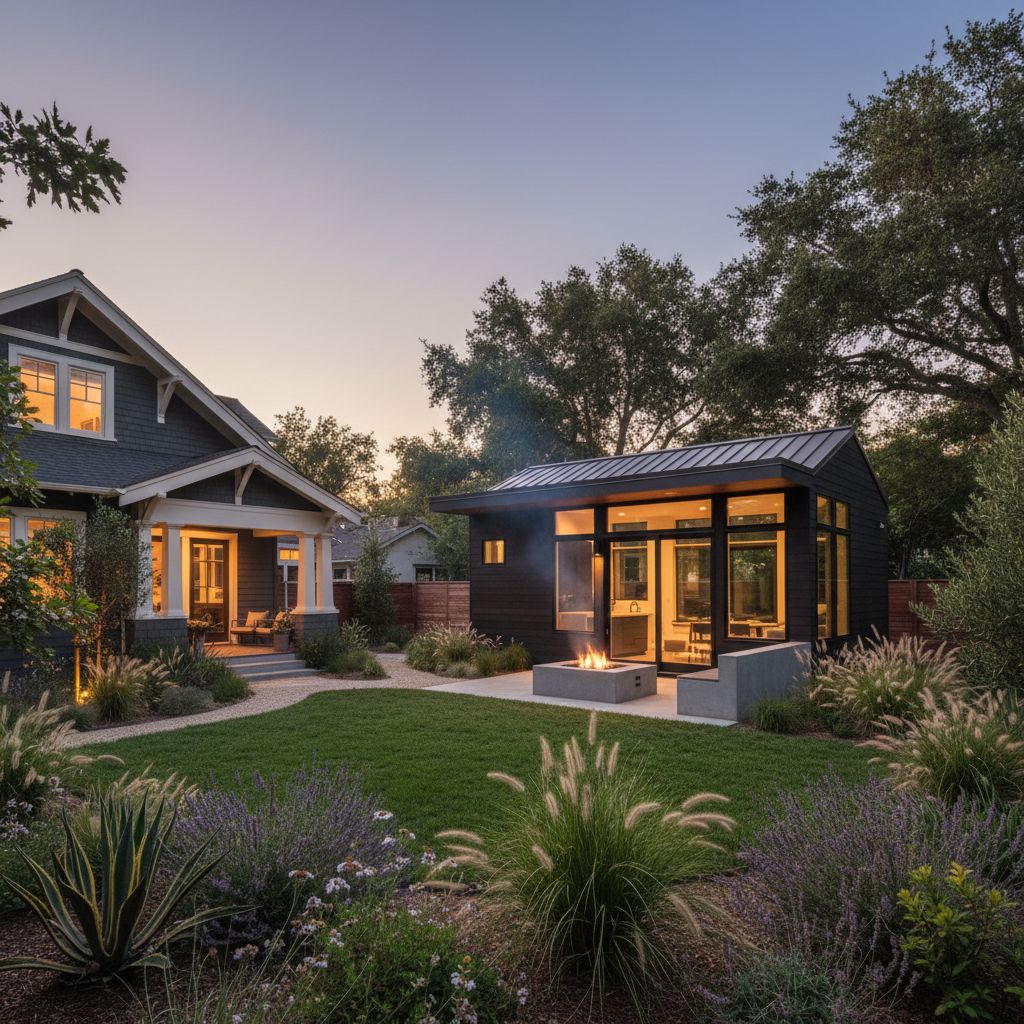
Backyard ADUs — accessory dwelling units placed on existing single-family lots — have shifted from a niche housing category to one of the fastest-growing rental-income plays in the country. In the metros where zoning has opened up and financing programs exist, a $90-140K prefab ADU on a paid-off backyard lot can generate $1,600 to $3,200 in monthly rental income. The gross-yield math beats most conventional single-family rentals by 2-4x.
But the math only works in the right metros. We pulled HUD FY2025 Fair Market Rents at the metro level, cross-referenced against Zillow ZHVI state-level home values, and ranked the top US metros for ADU cash flow in 2026. This is the working shortlist for anyone thinking about backyard rental income.
How We Ranked
We used two datasets: HUD FY2025 Fair Market Rents for the 2-bedroom rental benchmark at the metro level, and Zillow ZHVI at the state level for the home value denominator. The gross yield formula is:
Gross Rental Yield = (2BR FMR × 12) / State ZHVI
We then filtered for metros where ADU legislation is permissive — either through state ADU laws (California, Oregon, Washington, Colorado) or through local municipal ordinances that explicitly permit backyard ADUs on single-family lots. Metros that have strong yield ratios but restrictive ADU zoning were excluded from the top-10 shortlist.
The full state-by-state Rental Yield ranking is published in the PERCH Rental Yield Index. For a specific ZIP-level estimate, the PERCH Yield calculator returns an answer in under 10 seconds.
The Top 10 ADU Cash-Flow Metros in 2026
1. Fayetteville-Springdale-Rogers, Arkansas
NW Arkansas has become one of the fastest-growing metros in the country, anchored by Walmart's global HQ, Tyson Foods, and JB Hunt. Rent has grown 40% since 2020, while home values have grown more slowly. HUD FY2025 puts the metro 2BR FMR near $1,150; state ZHVI in the low-$200Ks. Fayetteville's local zoning permits ADUs on most single-family lots, with a fast-track permit path launched in 2024.
Gross yield on a $120K prefab ADU generating $1,400/mo in Fayetteville: 14%. Cash-on-cash returns of 15-22% are achievable with modular product on family land.
2. Little Rock, Arkansas
Central Arkansas's largest metro. 2BR FMR near $1,050. State ZHVI in the low-$200Ks. Little Rock's Downtown Housing Overlay permits ADUs by right in most residential zones. HUD-code and modular product both approved.
Gross yield: 12-14%. Strongest downtown-adjacent submarkets: Hillcrest, SoMa, Riverdale.
3. Fargo, North Dakota
Fargo's rental market held its post-Bakken rent floor without a home value spike. 2BR FMR near $1,100. State ZHVI in the mid-$200Ks. Fargo permits ADUs in R-1 zones with off-street parking and setback compliance.
Gross yield: 13%. Winter climate demands attention on prefab insulation specs — cold-climate modular product (R-40 walls, triple-pane) is the fit.
4. Cedar Rapids, Iowa
Iowa's second-largest metro after Des Moines. Strong stable rental market backed by Rockwell Collins, ACT, and Cargill. 2BR FMR near $1,050. State ZHVI in the mid-$200Ks. Cedar Rapids ADU regulations permit accessory dwellings on lots over 6,000 sqft.
Gross yield: 12-13%. IRC modular tiny homes are the product-market fit here.
5. Des Moines, Iowa
Iowa's capital and largest metro. Backed by insurance industry (Principal, Nationwide) and Wells Fargo operations. 2BR FMR near $1,100. State ZHVI in the mid-$200Ks. Des Moines updated its ADU code in 2023 to permit both attached and detached units.
Gross yield: 12-13%.
6. Tulsa, Oklahoma
Tulsa has an active downtown redevelopment corridor and a growing tech scene. 2BR FMR near $1,000. State ZHVI in the low-$200Ks. Tulsa's Comprehensive Plan supports ADU-by-right in most residential zones. Downtown-adjacent submarkets support premium rent.
Gross yield: 12-13%.
7. Oklahoma City, Oklahoma
The larger of Oklahoma's two big metros. Downtown revitalization, energy sector, and healthcare drive the rental market. 2BR FMR near $1,050. State ZHVI in the low-$200Ks. OKC permits ADUs on most single-family lots with permit review.
Gross yield: 12-13%.
8. Wichita, Kansas
Wichita's aerospace and manufacturing base gives the rental market unusual stability. 2BR FMR near $1,000. State ZHVI in the low-$200Ks. Wichita permits detached ADUs in R-1 zones with lot size minimums.
Gross yield: 12-13%.
9. Omaha, Nebraska
Anchored by Berkshire Hathaway, Union Pacific, and TD Ameritrade. 2BR FMR near $1,150. State ZHVI in the mid-$200Ks. Omaha permits ADUs in select residential zones — check specific parcel with the city's zoning lookup tool.
Gross yield: 11-13%.
10. Lincoln, Nebraska
Nebraska's capital and University of Nebraska hub. Student-adjacent rental demand supports year-round occupancy. 2BR FMR near $1,050. State ZHVI in the mid-$200Ks. Lincoln permits ADUs by right in most residential districts, updated in 2022.
Gross yield: 11-13%.
The Extended Shortlist — Coastal Metros Where ADU Legislation Compounds Yield
Coastal metros don't crack the top 10 on gross yield alone, but four of them deserve inclusion for a combined-factor case where ADU legislation and high absolute rents make the play viable at higher all-in cost:
- Los Angeles, California — LA County's aggressive ADU legalization since 2017 has made backyard ADU rentals a durable rental-income category. 2BR FMR near $2,400. Gross yield ~5% on state basis but jumps to 8-11% on submarket basis (Long Beach, San Fernando Valley) where family land is already owned.
- Portland, Oregon — Oregon's statewide ADU legislation (HB 2001) permits ADUs on all residential lots. Strong absolute rents.
- Denver, Colorado — Colorado's growing ADU-permissive legislation, plus a rental market that hasn't cooled.
- Seattle, Washington — Washington state's ADU-friendly framework plus one of the strongest tech-city rental markets.
These metros are where absolute rental income is highest, even if gross-yield percentages sit below the mid-South top 10. On family land already paid for, they can be the strongest total-dollar play.
What Product Class Works Best for ADU Cash-Flow
- HUD-code manufactured tinies ($65K-$130K) — deepest financing access, fastest delivery, widest state legality. The default for entry-level ADU cash-flow.
- IRC modular tinies ($95K-$180K) — better appreciation, cleaner zoning path in urban submarkets, longer delivery.
- Foldable/expandable homes ($32K-$75K shell) — lowest all-in cost, highest potential yield percentage, but certification risk. See our Foldable Homes Complete 2026 Guide.
- Container conversions ($45K-$195K) — strongest fit for lots with limited setback flexibility. Reputable operators only.
Our full Prefabricated Tiny Homes Complete 2026 Guide covers each category's tradeoffs.
Financing an ADU as a Rental
Financing an ADU is easier than most people expect. If the ADU is built on land you already own, the most common paths are:
- HELOC — home equity line of credit against the primary residence. Rates float but principal is available immediately.
- Cash-out refinance — pull equity out of the primary residence and pay for the ADU with proceeds.
- Renovation loan (FHA 203k, Fannie HomeStyle) — one loan covers both primary residence purchase/refi and ADU construction.
- Specialty ADU financing — programs like the California CalHFA ADU Grant Program provide up-front funding.
If you're financing the modular or manufactured unit directly, the PERCH Financing Finder matches your product class and certification to the right specialty lender track.
Related guides
- Prefabricated Tiny Homes: Complete 2026 Guide
- Foldable Homes: Complete 2026 Guide
- The 10 Most Affordable States to Rent in 2026
- PERCH Rental Yield Index — State-by-State 2026
- PERCH Financing Finder — Match a Modular-Friendly Lender
- PERCH Yield Calculator — ZIP-Level Rental Income Estimate
The weekly brief for modern modular living.
Design concepts, zoning workarounds, and market strategies — the specific ones the 22 million families in the missing middle actually need.
Under 3 minutes. Every Friday afternoon. Unsubscribe with one click.
Join the conversation
Comments
Reader questions get answered. Real names and a working email — that's it.