Guides
Prefabricated Tiny Homes: The Complete 2026 Guide
On this page
Prefabricated tiny homes are the fastest-moving product category in US small-footprint housing. In the last three years, the market has expanded from a handful of niche builders selling one-off custom units to a mature ecosystem of factory-built modular tinies, expandable container homes, folding-panel homes, and IRC-code park models — all shippable across the country in weeks, not months.
This guide is our full 2026 breakdown: what a prefabricated tiny home actually is, how the categories differ, real 2026 pricing, financing paths, where you can legally place one, and how to think about rental yield if you're planning to rent it out.
What "Prefabricated" Actually Means
A prefabricated (or "prefab") tiny home is built inside a factory rather than on the site where it will sit. That single distinction changes everything downstream — cost, timeline, quality, permit path, and financing.
There are two sub-categories worth naming:
- Modular: the home is built in factory modules, shipped to the site, and assembled on a permanent foundation. It becomes real property once assembled. Modular tiny homes are built to IRC (International Residential Code) — the same code as a stick-built home — and get a state modular insignia.
- Manufactured: the home is built on a permanent chassis to the federal HUD code and shipped as a complete unit. HUD-code homes get a HUD tag, and can be titled as either real property (on a permanent foundation) or personal property (chattel).
Both are prefabricated. The confusion comes because in casual usage "prefab" often means "not manufactured" — but by any technical definition, HUD-code manufactured homes are also prefab. This guide covers both.
The Four Categories of Prefabricated Tiny Homes
1. HUD-Code Manufactured Tiny Homes
These are the descendants of what used to be called "mobile homes" — factory-built to the federal HUD Manufactured Home Construction and Safety Standards, which apply nationwide. In the tiny footprint (400-800 sqft), manufacturers like Clayton Homes, Cavco, and Champion offer real 2026 product from $65,000 to $130,000 turnkey.
HUD-code homes have the widest financing access — chattel loans through 21st Mortgage, Triad, and Vanderbilt; FHA Title I loans up to $96,000; FHA Title II mortgages if placed on a permanent foundation. Every US state allows HUD-code product, though local zoning may restrict where.
2. IRC-Code Modular Tiny Homes
Built to the same International Residential Code as a stick-built house, modular tinies get a state-issued modular insignia and are legally indistinguishable from a site-built home once assembled. Product runs from $95,000 to $180,000 turnkey depending on spec.
Builders in this category include Plant Prefab, Dvele, Method Homes, and Connect Homes. Financing paths open up to conventional mortgages (Fannie MH Advantage, Freddie CHOICEHome), FHA Title II, and VA and USDA Rural for eligible buyers.
3. Expandable / Foldable / Panel-Kit Homes
The fastest-growing category — foldable and expandable homes that ship flat-packed in a container and expand at the site to 400-800 sqft. Companies like Boxabl, Cover, and a growing set of Chinese import brands compete at the entry tier ($32,000 to $75,000 for the shell).
The category is where our 2026 market is expanding fastest, and where regulatory clarity is still developing. Most expandable homes are treated as either park models (RVIA-certified) or as modular units if they meet IRC on-site. Buyers should confirm both the product certification and the local zoning path before purchase — the PERCH Buyer Education library covers each state's regulatory posture.
4. Container Conversions
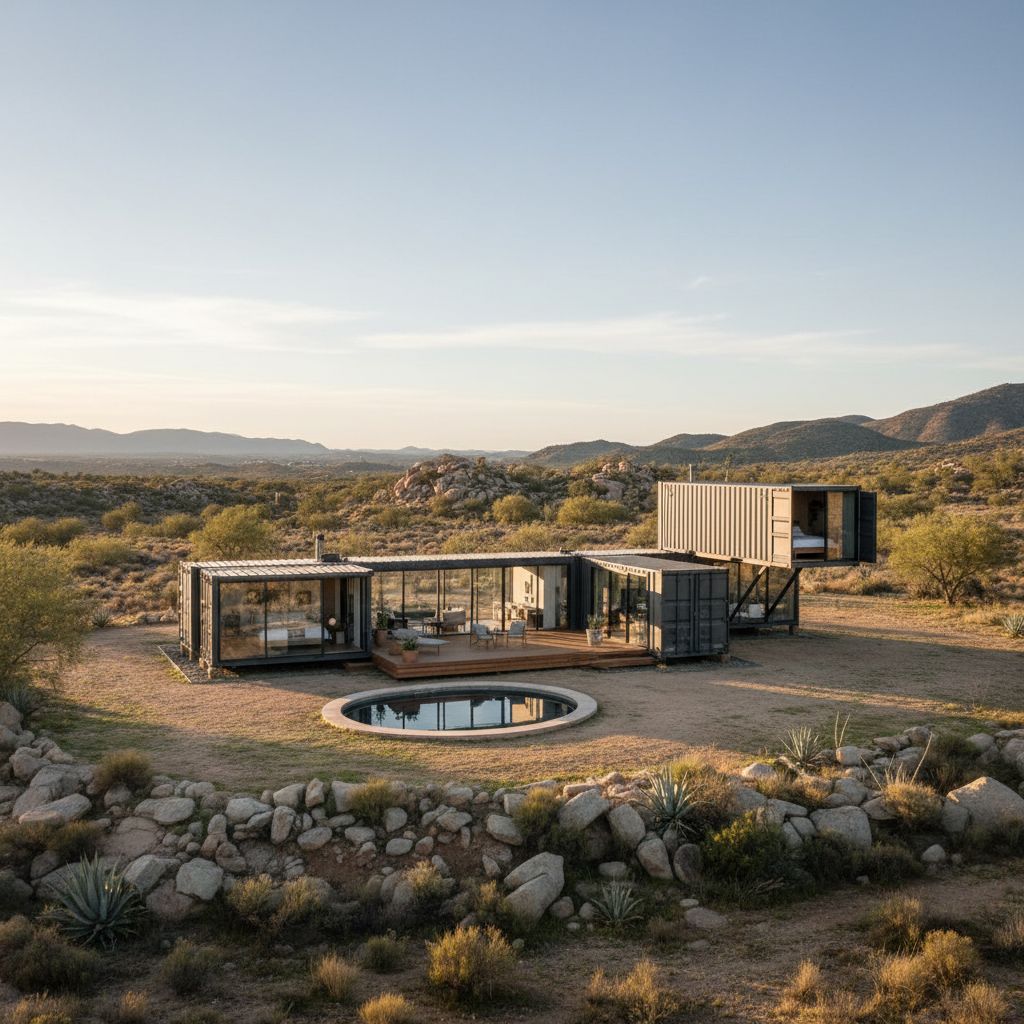
Steel shipping containers converted into dwellings, either as single-container tinies (160-320 sqft) or as multi-container assemblies (640-1,280+ sqft). Container homes vary widely on code path — some sold as RVIA park models, some as HUD-code, some as IRC modular. Reputable US operators like Backcountry Containers, Custom Container Living, and Honomobo build to modular insignia standards.
2026 pricing runs from $45,000 for a single container conversion to $195,000+ for premium multi-container designs.
What Prefabricated Tiny Homes Are NOT
- They are not tiny homes on wheels (THOWs). THOWs are DMV-titled as trailers or RVs. They are not real property. They cannot get a conventional mortgage. Financing is through RV lenders, personal loans, or manufacturer finance. This guide covers foundation-placed prefab tinies only.
- They are not park model RVs (unless specifically labeled). Park models are RVIA-certified units up to 400 sqft designed for recreational use. Some prefab tinies double-serve as park models; most do not.
- They are not accessory dwelling units (ADUs) by default. An ADU is a use category — a second dwelling on a residential lot. A prefab tiny home can serve as an ADU if the local jurisdiction permits it, but "prefab tiny home" and "ADU" are not the same category.
Real 2026 Pricing
| Category | Turnkey Range | Financing Access | Typical Delivery Time |
|---|---|---|---|
| HUD-code manufactured tinies | $65K–$130K | Widest — chattel, FHA Title I/II | 6-10 weeks |
| IRC-code modular tinies | $95K–$180K | Conventional MH programs, FHA Title II, VA, USDA | 10-16 weeks |
| Expandable/foldable panel homes | $32K–$75K (shell) | Specialty/personal loans, some conventional if IRC | 3-8 weeks |
| Container conversions | $45K–$195K | Specialty lenders, some conventional if modular insignia | 8-14 weeks |
Turnkey means the price includes the delivered unit and basic installation on a prepared site. It does NOT include the land, foundation, utility connections, permit fees, or delivery beyond a set radius. Actual delivered-to-livable cost typically adds 20-40% to the turnkey figure.
Where You Can Legally Place One
Legal placement depends on three layers of rule:
- State code path. Every state permits HUD-code product. Every state permits IRC modular product. Expandable and container product paths vary by state — some accept as modular, some require additional local review.
- County and municipal zoning. The local zoning ordinance determines whether a dwelling can be placed on a given lot. Minimum square footage rules (often 600, 800, or 1,000 sqft) will disqualify smaller tinies in many jurisdictions.
- HOA and deed restrictions. Private deed restrictions and HOA covenants routinely exclude manufactured product and may restrict modular below a certain size.
The PERCH ADU Guides library covers state-by-state legality for every US state. Cross-check against Find an ADU Builder in Your State for local expertise.
Financing a Prefabricated Tiny Home
Financing is where prefab tiny buyers get stuck. The good news: real programs exist. The bad news: most conventional lenders will decline. The PERCH Financing Finder exists precisely for this reason — matching a buyer's product class, foundation type, credit tier, and state to the lenders who will actually finance the deal.
Key financing paths for prefab tinies in 2026:
- Fannie Mae MH Advantage: conventional 30-year mortgage for HUD-code manufactured homes meeting specific site-built appearance criteria. 3-5% down.
- Freddie Mac CHOICEHome: similar to MH Advantage, from Freddie Mac. 3-5% down.
- FHA Title I: up to $96,000 for manufactured homes as personal property. 3.5% down. Widely available for tinies under 800 sqft.
- FHA Title II: standard FHA mortgage for manufactured homes on permanent foundations, titled as real property.
- Chattel/specialty: 21st Mortgage, Triad Financial, Vanderbilt, Cascade Loans. Higher rates but streamlined for the product class. 5-10% down typical.
- USDA Rural: 0% down for eligible rural properties. Real property only.
- VA: 0% down for eligible veterans. Real property only.
Rental Yield on a Prefabricated Tiny Home
If you plan to rent out a prefab tiny, the arithmetic that matters is gross rental yield — annualized rent divided by all-in cost. The PERCH Rental Yield Index publishes state-level yield rankings using HUD FY2025 rent data and Zillow ZHVI home values.
For a prefab tiny in the $80-120K all-in range, the yield math often works better than a stick-built rental because the denominator (all-in cost) is far below a comparable single-family home while the numerator (rent) tracks close to a 1-bedroom or small 2-bedroom in the same market. The PERCH Yield calculator will estimate a specific ZIP in under 10 seconds.
States where prefab tiny rentals currently show the strongest yield ratios include Oklahoma, Arkansas, Missouri, West Virginia, and North Dakota — see our full 10 Most Affordable States to Rent breakdown for the ranked list.
What to Ask Before You Buy
- What code is the home built to? HUD, IRC, or RVIA park model. This determines financing access and legal placement.
- What insignia will it carry when delivered? A state modular insignia or HUD tag matters for titling and financing.
- Is the foundation permanent or on chassis? Permanent foundation opens conventional and VA/USDA financing. Chassis restricts you to chattel and specialty programs.
- Will the builder handle delivery and set? Turnkey pricing sometimes excludes both. Confirm before signing.
- What is the warranty structure? IRC modular typically carries a builder's warranty of 1-2 years and a longer manufacturer's warranty on specific components. HUD-code carries a manufacturer warranty of 1 year.
- Which lenders is the builder pre-approved with? Builders with pre-approved specialty lenders can move a deal from application to closing in as few as 21 days.
Related guides
- The 10 Most Affordable States to Rent in 2026
- The 10 Most Expensive States to Rent in 2026
- PERCH Rental Yield Index — State-by-State 2026
- PERCH Financing Finder — Match a Lender
- Find an ADU Builder in Your State
The weekly brief for modern modular living.
Design concepts, zoning workarounds, and market strategies — the specific ones the 22 million families in the missing middle actually need.
Under 3 minutes. Every Friday afternoon. Unsubscribe with one click.
Join the conversation
Comments
Reader questions get answered. Real names and a working email — that's it.