Guides
Tiny Home Communities in Houston: A 2026 Buyer's Map of Where the Movement Actually Lives
Houston has no traditional single-family zoning — deed restrictions determine what can go on a given parcel. Here's what's real, what's available, and the deed-restriction analysis Houston buyers must do before buying land.

On this page
Houston has no traditional single-family zoning code — it is famously the largest US city without one — which means the legal framework for placing a tiny home in Houston is fundamentally different from every peer metro. Deed restrictions rather than city zoning determine what can go on a given parcel, and the result is a Houston market where the tiny home path is either very open (in areas with no deed restrictions) or effectively closed (in Houston's many deed-restricted subdivisions). This guide identifies what's real, what's available, and the Texas and Harris County rules that determine what can legally land where.
If you're searching for a tiny home community in Houston in 2026, the real question is not "where can I find one?" — it's "does my target parcel have deed restrictions that ban a tiny home, and how do I read them before I buy?"
Why Houston's Market Is Deed-Restriction-Dominant
Metro Houston combines conditions that produced a unique regulatory environment: median home prices climbed 65 percent between 2015 and 2024, land is available across a huge geographic footprint, Texas HB 2071 codified statewide ADU rights, and the city itself has no zoning code. What actually limits tiny home placement inside a given Houston subdivision is the deed restriction — a private-contract layer set by the original developer that continues to run with the land.
What this means for a buyer in 2026: expect to spend meaningful time reading deed restrictions before you commit to any Houston-area parcel. Areas outside deed-restricted subdivisions have among the most permissive tiny home siting rules in the US. Areas inside deed-restricted subdivisions can be effectively closed to tiny homes despite the absence of zoning.
The Texas Rule and Houston's Zoning-Free Framework
Texas HB 2071 (2023) requires every home-rule city with a population over 5,000 to allow at least one ADU on qualifying single-family lots. Houston complies — but Houston's "compliance" is layered on top of a no-zoning baseline, which means the city's role is minimal and the deed-restriction layer is dominant. For factory-built tiny homes, Texas follows the state Industrialized Housing and Buildings statute for modular and manufactured units.
The Real Tiny Home Communities in Metro Houston
Serenity Cottages — Willis
Serenity Cottages is a purpose-built tiny home community in Willis, roughly 45 minutes north of downtown Houston in Montgomery County. Homes range from 320 to 640 square feet on permanent foundations. Lots when available run $38,000-$72,000; homes typically list between $135,000 and $245,000. The community accepts new residents and inventory turns over a few times per year.
Houston Metro Accessory Dwelling Units (Deed-Restriction Permitting)
Inside the Houston MSA, the primary tiny home path is a permitted ADU behind a primary residence — but only on parcels whose deed restrictions permit it. Older Houston subdivisions and newer master-planned communities frequently have deed restrictions banning any secondary residential structure. Newer inner-loop redevelopment and unrestricted outer-ring parcels are meaningfully more permissive.
Typical delivered cost of a permitted tiny-home ADU behind an existing Houston-area home in 2026 lands between $115,000 and $205,000, including foundation, utilities, and permits — where deed restrictions allow.
Established HUD-Code Manufactured Communities
Throughout Harris, Fort Bend, Montgomery, and Galveston counties, dozens of established HUD-code manufactured home communities offer small-footprint community living at price points below purpose-built tiny home communities. Homes typically list between $58,000 and $175,000 for units in the 600-1,100 square foot range, with monthly lot rent between $525 and $1,050.
What Living in a Tiny Home Community Actually Costs
The all-in cost of living in a permitted tiny home community in metro Houston in 2026 breaks down roughly as follows for a typical 400-square-foot unit on a permanent foundation:
| Cost component | Typical range |
|---|---|
| Unit purchase or build | $115,000 – $215,000 |
| Lot or site fee (if separate) | $38,000 – $85,000 |
| Site prep, foundation, utilities | $18,000 – $38,000 |
| HOA or community fee (annual) | $1,400 – $3,600 |
| Property tax (annual) | $2,000 – $4,600 |
The all-in delivered cost of an entry-level unit on a deeded community lot in 2026 typically lands between $145,000 and $265,000.
How Houston Zoning Actually Works for Tiny Homes in 2026
Three legal pathways for placing a tiny home in metro Houston:
- Inside a permitted community. The community holds any needed county-level approvals and sites homes under a master plan or platted subdivision.
- As an accessory dwelling unit on a deed-unrestricted parcel. Under HB 2071, the city allows it — the question is whether the parcel's deed restrictions do. Read the deed restrictions carefully.
- As a primary residence on private land. A permanent-foundation dwelling meeting Texas Industrialized Housing and Buildings code or IRC is permitted, subject to the same deed-restriction analysis.
Why Deed Restrictions Determine Everything
Across metro Houston, city permitting is not the primary regulatory filter — deed restrictions are. Many Houston subdivisions were platted with restrictions that ban tiny homes, ADUs, or non-traditional residential structures. These restrictions run with the land and remain enforceable indefinitely unless amended by the required homeowner majority (usually 67-75 percent).
Before buying any Houston-area parcel with the intent to place a tiny home, read the recorded deed restrictions for that subdivision in full. They are almost always available through the Harris, Fort Bend, Montgomery, or Galveston County Clerk's real property records.
The Path Most Buyers Actually Take
Most Houston-area families who want a tiny home end up doing one of three things.
The first is to identify a deed-unrestricted parcel — typically outer-ring, older, or specifically un-subdivided — and place a permitted tiny home there. This is the most permissive path but requires meaningful upfront research on the deed.
The second is to buy a HUD-code manufactured home in an established community in one of the Houston-area counties — fast, cheap, but with monthly lot rent rather than land ownership.
The third is to buy into Serenity Cottages in Willis for a deeded permanent-foundation unit, or place a modular or manufactured home as a primary residence on a private outer-ring parcel.
PERCH was built to be the honest market for all three routes. We surface real listings, real comps, and real concierge support.
Ready to find yours — or list one you already own? Join the PERCH waitlist → for nationwide early access.
Related guides
Frequently asked questions
Are tiny homes legal inside Houston city limits?
Why do deed restrictions matter more in Houston than in other cities?
What is the closest active tiny home community to Houston?
Can I park a tiny home on wheels in my Houston backyard?
What did Texas HB 2071 change for Houston?
Do I need a special permit for a tiny home ADU in Houston?
How do I find the deed restrictions on a Houston parcel?
Join the conversation.
Share your take on this guide.
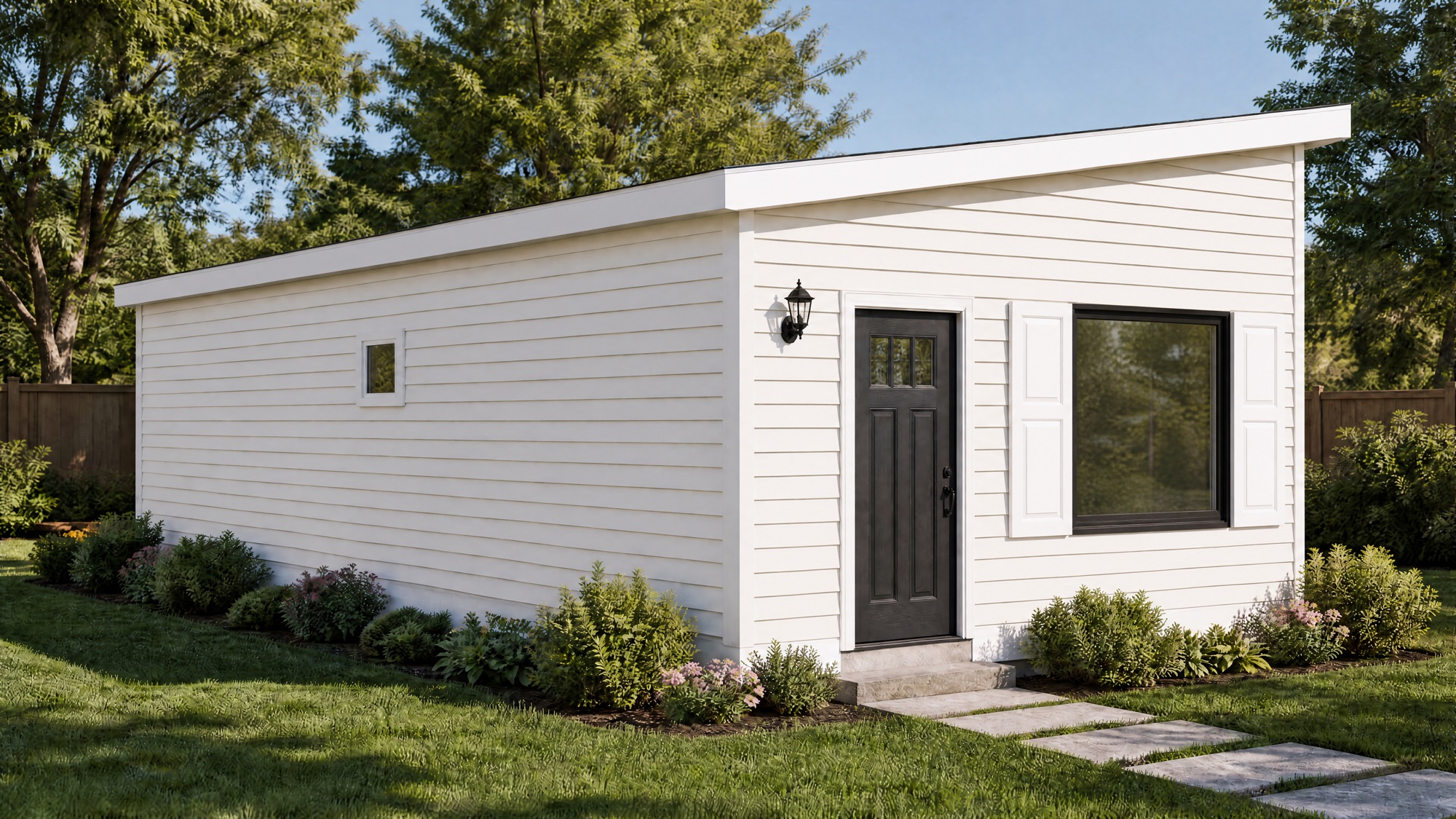 Available now
The Nest
Delivered to your parcel · 60–75 days
- PERCH-designed
- Escrow with proof
Refundable within 7 days.