Guides
Shipping Container Homes: The Honest 2026 Guide
On this page
Type "shipping container homes" into a search bar and you'll get a wall of Pinterest renders, YouTube build vlogs, and listings promising a $9,000 turnkey two-bedroom that ships in three weeks. The category has been hot for a decade, the dream is real, and the actual product class has matured enough that some builds genuinely work. Most don't — but the ones that do follow a pattern worth understanding before you wire anyone money.
This is the version we wish someone had handed every buyer who showed up to PERCH after a container project went sideways. We're not selling containers, we're not anti-container, and we don't have a horse in the steel race. We do have a clear read on what works, what doesn't, and where the category actually fits in the US housing market in 2026.
What a Shipping Container Home Actually Is
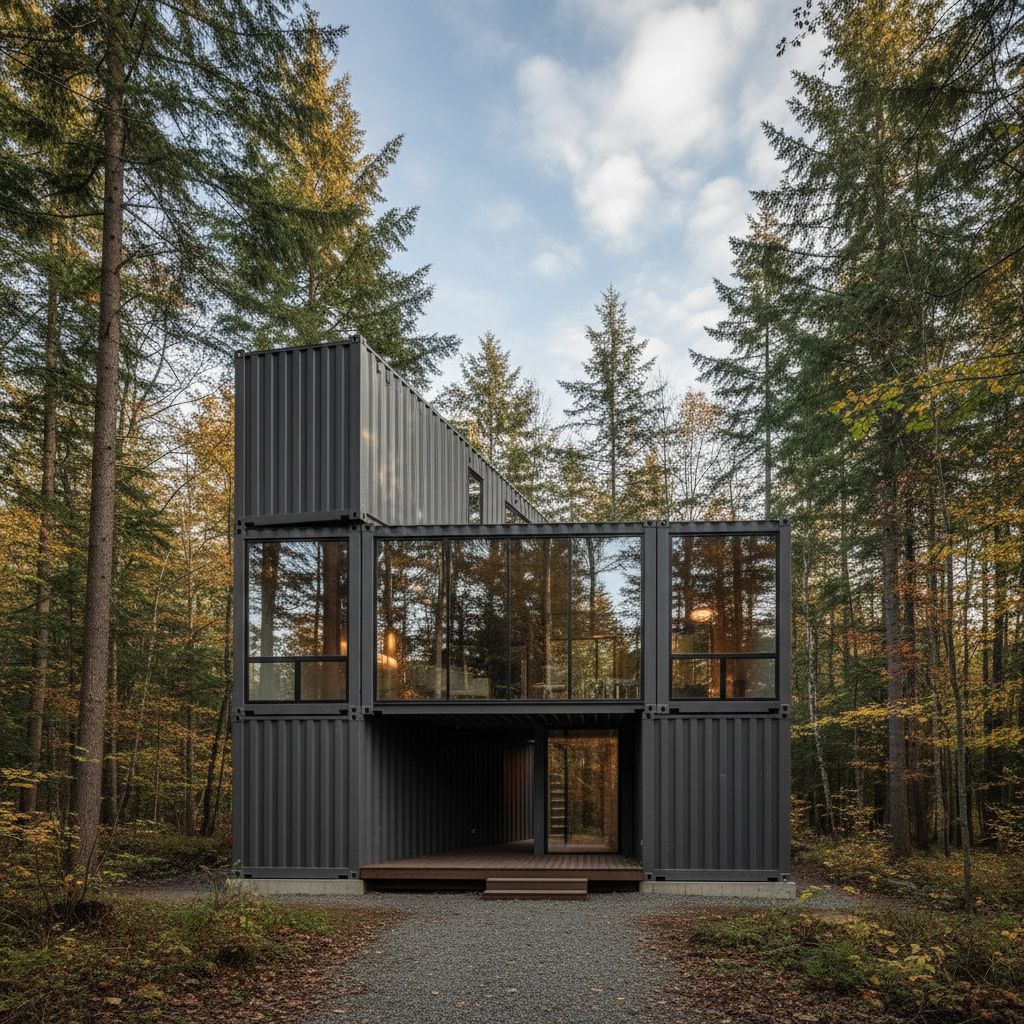
A shipping container home is a dwelling built using one or more ISO intermodal shipping containers as the primary structural shell. The container is the box your sneakers crossed the Pacific in — corrugated steel walls, a steel frame, corner castings rated for stacking, and a wood floor that was almost certainly treated with pesticides for ocean transit.
Three categories sit under the same search term and they are not the same product.
Architect-built site-converted homes. A US builder buys one-trip or used containers, cuts openings, welds reinforcing steel back into the structure where the corrugation was removed, sprays closed-cell foam insulation, frames out interior walls, runs MEP to code, and finishes the unit on or near the build site. These are real homes. They cost real money. They appraise.
US factory-built modular container homes. A factory takes new containers, does the same conversion work in a controlled environment, and ships the finished unit to your site on a flatbed. These carry state modular insignia, can be permitted as dwellings, and are financeable. Builders like Honomobo and a handful of regional shops operate in this lane.
Imported flat-pack or expandable container kits. A Chinese factory ships a folded steel box that pops open into a 200-400 sq ft footprint. These are the $9,000 listings. They are not US-code-compliant dwellings. They are not financeable. They are not titled. We covered the gap between what's sold and what arrives in our Amazon tiny homes review.
When someone tells you they bought a shipping container home, ask which of the three they actually bought. The three numbers — cost, code, financing — are completely different.
Popular Sizes and What They Give You
The two standard sizes are 20 feet and 40 feet, both 8 feet wide and either 8'6" or 9'6" tall (the high-cube variant). The dimensions are exact because they have to fit on every truck, train, and ship in the world.
20-foot container. 160 sq ft of raw interior. After wall thickness, insulation, and interior framing, you're closer to 130 usable sq ft. That's a studio cabin, an office, a backyard ADU bedroom — not a family home.
40-foot container. 320 sq ft raw, roughly 280 usable after finishing. A one-bedroom is possible. A small one-bedroom with a separate kitchen is tight. Most serious container homes combine two or three 40-footers side by side, removing the inside walls to create a 600-900 sq ft footprint.
High-cube (9'6" tall). The extra foot of ceiling height matters more than people expect once you account for floor build-up and ceiling assemblies. If you're serious about this, build high-cube.
The math people forget: containers are 8 feet wide externally. Subtract two inches of corrugation, three inches of insulation per side, and a half-inch of drywall, and your interior is roughly 7'2" wide. A queen bed is 5 feet wide. There is no hallway in a single-container home — you walk through rooms.
Real Cost Ranges
Forget the $9,000 listings for a minute. Here's what a real US-built shipping container home costs in 2026.
Single 20-foot site-converted. $35,000 to $75,000 finished. Used container $2,000-4,000, structural reinforcement $3,000-6,000, insulation $4,000-7,000, MEP rough-in $8,000-14,000, finishes $8,000-20,000, site work and foundation $5,000-15,000, permits $1,000-5,000, labor markup.
Single 40-foot site-converted. $60,000 to $130,000 finished. Same line items, larger numbers.
Two-container 40-foot architect build (around 600 sq ft). $120,000 to $250,000 finished. This is where you start getting a real one-bedroom home with a real kitchen and a real bathroom.
Three to four container architect build (900-1,200 sq ft). $200,000 to $450,000. This is comparable to a small custom site-built home because at this point, that's effectively what you're building — the containers stop being a cost-savings strategy and become an aesthetic and structural choice.
Factory-built modular container. $90,000 to $300,000 depending on size, finish, and builder. These come closer to the timeline and predictability of a HUD-tagged manufactured home.
The number that surprises buyers: the container itself is almost never the expensive part. The cost lives in everything that turns a steel box into a code-compliant dwelling.
Code Compliance Reality
This is where most container dreams crash into the local building department.
Your county or city building department uses some version of the International Residential Code (IRC) for site-built and the relevant state modular code for factory-built. Neither was written with shipping containers in mind. Some jurisdictions have updated their codes to explicitly allow ISBU (intermodal steel building unit) construction. Most haven't, which means your container build will be reviewed under the standard IRC and your inspector will be making real-time judgment calls about a structural system they may have never inspected before.
The friction points are predictable. Container roofs aren't rated for snow loads in the way the IRC expects — you may need a secondary roof structure in northern climates. Cutting openings into corrugated steel walls removes structural capacity and requires engineered steel reinforcement, which means a stamped engineering drawing, which means an additional $1,500-5,000 in soft costs. Insulating to current IRC R-value requirements eats real interior space. The treated container floor has to come out or be sealed under an additional subfloor for any residential use.
The buyers who get container homes permitted in 2026 do one of three things: they use a factory-built modular container with state insignia, they hire a residential architect who has done container builds in the same jurisdiction before, or they choose a rural county with a building department small enough that the inspector is willing to work through the build collaboratively.
Who Container Homes Actually Work For
The honest match list is shorter than the Pinterest board suggests.
People who already own rural or semi-rural land in a permissive county, want a 600-900 sq ft footprint, have $150K+ in cash or a clear financing path, and care about the look of the finished product enough to pay the premium that the container aesthetic actually carries in 2026.
ADU buyers in west coast cities where the local code has caught up enough that a small factory-built container ADU can drop into a backyard with a clear permit path.
Off-grid buyers who want something more durable than a tiny home on wheels, are willing to do a serious site preparation, and don't need bank financing because they're paying cash.
Commercial uses — offices, retail kiosks, agricultural housing, glamping operators — where the code path is sometimes easier than residential and the durability of steel actually pays off.
Who They Don't Work For
The reverse list is longer.
Anyone who needs the build to pencil out cheaper than a comparable manufactured home. HUD-tagged single-section manufactured homes regularly come in at $70-110/sq ft delivered. A serious container build rarely beats $200/sq ft and often runs higher. The "save money with containers" pitch has been wrong for at least five years.
Anyone who wants the build to finish faster than a stick-built home. A real container home takes 6-14 months from contract to occupancy once you account for design, permitting, fabrication, site work, and finishing.
Anyone in a hot climate without serious insulation strategy. Steel is the opposite of a thermal break. An under-insulated container in Phoenix is a oven that takes a 4-ton HVAC system to fight.
Anyone whose lender requires a standard appraisal pulled against comps. Container homes rarely have comps. Lenders rarely write loans without comps.
Financing Reality
This is the section that ends most container dreams.
Factory-built modular container homes with state insignia can get a construction-to-permanent mortgage from any regional lender who understands modular. The list of those lenders is shorter than for stick-built but it exists. Fannie Mae and Freddie Mac will both buy modular loans that meet their standard guidelines.
Site-converted container homes built by a residential architect can sometimes get a construction loan, but only from a portfolio lender willing to underwrite the unusual structure on the merits of the borrower's balance sheet. Expect higher rates, lower LTVs, and a longer underwriting timeline.
Imported flat-pack kits get no financing. Cash, HELOC against other property, or a personal loan. Period.
The Consumer Financial Protection Bureau has good resources on construction loan structure if you're new to the lending side of a custom build.
What We Think After Watching the Category
Shipping container homes are a real product class with a narrow lane where they make sense. The lane is narrower than the YouTube channels suggest and wider than the skeptics claim. The buyers who end up happy are the ones who treat a container build like a custom architect-built home that happens to use steel boxes as the structural shell, budget accordingly, hire a builder who has actually done it before, and pick a jurisdiction that won't fight them at every inspection.
The buyers who end up unhappy are the ones who started with a $9,000 Chinese kit listing and a YouTube video.
PERCH is the honest marketplace for modular and manufactured homes — verified US builders, transparent specs, and the code and financing path mapped before you make a decision. If you're shopping the container lane, we don't list import kits, but we do work with factory-built modular container builders and we can help you sort the real product from the render. Closer to Autotrader plus Zillow for the housing category than another lead aggregator.
Join the conversation
Comments
Reader questions get answered. Real names and a working email — that's it.