Guides
Modern Mother-in-Law Suite: ADU Design & Cost Guide
On this page
The mother-in-law suite finally grew up.
It used to mean a room off the garage with a hot plate and a door that closed loudly. That version worked for nobody and reminded everyone of it. The modern version is a permitted 500 to 800 sq ft accessory dwelling unit — its own kitchen, its own bath, its own front door — behind or beside the main house. Nobody has to knock. Nobody has to explain.
Why this makes sense right now
Multi-generational households hit 60 million Americans in 2024 — the highest count since the U.S. Census Bureau started tracking. Pew Research surveyed the families; the phrase "better than expected" showed up in 61% of responses. The remaining 40% cited privacy tension, not affection tension.
Meanwhile, private-pay assisted living averaged $5,500 to $8,000 per month across most metros in 2025, per the Genworth Cost of Care Survey. A well-built mother-in-law ADU costs roughly the same across 15 years as four years of assisted living. Nobody in the assisted-living industry is going to run that math out loud. Someone should.
Zoning shifted too. California SB 9 and SB 10, Oregon HB 2001, Washington HB 1337, Vermont S.100, Maine LD 2003, Utah HB 82 — all landed between 2020 and 2024, and each one made ADUs a by-right use on single-family lots for at least one class of unit. The days of a three-year variance fight for a backyard suite are, in most metros, over.
The design consensus updated with the code. AARP's 2025 Home & Community Preferences Survey found that 84% of Americans over 50 want to stay in a familiar community as they age. A backyard ADU behind an adult child's home checks that box without the moral weight of "moving in."
The layout — what actually reads as a home
Every modern mother-in-law suite we've seen work in the wild shares six design decisions:
Zero-threshold entry. No steps. Not "one step, it's fine" — zero. A single step becomes a fall risk the moment a walker is involved. It's cheaper to grade the site than to retrofit.
A real kitchen. 24" range minimum, dishwasher, full-height fridge, enough counter to plate a meal. A kitchenette is a message. A real kitchen is a home.
One bedroom, one flex room. The flex room becomes a den for the first five years and — if it comes to it — a live-in caregiver's room for the next five. Design for the transition.
A bathroom sized for a walker. 36" clear door, curbless shower, blocking in the wall for future grab bars, comfort-height toilet. You do not have to install grab bars now. You do have to plan for them.
Real natural light. Two exposures minimum. A one-window unit feels institutional no matter how well it's finished.
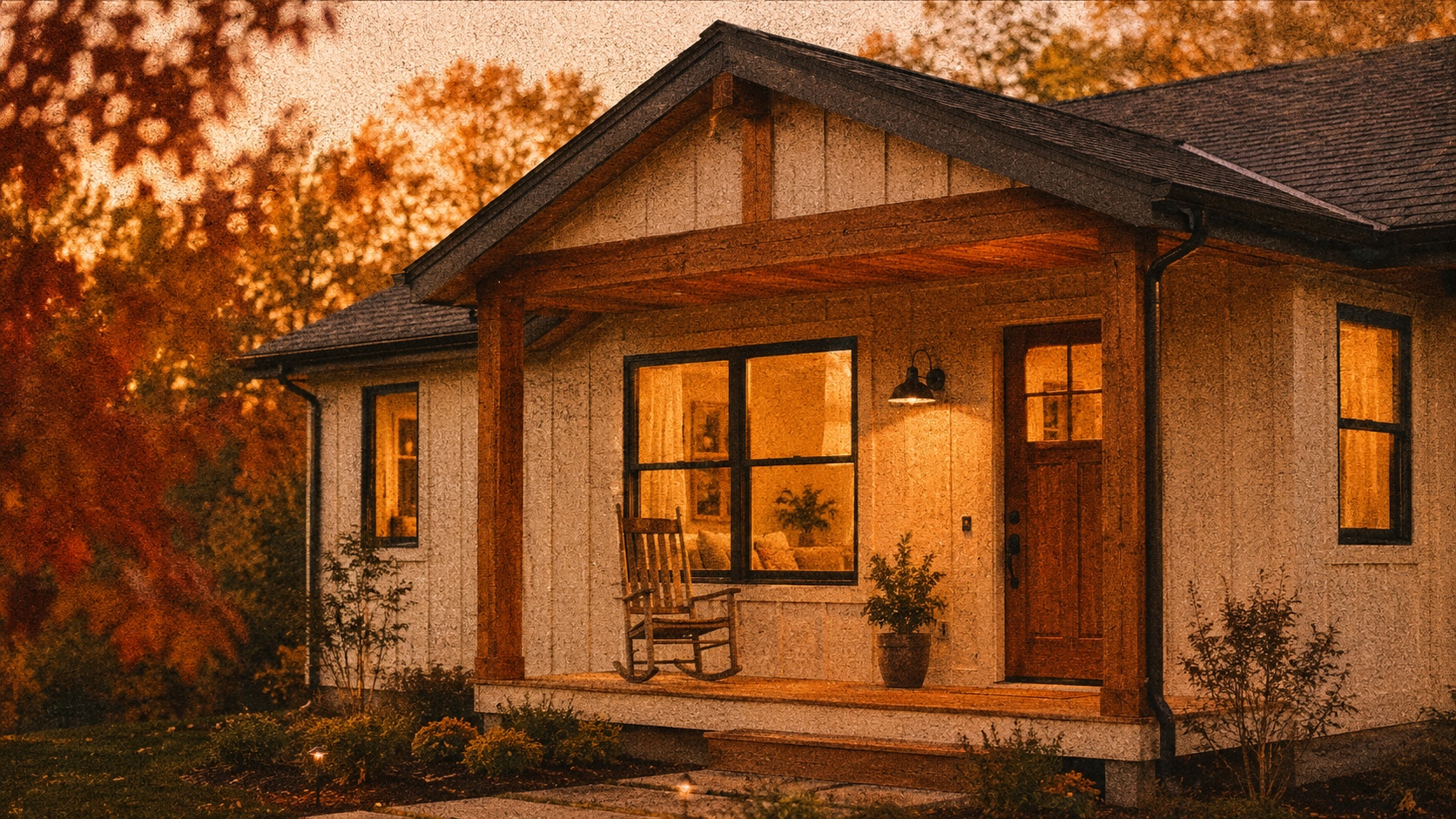
A covered outdoor space. Even 60 sq ft — a small porch, a shaded patio — matters more than another 100 sq ft of interior square footage. This is where they'll actually live in the mornings.
Two builders doing this well in 2026: Abodu — California, Washington, Oregon, 500 and 610 sq ft models with aging-in-place layouts as a stock option, 12-16 week turnkey. Dvele — California, Nevada, Utah, factory-built single-level ADUs at $230K to $340K turnkey.
Financing — the paths that actually close
Most families finance a mother-in-law ADU one of three ways:
HELOC on the primary. Rates as of Q3 2026 run 8.25% to 9.75% variable during draw. This is the most common structure. Fast to close, low fees, uses the equity that's already sitting in the main house.
Fixed HELOAN on the primary. 7.5% to 8.75% fixed, fully amortizing over 10-20 years. Higher monthly than a HELOC, but rate is locked. Best for families who plan to keep the ADU 10+ years and want cash-flow certainty.
Renovation loan (Fannie Mae HomeStyle or FHA 203(k)). Rolls construction and permanent financing into one closing. Rate typically 0.25% to 0.5% above conventional. Best for families with less than $150K equity in the primary who need to fold the ADU cost into a single mortgage.
Cash-out refinance is technically an option but only makes sense if your existing mortgage rate is above 7%. Otherwise you burn a low rate to fund the ADU and never get it back.
Permit fees typically run $2,500 to $8,500 depending on jurisdiction and add 8-14 weeks to the timeline. In California, the state ADU statute caps most of these fees; in Texas or Georgia, the county sets them and they vary. The PERCH Financing Finder walks through eight questions and returns the two loan structures most likely to close for your specific situation.
The quiet part.
The mother-in-law suite failed as a concept for thirty years because it was designed as a room — and rooms belong to whoever pays the mortgage. The modern version fixed that by giving your mother her own front door.
The door does the work. It reframes the whole arrangement from "she lives with us" to "she lives here, and we live here, and we happen to share the driveway." That's a different sentence. It's the sentence adult in-laws have wanted to say for two decades.
She won't tell you the door is what changed things. She'll tell you the kitchen. Or the light. Or how nice it is to have her own porch in the morning. All three are code for the door.
Related guides
- ADU for Elderly Parents & In-Laws: The 2026 Guide — Close, but not too close
- Backyard Home for an Aging Parent: ADU Guide — A house for your mother, on your terms
- Financing an ADU for Aging Parents: 2026 Options — How to buy your parents' independence
Join the conversation
Comments
Reader questions get answered. Real names and a working email — that's it.