Guides
Expandable Homes: The Honest ROI Analysis — Benefits, Hidden Costs, and Where the Math Actually Works
On this page
The pitch for expandable homes leans hard on a single number: cost per square foot of the expanded footprint. A 400 sq ft unit that ships for $30,000 reads as $75 per square foot, which is roughly a quarter of what site-built construction costs in most US markets. That math is real. It's also incomplete in ways that decide whether the purchase is a win or a slow-motion regret.
This guide is the long-form version of the conversation we have on the phone with buyers who showed up to PERCH already deep into expandable research. We don't manufacture, we don't sell units, and we aren't paid by any factory. What follows is the unsentimental ROI breakdown — the real benefits, the real downsides, and the specific scenarios where the category genuinely pencils out.
The Headline Benefits Are Real
Three of them, and they don't go away no matter how skeptical you get about the category.
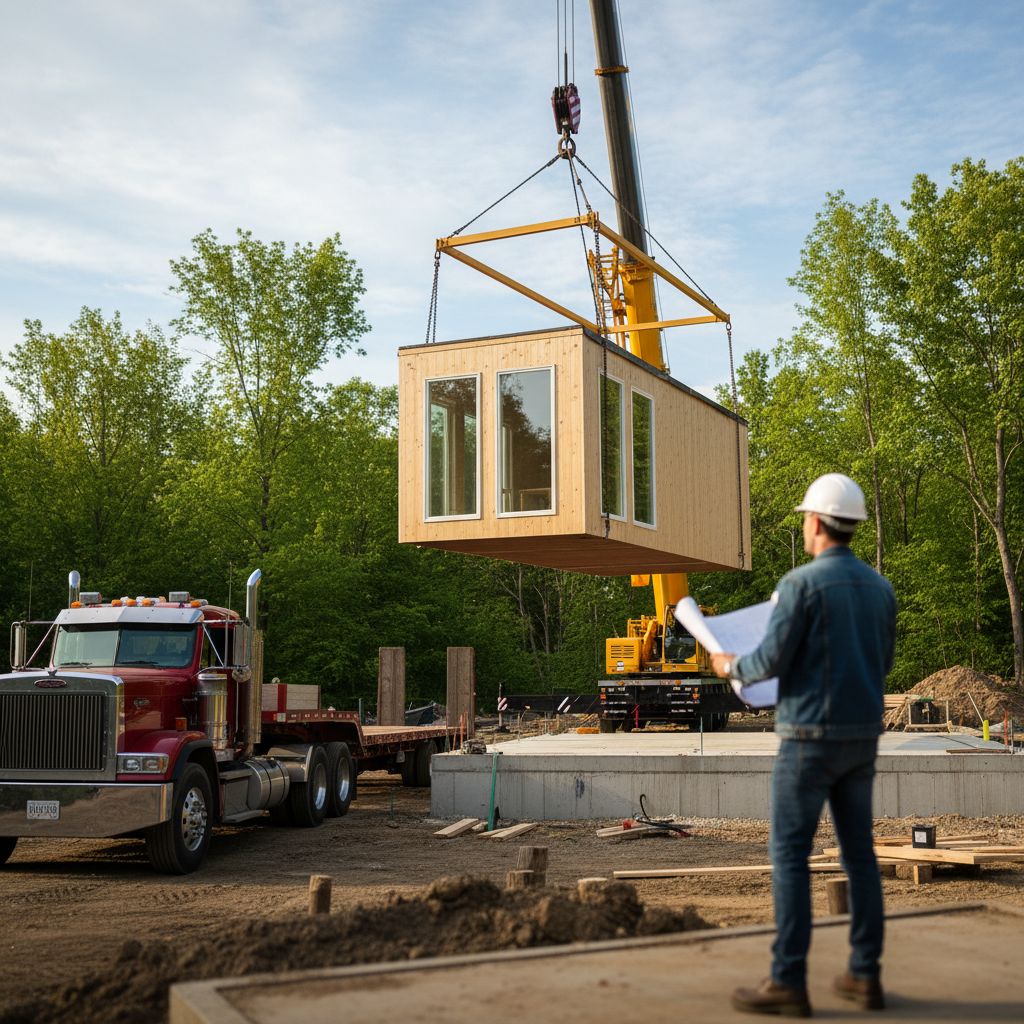
Transport efficiency is the entire reason the category exists. A traditional modular home of 400 sq ft typically ships as a single wide load on a permitted route with pilot cars and a logistics bill that can run $5,000 to $15,000 depending on distance and terrain. An expandable that ships at 8-foot transport width fits on a standard flatbed, needs no oversize permits in most states, and lands closer to $1,500 to $4,000 in trucking. On a remote site or a long haul, that delta alone is meaningful.
On-site labor compresses dramatically. A traditional small modular set still involves a crane, a crew, and a full day. A well-designed expandable can be deployed by two people with hand tools in eight to twelve hours. For an owner-builder on private acreage, that's the difference between hiring a crew and doing it yourself.
Lead time is shorter for the unit itself. Factory-built expandables, especially the imported steel-frame category, run on aggressive production schedules. A site-built small home in most US markets takes 6 to 12 months from breaking ground. An expandable can arrive in 8 to 16 weeks from order — though that timeline includes shipping, which is the volatile part for imports.
These three benefits are not marketing fiction. They are the actual reason the architecture exists and the actual reason it sometimes pencils when nothing else does.
The Cost-Per-Square-Foot Math, Honestly
The headline number compares the wrong things. Cost per square foot of an expanded prefab is usually quoted as kit price divided by expanded footprint. That ignores everything that converts a kit into a livable structure.
A complete delivered-and-livable cost for an imported expandable typically includes the kit, port-to-site trucking ($2,000 to $6,000), site prep and foundation ($3,000 to $15,000), customs and broker fees on imports ($1,500 to $4,000), electrical hookup and a US-code-compliant rework ($2,000 to $8,000), plumbing connection ($2,000 to $6,000), interior finish-out beyond the base SKU ($3,000 to $20,000 depending on what the listing actually included), and any code work the local jurisdiction requires.
A $30,000 kit reasonably lands between $50,000 and $90,000 all-in for a livable, hooked-up unit on a prepared site. That's still meaningfully cheaper per square foot than site-built in most US markets — but it's not $75 per square foot. It's closer to $125 to $225 per square foot, which is comparable to a HUD-tagged single-section manufactured home from Clayton, Champion, or Cavco, often with better certification and a financeable path.
The comparison that matters isn't expandable versus site-built. It's expandable versus a US-built manufactured or modular home in the same price bracket. The math gets more interesting and a lot more nuanced when you frame it that way.
Where the Hidden Costs Hide
Foundation and site prep are the biggest unmodeled line item. Most expandable listings price as if you have a flat, level, drained, and serviced pad waiting. You probably don't. Even a simple pier foundation runs $3,000 to $8,000 with proper frost-depth footings. A monolithic slab on a graded pad runs $8,000 to $20,000 in most US markets. Excavation, drainage, and access road work can add more.
Mechanism maintenance is the recurring line item. Gaskets, seals, slide rails, and hinges need attention. A reasonable maintenance budget is $200 to $800 a year for an expandable kept in continuous deployed configuration, more in harsh climates. Compare that to roughly $1,500 a year typical for a small site-built home and the expandable still wins — but the line item isn't zero.
Insurance category confusion is the underestimated line item. Standard homeowner's policies are written against HUD-tagged manufactured homes, state-modular-certified modular homes, or site-built homes on a permanent foundation. An uncertified imported expandable typically can't get a standard dwelling policy and gets written as an outbuilding rider — which is cheaper in premium but excludes most of the coverage that makes a homeowner's policy worth having. If the unit burns down, you may collect for the structure and very little for the contents, the temporary living expenses, or the liability exposure.
Financing is the largest unmodeled cost of all — because if you can't finance, you're paying cash, and the opportunity cost of that cash is real. Imported expandables without HUD or state modular certification are not eligible for Fannie Mae, Freddie Mac, FHA, USDA, or VA financing. They're not eligible for chattel loans either, since chattel requires HUD certification. The buyer is paying cash or putting the unit on a personal loan at 9 to 14% interest.
Code Complexity: Real Money, Easy to Miss
The same expandable can be a permitted dwelling in one county and an unpermittable steel box ten miles away. Building codes are local. State modular insignia from ICC accredited third parties carries weight in most jurisdictions. HUD-tagged manufactured homes carry national reciprocity. Imported expandables typically carry neither.
The cost shows up in three places. First, permit application fees and engineering letters can run $1,500 to $6,000 if the local department requires a stamped engineer's review. Second, code remediation — bringing electrical to NEC, plumbing to the local code, anchoring to wind-load requirements — can add $3,000 to $15,000. Third, the most expensive scenario: you order, the unit arrives, the department refuses to permit it, and you now own a structure you can't legally live in. That happens. We've talked to the people it happened to.
Where the ROI Actually Works
Three scenarios where expandables genuinely outperform their alternatives.
A US-built and certified expandable as a permitted ADU in a state and county that already supports ADU pathways — California, Oregon, parts of Colorado, Washington. The transport efficiency, deployment speed, and architectural footprint match the ADU use case cleanly. Builders like Abodu, Cover, and Connect Homes are not all expandable per se, but the category lives near them in spirit and in pricing.
A weekend or seasonal cabin on private acreage with no inspector, paying cash, where the buyer accepts the uncertified-import tradeoffs honestly. Total delivered cost in the $40,000 to $70,000 range against a site-built equivalent that would cost $150,000 or more is a real win for the right buyer.
A backyard office, art studio, or guest suite in a permissive jurisdiction where the unit doesn't need to be a permitted dwelling. Here the expandable's downside — uncertified, unfinanceable, unsellable as a primary home — is the buyer's upside because none of those matter for the use case.
Where the ROI Doesn't
A primary residence anywhere with a building department, any purchase requiring a mortgage, any plan to sell the unit later at a recoverable price, any climate zone that punishes thin insulation, and any buyer who would treat $40,000 cash out of pocket as a serious capital event without a financeable alternative. In those cases, a HUD-tagged manufactured home or a small state-modular home — financeable, certified, insurable, resaleable — is the more sober choice.
The Comparison Table
| Factor | Imported expandable | US-built modular | HUD manufactured |
|---|---|---|---|
| Kit-only cost | $15K-$45K | $90K-$250K | $60K-$150K |
| All-in delivered cost | $50K-$90K | $120K-$300K | $80K-$180K |
| Financeable | No | Yes | Yes |
| Insurable as dwelling | Rarely | Yes | Yes |
| Permittable as dwelling | Case-by-case | Yes | Yes |
| Resale market | None | Yes | Yes |
| Maintenance budget | $200-$800/yr | $1,000-$2,000/yr | $1,000-$2,000/yr |
| Lifespan with maintenance | 10-20 yrs | 30-50 yrs | 30-55 yrs |
The expandable is the right answer in a narrow lane. The lane is real, and so are the buyers who fit it.
The PERCH Take
If the math works for your specific site, use case, and capital position, an expandable can be the cleanest answer in the category. If you're being drawn in by the headline price and haven't priced site prep, financing, insurance, or code path, the math you're running is the wrong math. PERCH lists US-built modular and manufactured homes that pencil out with honest line items. Worth comparing before you commit.
Data Sources & Further Reading
The specifics in this guide reference the following authoritative sources — check them directly for the current numbers, program rules, and code text before finalizing a purchase or build decision:
- HUD manufactured-home construction standards (24 CFR Part 3280)
- CFPB — Manufactured Housing Consumer Finance research
- Fannie Mae MH Advantage
For federal manufactured-housing dispute and repair resources, see HUD's Manufactured Home Dispute Resolution Program. For financing standards on factory-built product, Fannie Mae MH Advantage and Freddie Mac CHOICEHome set the terms most lenders reference.
Join the conversation
Comments
Reader questions get answered. Real names and a working email — that's it.