Guides
Expandable Prefab Homes: The Complete 2026 Guide to What Actually Folds, Slides, and Lasts
On this page
Search "expandable prefab home" today and you'll see the same handful of renders: a slim steel box on a flatbed, then the same box bloomed open into a 400 sq ft cabin with a deck, panoramic glass, and a couple at sunset. The category is real. The mechanism is real. What's missing from almost every listing is the unglamorous part — what the unit actually looks like three years in, what the shipping footprint really is, and whether the climate where you plan to put it will quietly destroy the thing that makes it expandable in the first place.
This is the honest version of that category. We're not selling units, we're not the factory, and we have no incentive to push you toward or away from an expandable. PERCH is a marketplace where verified US builders list modular, manufactured, and prefab homes. We talk to hundreds of buyers who came in after researching expandables, and the patterns are clear enough to write down.
What "Expandable" Actually Means
The word covers three distinct mechanical categories that almost never get separated in marketing copy.
Pop-out expandables. A central core ships at transport width — typically 8 to 10 feet — with one or two side modules that ride inside the shell. On site, the side modules are jacked or winched outward on rails, then dropped onto integrated supports. The expanded footprint can land anywhere from 320 to 700 sq ft depending on the unit. This is the most common architecture in the under-$50K imported category.
Fold-out expandables. Walls and roof sections are hinged. The unit ships as a flat steel box and on site the walls fold down, the roof unfolds, and the structure is bolted into its expanded geometry. These designs lean heavier on weatherproof gasketing along every fold line — and the gaskets are the part that ages.
Slide-out expandables. Borrowed directly from the RV world. A primary structure holds one or more rectangular bumps that slide outward on tracks to extend a single room. Slide-outs are the most familiar mechanism in the US because Cavco, Champion, and other manufactured-home factories have been building park-model and RV-class units with them for decades.
Each category has its own failure mode and its own real-world lifespan. Lumping them together as "expandable prefab" is the single biggest reason buyer expectations and reality diverge.
Why the Marketed Footprint Isn't the Shipping Footprint
This is the gap that catches almost everyone. A listing that says "400 sq ft" is describing the expanded, on-site footprint. The thing that gets transported to your land is the transport footprint — and for a pop-out or fold-out, that's usually a steel box around 8 feet wide by 20 to 40 feet long.
That matters in three concrete ways. First, the unit ships on a standard flatbed or in a 40-foot ocean container, which is good — no oversize permits, no pilot cars, no $8,000 transport bill. Second, the interior volume during transport is not your final interior. Cabinets, fixtures, and partitions that look great in the marketing render are often shipped loose, installed during the unfold, or omitted from the base SKU entirely. Third, the expanded footprint depends on a flat, prepared, level site. The factory cannot ship you a level slab.
If you're calculating square-foot cost from the listing photo, you're calculating against the expanded number while paying for transport efficiency. Both numbers are true. Most listings only tell you one.
The Mechanism Question: Three to Five Years Later
This is the part no factory wants to talk about in a sales call, and it's the most important question for any buyer planning to live in the unit long-term.
Every expandable mechanism is a moving joint that has to stay weathertight. Pop-out rails accumulate grit. Fold-out hinges live outdoors and cycle through every freeze and thaw. Slide-out seals — the rubber gaskets that compress when the room is retracted and extend when it's deployed — are the same component that gives RV owners their longest-running maintenance headache. The recreational vehicle industry, which has run this experiment at scale for forty years, has well-documented patterns: slide-out seal life is typically 5 to 10 years in moderate climates and shorter in harsh sun or repeated cycling.
For an expandable prefab home that's deployed once and left in position, the cycling problem largely disappears — you're not retracting the unit weekly the way an RV owner does. What remains is the static weathertightness of the joint. A pop-out left extended for ten years is a ten-year exposure of the gasket along the seam line to UV, freeze-thaw, and any water that finds its way in. Quality of gasket material, drip-edge design, and whether the manufacturer used marine-grade or commodity rubber determines whether year five is a non-event or a leak hunt.
Steel-frame units add a second concern: thermal cycling between the steel skin and the interior finish. Steel expands and contracts more than wood. Drywall, flooring, and trim that meet steel members will show seasonal movement. The better builders address this with isolation details. The cheap imports do not.
Climate: Where Expandables Work and Where They Fight You
The honest map looks something like this.
Mild marine and Mediterranean climates — coastal California, Pacific Northwest west of the Cascades, parts of the Carolinas and Georgia coast — are kind to expandable mechanisms. Temperature swings are modest, freeze cycles are rare, and UV is manageable. This is where the category performs closest to advertised.
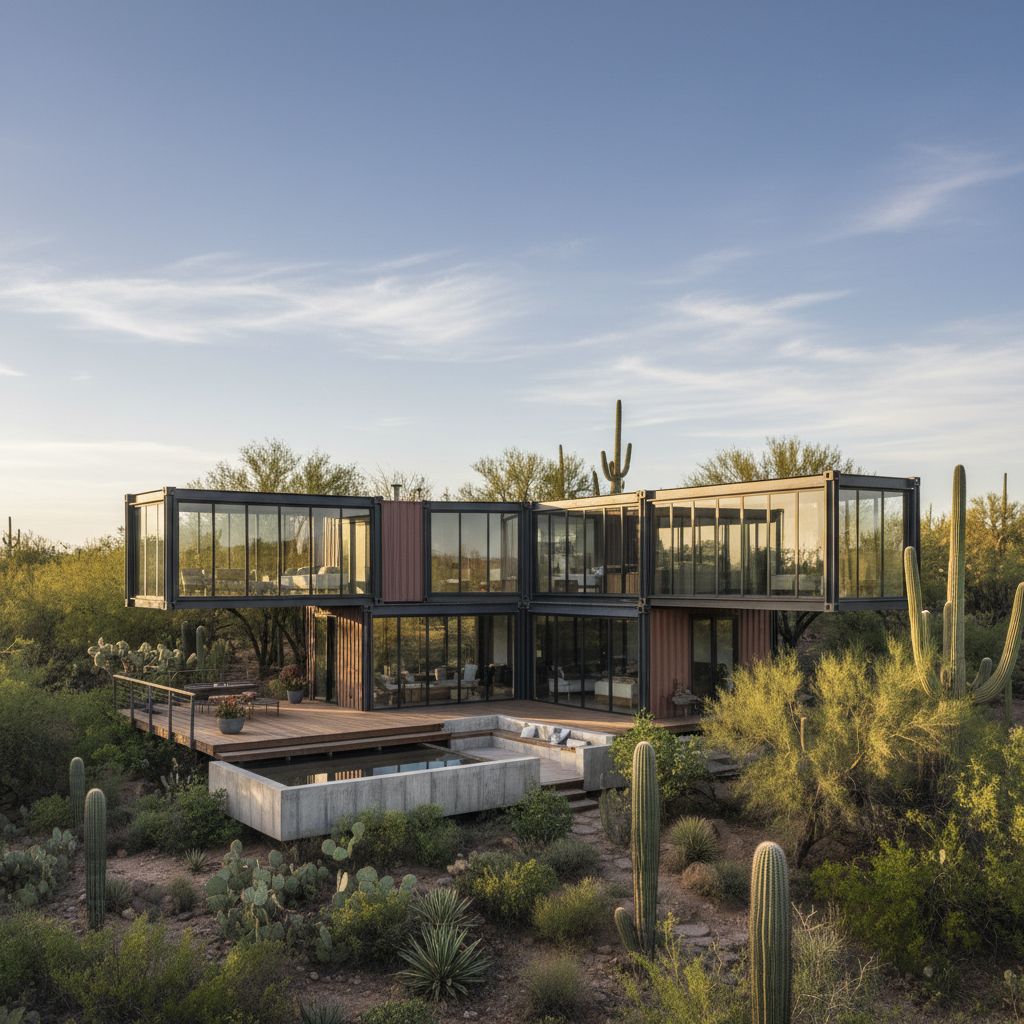
Hot-dry desert climates — Arizona, Nevada, parts of West Texas — punish gaskets through UV and surface temperature. A black steel skin in Phoenix can hit 160°F. Expandables work here, but the maintenance interval on seals and exterior coatings is shorter, and insulation that was already thin in the listing becomes a real comfort and utility-cost problem.
Cold and freeze-thaw climates — the Mountain West, upper Midwest, Northeast, anywhere with serious winter — are the hardest case. Every fold and gasket cycles between expansion and contraction. Snow load on a fold-out roof has to be calculated honestly. Many imported expandables are not engineered for any meaningful snow load and will say so in the fine print if they say anything at all.
Hot-humid climates — Florida, Gulf Coast, Southeast — combine UV exposure with constant moisture. Gasket failure is faster, and corrosion on steel frames is an ongoing battle without aggressive coating maintenance.
If you live in zones 5 or higher under the IECC climate map, the question isn't whether an expandable can survive — it's whether the specific unit you're buying has been engineered for your zone. Most imported ones haven't.
The Code Reality
An expandable prefab is not automatically a code-compliant dwelling. The category sits in an awkward gap between three regulatory frameworks: HUD manufactured-home code (governed by HUD), state modular code (administered jurisdiction by jurisdiction), and the International Residential Code that governs site-built homes.
US-built expandables from factories like Boxabl carry factory certifications and can pursue HUD or state modular paths depending on the configuration. Imported expandables — the $15K to $40K units you see on Amazon and direct-from-overseas sites — typically carry neither. That means the same unit can be a permitted dwelling in one configuration and an unpermittable steel box in another, and the listing rarely makes the distinction clear.
The standard advice from NAHB and from any honest factory rep applies here: call your local building department before you order. Bring the manufacturer's data plate or certification letter. Ask specifically whether the unit will be permitted as a dwelling, as an accessory structure, or not at all. That ten-minute call is the cheapest insurance in the entire purchase.
What an Expandable Is Genuinely Good For
The lane where this category shines is real and worth naming.
A weekend cabin on private acreage in a permissive county, a guest suite or backyard office where the local jurisdiction allows accessory structures, a small ADU footprint where a US-built and properly certified expandable can be financed and permitted, a remote site where transport cost would dominate a traditional build — these are the cases where the mechanism earns its complexity. The transport efficiency is genuine. The on-site labor savings are genuine. The aesthetic of a steel box that opens into a glass-walled cabin is, for the right buyer, exactly the point.
What gets people in trouble is treating the category as a universal cost-saver for primary residences. It isn't. It's a specific architectural answer to a specific transport-and-deployment problem.
What to Inspect Before You Buy
Walk a unit in person if you possibly can. Check the gasket material at every fold and slide line and ask what the warranty interval is on it. Open and close the mechanism if the seller will let you. Look at the underside of the unit — that's where corrosion shows first on imported steel frames. Ask for the data plate or certification letter and look up the certifying agency. Confirm in writing what's included in the base SKU versus the photographed configuration. Ask about snow load, wind load, and seismic rating in the actual code language of your jurisdiction. If the seller can't answer in code terms, you're talking to a reseller, not a builder.
The PERCH Frame
If an expandable is the right architectural answer for your site and your use case, buy a good one from a builder who will still be in business in five years. If you're looking at the category because the price is low, slow down — the listed price is rarely the delivered cost, and the certification gap is rarely visible from the photos. PERCH lists US-built modular and manufactured homes from verified builders. We're worth a look before you wire money to an overseas factory you can't reach by phone.
Data Sources & Further Reading
The specifics in this guide reference the following authoritative sources — check them directly for the current numbers, program rules, and code text before finalizing a purchase or build decision:
- HUD manufactured-home construction standards (24 CFR Part 3280)
- International Code Council (IRC/IBC)
- Fannie Mae MH Advantage
For federal manufactured-housing dispute and repair resources, see HUD's Manufactured Home Dispute Resolution Program. For financing standards on factory-built product, Fannie Mae MH Advantage and Freddie Mac CHOICEHome set the terms most lenders reference.
Join the conversation
Comments
Reader questions get answered. Real names and a working email — that's it.