Guides
Tiny Home vs. Park Model RV: The 2026 Comparison
On this page
Same size, entirely different paperwork.
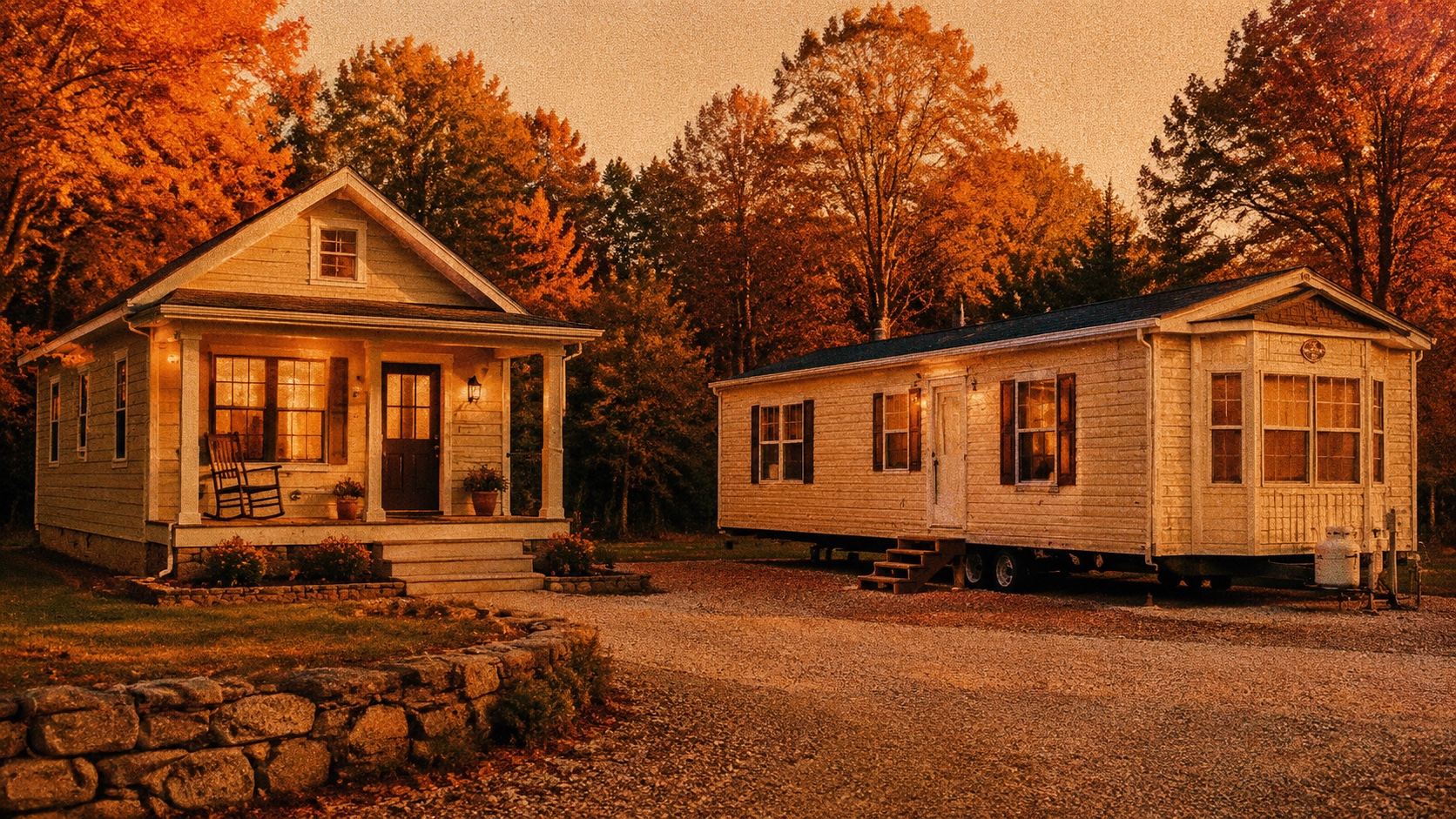
They both fit on 400 sq ft of floor. They both photograph beautifully at sunset. They both get called "tiny homes" in Instagram captions. The IRS, the DMV, and your insurance company disagree. A park model RV is technically a vehicle. A tiny home on a foundation is technically a house. Same silhouette. Ten years of tax, resale, and financing consequences.
Why this makes sense right now
Park model RV shipments hit 4,800 units in 2024 per RV Industry Association, up 22% year-over-year. Purpose-built tiny home starts hit ~12,000 units in 2024 per American Tiny House Association, up 15%. Both categories are growing — for different buyer profiles.
The tax gap is significant. Park model RV owners in most states pay ~$40-$150/year in vehicle registration + personal property tax. Tiny home owners on real property pay standard property tax rates on land + structure (typically $1,200-$4,500/year). Over ten years the tiny home pays $10K-$40K more in taxes — but appreciates while the park model depreciates.
Zoning cooperated for tiny homes as ADUs in 38 states by right. Park model RVs remain restricted to RV parks, campgrounds, or specifically-permitted tiny home villages in most jurisdictions.
The layout — head-to-head on the 10 things that matter
Building code
- Tiny home: IRC or state modular code
- Park model: ANSI A119.5 (recreational vehicle standard)
Structure
- Tiny home: standard residential framing, permanent foundation
- Park model: RV chassis with wheels (removable in some models)
Cost turnkey (2026)
- Tiny home: $60K-$180K
- Park model: $40K-$120K
Financing
- Tiny home: HELOC, chattel, specialty construction loan, cash
- Park model: RV loan (5-20 year term, 7-10% APR typical), cash
Registration
- Tiny home: real estate deed
- Park model: DMV title + vehicle registration
Property tax
- Tiny home: real property tax on land + structure
- Park model: personal property tax (much lower) + vehicle registration
Appreciation
- Tiny home: appreciates like small homes in most markets
- Park model: depreciates 3-5% annually like vehicles
Placement
- Tiny home: any residential lot that permits ADUs, permanent foundation
- Park model: RV park, campground, tiny home village, private land if legally permitted
Utility hookups
- Tiny home: standard residential — buried lines, permanent connections
- Park model: RV-style hookups — 30/50-amp pedestal, water, sewer connections, propane tank
Resale
- Tiny home: standard real estate market, 5-10 year hold
- Park model: RV secondary market, 5-15% depreciation per year
Two builders in 2026 doing purpose-designed tiny homes on foundations: Tumbleweed Tiny House Company — long-established, $70K-$140K. Rocky Mountain Tiny Houses — custom builder, $95K-$180K. Two doing serious park model RVs: Athens Park Homes — $65K-$120K, Texas-based. Cavco Park Model Division — $55K-$110K, nationwide dealer network.
Financing — the fork that actually determines the deal
If you're financing:
- Tiny home: HELOC (fastest, cheapest for existing homeowners), chattel loan (7-9% APR), specialty tiny-home construction loans
- Park model: RV loan at 7-10% APR, 5-20 year term. Many banks offer this as a standard product.
If you're paying cash:
- Tiny home: 90-180 day close typically
- Park model: 30-60 day close typically (delivery from dealer to your pad)
If you're building an ADU on financed primary land:
- Tiny home: HELOC or HomeStyle Renovation
- Park model: rarely permitted as ADU; check jurisdiction specifically
Cash-flow math for a $100K tiny home vs. a $75K park model: tiny home HELOC at 8.75% = ~$730/month interest; park model RV loan at 8% for 15 years = ~$720/month P+I. Same monthly obligation. Over ten years the tiny home's structure retains 80-100% of value; the park model retains 40-50%. That's the ten-year equity gap.
Choose the tiny home if...
- You are placing it on land you own or will own
- You want the home to appreciate and build equity
- You plan to hold 5+ years
- Zoning permits residential structures on your parcel
- You want standard homeowner's insurance
- You want financing options beyond RV loans
Choose the park model if...
- You need the fastest possible acquisition (30-60 days)
- The home will sit on rented land (RV park, tiny home village, campground)
- Vehicle taxation is dramatically cheaper than real property taxation in your state
- You want the option to move the home later
- Depreciation is acceptable in exchange for lower upfront cost
- You are testing the tiny-living lifestyle before committing to a permanent structure
The quiet part.
Nobody explains this well because the two products look almost identical from the driveway. The Instagram photos hide the paperwork. The paperwork decides whether your equity compounds or evaporates.
The park model is the honest answer for a specific kind of buyer: cash-strong, land-uncertain, mobility-optional, doesn't need the equity build. The tiny home is the honest answer for the buyer with a lot, a plan, and a ten-year horizon. Neither is wrong. Both are wrong when the buyer bought the other one by mistake.
Ten years from now the tiny home on its permanent foundation appraises 20-40% higher than the park model on rented land. That is not the builder's fault. It is the code, the title, the tax structure, and the buyer pool doing what they do.
Related guides
- Park Model vs. Tiny vs. Manufactured Homes — the three-way overview
- Tiny Home Affordable Housing Solution — for the buyer choosing tiny for financial reasons
- Manufactured vs. RV/Tiny Homes (2026) — the third category most buyers miss
Join the conversation
Comments
Reader questions get answered. Real names and a working email — that's it.