Guides
Tiny Home Communities in Austin: A 2026 Buyer's Map of Where the Movement Actually Lives
Austin's tiny home market is the most nationally recognized in the US — anchored by Community First! and Texas HB 2071. Here are the real communities open to buyers, what they cost, and the ADU path most Central Texas buyers actually take.
On this page
Austin's tiny home market is one of the most nationally recognized in the United States — Community First! Village anchors it, HB 2071 gave every Texas homeowner ADU rights on qualifying lots, and the local tech-culture appetite for small-footprint living has produced a dozen visible communities in the last decade. This guide identifies the real communities operating today, the Texas and Travis County zoning rules that determine what can legally land where, and the buyer pathway that has worked for the families now living in Austin-area tiny homes.
If you're searching for a tiny home community in Austin in 2026, the right starting question is not "where can I find one?" — it's "which community accepts market-rate buyers versus which is a formerly-unhoused pilot, and which Central Texas jurisdiction will approve the placement?"
Why Austin Became a Nationally Visible Tiny Home Market
Metro Austin combines conditions that created a national reference case for tiny home development: median home prices climbed 108 percent between 2015 and 2024 before flattening in 2024-2025, a highly-visible faith-based nonprofit (Mobile Loaves & Fishes) built the country's most cited tiny home community (Community First!), and Texas legislative action in 2023 codified statewide ADU rights. The visibility overstates the number of communities open to market-rate buyers, but it does not overstate the ADU-on-private-land opportunity.
What this means for a buyer in 2026: Community First! is not a purchase target — it is a formerly-unhoused residential program with a wait list managed by Mobile Loaves & Fishes. Market-rate buyers should focus on the smaller communities in the outer ring and the ADU path on their own parcel.
The Texas Rule That Determines Everything
Texas HB 2071, passed in 2023, requires every home-rule city with a population over 5,000 to allow at least one accessory dwelling unit on any residential lot meeting minimum size. Austin's ADU ordinance was already among the most permissive in the state pre-HB 2071 and now serves as the operational reference for most Central Texas jurisdictions.
For tiny homes specifically, Austin follows the Texas Industrialized Housing and Buildings statute for factory-built dwellings and IRC standards for on-site builds. Dwellings on permanent foundations meeting these codes are residential structures across Travis, Williamson, Hays, and Bastrop counties.
The Real Tiny Home Communities in Metro Austin
Community First! Village — East Austin
Community First! is a 51-acre neighborhood in East Austin operated by Mobile Loaves & Fishes for formerly unhoused residents. The village includes over 500 permanent-supportive housing units, most under 400 square feet. It is the most-covered tiny home community in the United States, and it is not open to market-rate purchase. Buyers researching Austin tiny homes should understand Community First! as the reference case for what tiny home development can look like at scale — not as a personal acquisition target.
The Village at Cottonwood — Hutto
The Village at Cottonwood is a purpose-built small-cottage community in Hutto, roughly 30 minutes north of downtown Austin. Cottages range from 400 to 780 square feet, with resale prices typically between $215,000 and $365,000 depending on lot and finish. Lots are deeded and inventory turns over several times per year.
Camp Comfort Tiny Home Village — Hill Country
Camp Comfort sits in the Texas Hill Country roughly an hour west of Austin, oriented toward retirees and weekend residents. Homes range from 320 to 600 square feet with prices typically between $185,000 and $325,000. Lots when available run $58,000-$115,000.
Escapees CARE Center — Livingston
Escapees CARE is a retiree-focused residential RV park in Livingston, about two hours east of Austin, that permits tiny homes on wheels as long-term full-time residences. Lots are rented rather than owned. This is a legal Texas full-time RV lifestyle option for tiny-home-on-wheels owners, not a deeded ownership path.
What Living in a Tiny Home Community Actually Costs
The all-in cost of living in a permitted tiny home community in metro Austin in 2026 breaks down roughly as follows for a typical 400-square-foot unit:
| Cost component | Typical range |
|---|---|
| Unit purchase or build | $145,000 – $285,000 |
| Lot or site fee (if separate) | $58,000 – $145,000 |
| Site prep, foundation, utilities | $22,000 – $45,000 |
| HOA or community fee (annual) | $2,400 – $5,200 |
| Property tax (annual) | $2,100 – $5,400 |
The all-in delivered cost of an entry-level unit in an Austin-area community in 2026 typically lands between $225,000 and $385,000. An ADU behind a primary residence inside Austin proper is meaningfully less at $145,000-$245,000 all-in.
How Austin Zoning Actually Works for Tiny Homes in 2026
Three legal pathways for placing a tiny home in metro Austin:
- Inside a permitted community. The community holds the zoning approval and sites homes under a master plan.
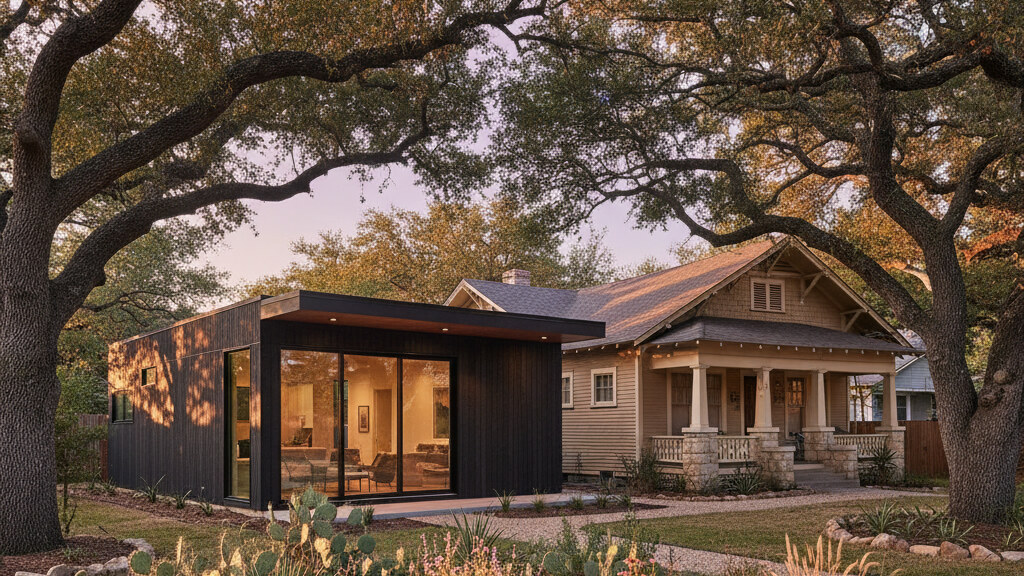
- As an accessory dwelling unit. Austin's ADU ordinance, reinforced by HB 2071, allows one ADU per single-family parcel meeting minimum size in most residential zones.
- As a primary residence on private land. A permanent-foundation dwelling meeting Texas Industrialized Housing and Buildings code or IRC is permitted in most Central Texas residential zones. Some Hill Country subdivisions have restrictive covenants that layer on top of zoning — always check the deed restrictions.
Why Foundation Type Determines Everything
Across every metro Austin jurisdiction, a home on a permanent foundation with connected utilities is a residential dwelling. A tiny home on wheels is a recreational vehicle and cannot be used as a primary residence in incorporated Austin, Round Rock, Cedar Park, or Georgetown. Unincorporated areas of Travis, Williamson, Hays, and Bastrop counties allow some longer-term RV-classified tiny home occupancy with parcel-specific rules; check with the county before you buy the land.
The Path Most Buyers Actually Take
Most Austin-area families who want a tiny home end up doing one of two things.
The first is to buy into the Village at Cottonwood or Camp Comfort. Community First! is not a market-rate option. Escapees CARE is a rented-lot RV lifestyle rather than a deeded community.
The second, and by far most common, is to place a permitted tiny-home ADU behind an existing home under Austin's ADU ordinance and HB 2071, or a modular or manufactured home as a primary residence on a private outer-ring parcel. This delivers more inventory, better financing, and stronger long-term economics.
PERCH was built to be the honest market for both routes. We surface real listings, real comps, and real concierge support.
Ready to find yours — or list one you already own? Join the PERCH waitlist → for nationwide early access.
Related guides
Frequently asked questions
Are tiny homes legal inside Austin city limits?
Can I buy a home in Community First! Village?
What is the closest active market-rate tiny home community to Austin?
Can I park a tiny home on wheels in my Austin backyard?
What did Texas HB 2071 change?
What's the average cost of a tiny home ADU in Austin?
Can I live in a tiny home on wheels full-time in Central Texas?
Join the conversation.
Share your take on this guide.
 Available now
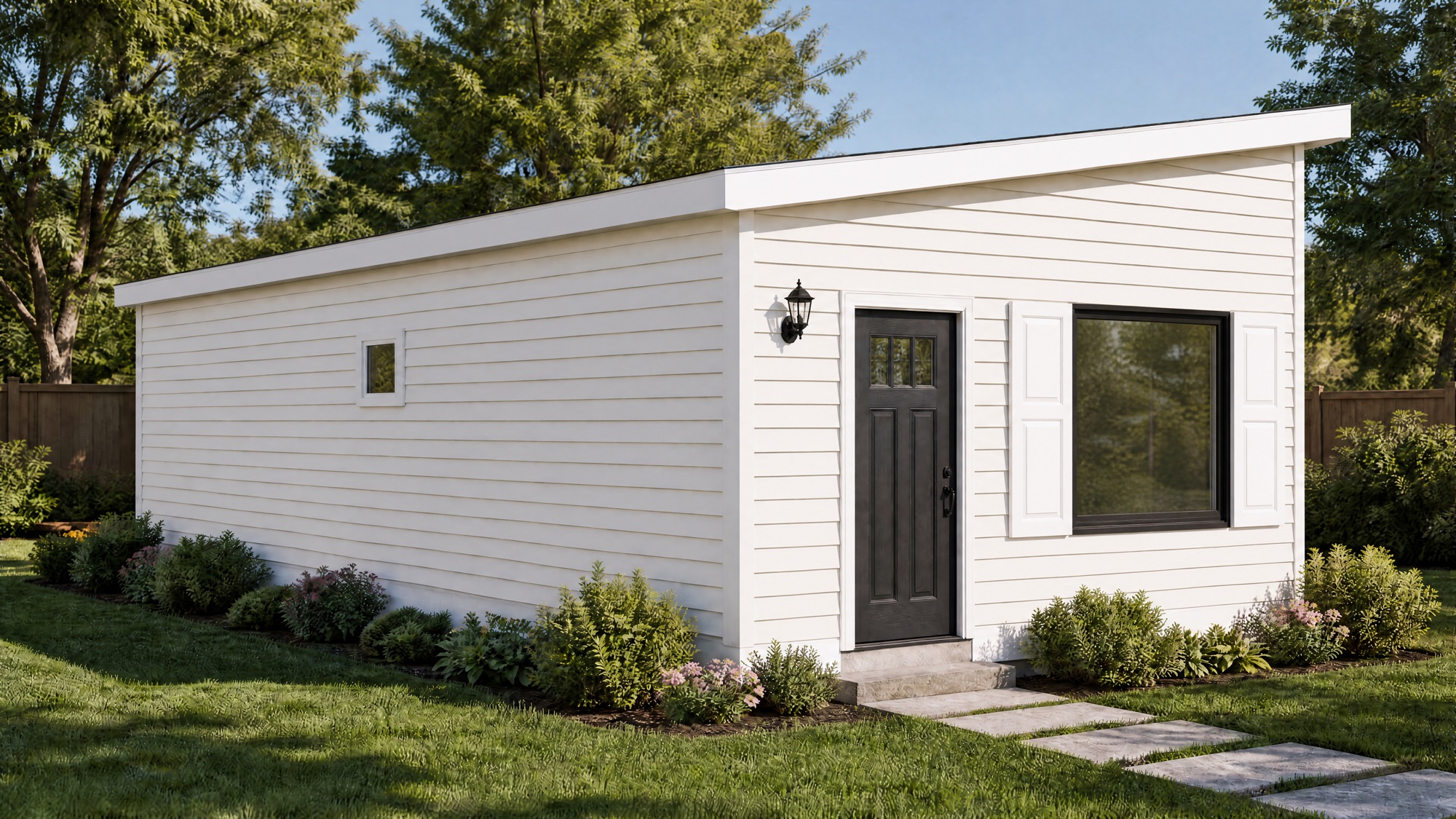
The Nest
Delivered to your parcel · 60–75 days
- PERCH-designed
- Escrow with proof
Refundable within 7 days.