Guides
Modular vs. Prefab vs. Container Homes: An Honest Side-by-Side (2026)
On this page
These three terms get used interchangeably in marketing copy, real-estate listings, and most of the articles a buyer finds in the first ten search results. They are not interchangeable. They are three different products, with three different code paths, three different financing realities, and three different resale stories.
If you've been trying to compare modular vs. prefab vs. container — or your search history suggests you have — this is the honest version. PERCH is the marketplace for verified US modular and manufactured home builders. We don't sell containers. We don't manufacture anything. The point of this article is to make the categories clear enough that you can pick the right one for your actual situation, not to push you into ours.
The Three Categories, in One Paragraph Each
Modular is a real, code-compliant, financeable house built in sections inside a factory and set on a permanent foundation at the site. State modular insignia. IRC code. Real-property title. Conventional mortgage. Builders include Plant Prefab, Dvele, Method Homes, Connect Homes, Champion Homes, Cavco.
Prefab is an umbrella term that includes modular and manufactured (HUD), panelized, kit, and tiny. Every modular is prefab; not every prefab is modular. When someone says "prefab" without qualifying, they could mean any of five subcategories — each with its own rules.
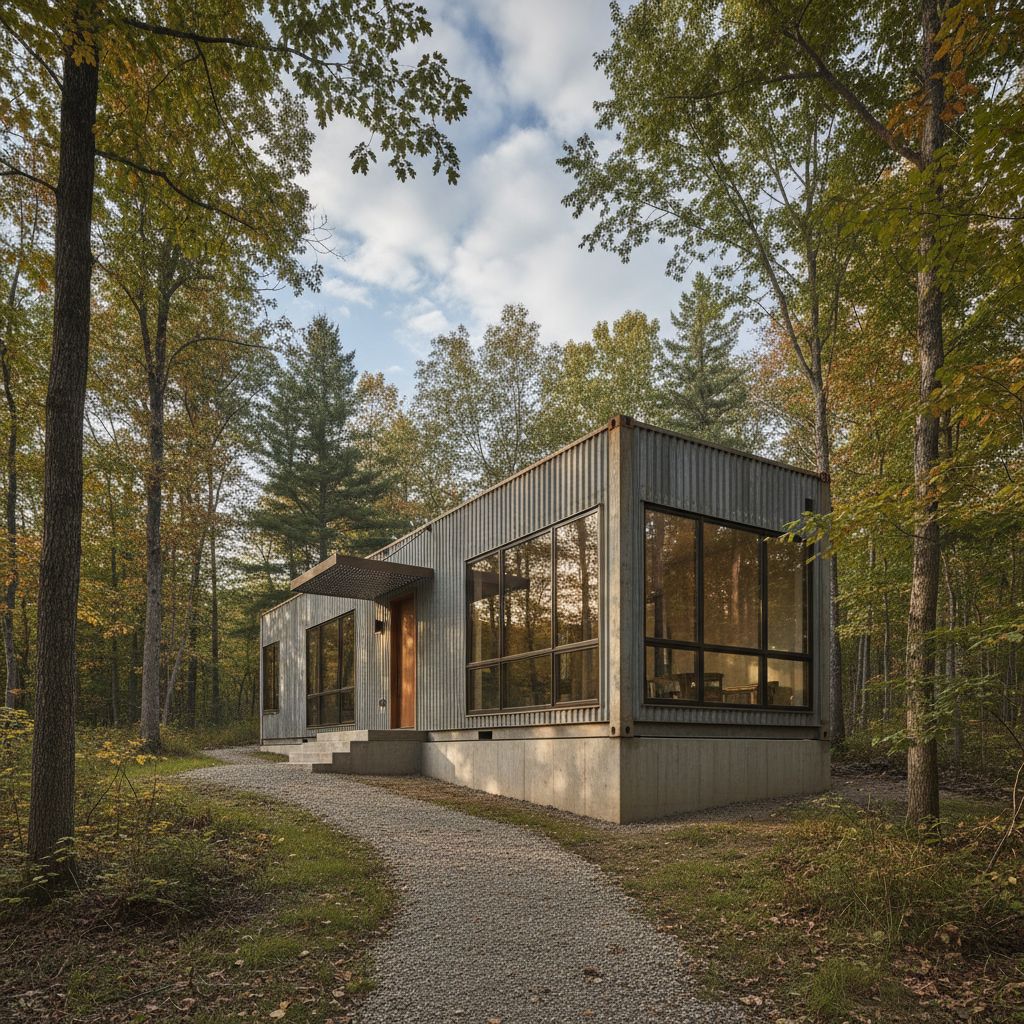
Container is a structure built from one or more steel shipping containers (ISO intermodal containers), either US-fabricated or imported as a finished or flat-pack unit. Container homes can be code-compliant in some jurisdictions if engineered, permitted, and inspected as a site-built or modular home — but the majority of "container homes" sold online are uncertified imports that cannot be legally used as primary residences in most US jurisdictions.
That's the headline. The details matter.
Modular: The Detailed View
A modular home is built in modules (sections) at a factory, inspected at the factory under a state modular program, trucked to the site, and set with a crane on a permanent foundation. The state modular insignia is the regulatory marker — it confirms the home meets the same IRC code as a stick-built house.
Modular homes finance through conventional construction-to-permanent loans. Fannie Mae and Freddie Mac buy modular mortgages on the secondary market under the same guidelines as site-built. The title is real-property, attached to the land. Insurance is a standard homeowner's policy. Appraisal at completion uses site-built comps.
Typical cost: $200–$350 per square foot all-in (module, transport, set, foundation, finish-out) for mid-range builds. $350–$600+ for high-design custom modular.
Resale market: strong. Modular homes appreciate with the land, just like site-built.
Prefab: The Umbrella View
Prefab is not a code category — it's a manufacturing approach. The five subcategories that live under "prefab":
Modular (described above): factory-sectioned, state-insignia, IRC code, real-property.
Manufactured (HUD): built to the federal HUD Code, shipped on a permanent steel chassis, carries a red HUD tag. Finances chattel or real-property. $50–$110 per square foot delivered. Real, code-compliant, financeable. Major builders: Clayton Homes, Champion Homes, Cavco, Skyline Homes.
Panelized: ships as flat wall, floor, and roof panels — often SIPs. Assembled on-site by a GC. Built to site-built (IRC) code. $180–$350 per square foot delivered.
Kit: ships as a materials bundle with instructions. Owner-builder or contractor assembles on-site. Built to site-built code. $150–$280 per square foot delivered, finished.
Tiny prefab: a small subcategory — THOW (RVIA + DMV), THOF (IRC Appendix Q), park model (ANSI A119.5 or HUD 233). See the tiny home guide for the full breakdown.
When someone says "prefab home," ask which subcategory. The answer changes everything downstream.
Container: The Honest View
Container homes split into two real groups.
US-fabricated, engineered, permitted container homes. A few specialist builders take ISO shipping containers, structurally engineer them, cut openings, add insulation that meets local climate code, add MEP systems to NEC/IPC standards, and ship the finished structure as a modular under a state modular program — or have it built on-site as a custom site-built home. Builders in this lane include Honomobo (which builds prefab modular homes from new steel structures, not used shipping containers, but operates in this aesthetic category) and a handful of regional specialists. Cost is comparable to or higher than conventional modular — the container itself is not cheap once you account for insulation, thermal bridging mitigation, and structural reinforcement.
Overseas imports sold on marketplaces. The dominant version of "container home" online is a flat-pack or expandable steel-frame unit manufactured overseas and drop-shipped through online sellers. These units typically carry no US certification — no state modular insignia, no HUD tag, no NEC-compliant electrical, no IPC-compliant plumbing. They are not financeable, not insurable as dwellings, and not permittable as primary residences in most jurisdictions. They can sometimes be permitted as accessory structures, agricultural buildings, or storage in permissive rural counties. They cannot be used as a primary home in any jurisdiction with a building department actively enforcing code.
The honest version: the first group is real and serves a narrow buyer. The second group is the source of the "container home went sideways" stories that fill consumer-protection forums.
Side-by-Side Comparison
| Factor | Modular | Prefab (HUD/manufactured) | Container (engineered US) | Container (overseas import) |
|---|---|---|---|---|
| Typical $/sq ft delivered | $200–$350 | $80–$160 | $200–$400+ | $20–$80 (kit only) |
| Certification | State modular insignia | HUD tag | State modular or site-built | None |
| Code | IRC (state) | HUD federal | IRC or state modular | None |
| Foundation included | Yes | Yes (pier or slab) | Yes | No |
| Financeable | Yes (conventional) | Yes (chattel or real-property) | Yes (where insignia applies) | No |
| Permittable as primary residence | Yes | Yes (where zoning allows) | Yes (where engineered + permitted) | Rarely |
| Insurance | Standard homeowner's | Standard dwelling | Standard dwelling | Outbuilding only, if at all |
| Title | Real property | MH title or real property | Real property | None (bill of lading) |
| Warranty | 1–10 yr US-enforceable | 1 yr HUD + structural | Builder-dependent | Effectively none |
| Resale market | Strong | Strong | Limited (niche) | None |
| Delivery timeline | 4–9 months total | 4–10 weeks | 4–9 months | 8–20 weeks (sea + customs) |
The Decision Tree
The right product depends on what the buyer actually needs.
If the goal is a real, financeable, appreciable primary residence with modern design and a fast build: modular.
If the goal is the lowest dollar-per-square-foot new construction that still permits, finances, and insures as a real home: manufactured (HUD).
If the goal is custom architecture with factory-precision framing on a unique site: panelized.
If the goal is owner-built construction with the buyer providing labor on private land: kit.
If the goal is a small dwelling — backyard ADU, vacation cabin, rural primary on small acreage: tiny prefab or small modular.
If the goal is the container aesthetic and the buyer is willing to pay modular-equivalent pricing for an engineered, permitted, US-built version: engineered container from a regional specialist.
If the goal is the lowest-cost possible structure on private rural land where no permit is required and the buyer accepts the risk: an overseas import container kit — with eyes open.
Why Buyers Mix These Up
Three reasons. First, "prefab" is used by builders, marketers, and journalists as shorthand for "modern factory-built home" — which collapses modular, panelized, and container into a single category in the buyer's mind. Second, photos look similar online — a modern modular and an engineered container both photograph as flat-roof, dark-clad, modern boxes. Third, manufactured-home stigma drives some HUD-code builders to call their product "modular" or "prefab" in marketing copy when it's legally manufactured.
The way out is to ask three questions before signing anything: What certification does it carry? Can it be financed where I'm putting it? Can it be permitted as a primary residence on my land? If the seller can't answer all three clearly, the product is not the category they're implying it is.
The PERCH View
PERCH lists verified US modular and manufactured builders so buyers can compare real specs across the two categories that work as financeable, code-compliant, appreciable homes for the broadest set of buyers. If you've been bouncing between prefab, container, and modular marketing for a few weeks, the right next step is to pick the category that matches your code, your financing, and your land — then narrow to the builders that serve your region.
Data Sources & Further Reading
The specifics in this guide reference the following authoritative sources — check them directly for the current numbers, program rules, and code text before finalizing a purchase or build decision:
- International Code Council (IRC/IBC)
- HUD manufactured-home construction standards (24 CFR Part 3280)
- Freddie Mac CHOICEHome
For federal manufactured-housing dispute and repair resources, see HUD's Manufactured Home Dispute Resolution Program. For financing standards on factory-built product, Fannie Mae MH Advantage and Freddie Mac CHOICEHome set the terms most lenders reference.
Join the conversation
Comments
Reader questions get answered. Real names and a working email — that's it.