The 22M Wedge
The Elon Musk Tiny Home: The Truth About the $50K Boxabl Story (2026 Update)
Did Elon Musk really live in a $50K Boxabl tiny home? The real story behind the 2021 headline, what Boxabl actually is in 2026, and the 22M-household category the press accidentally introduced you to.
On this page
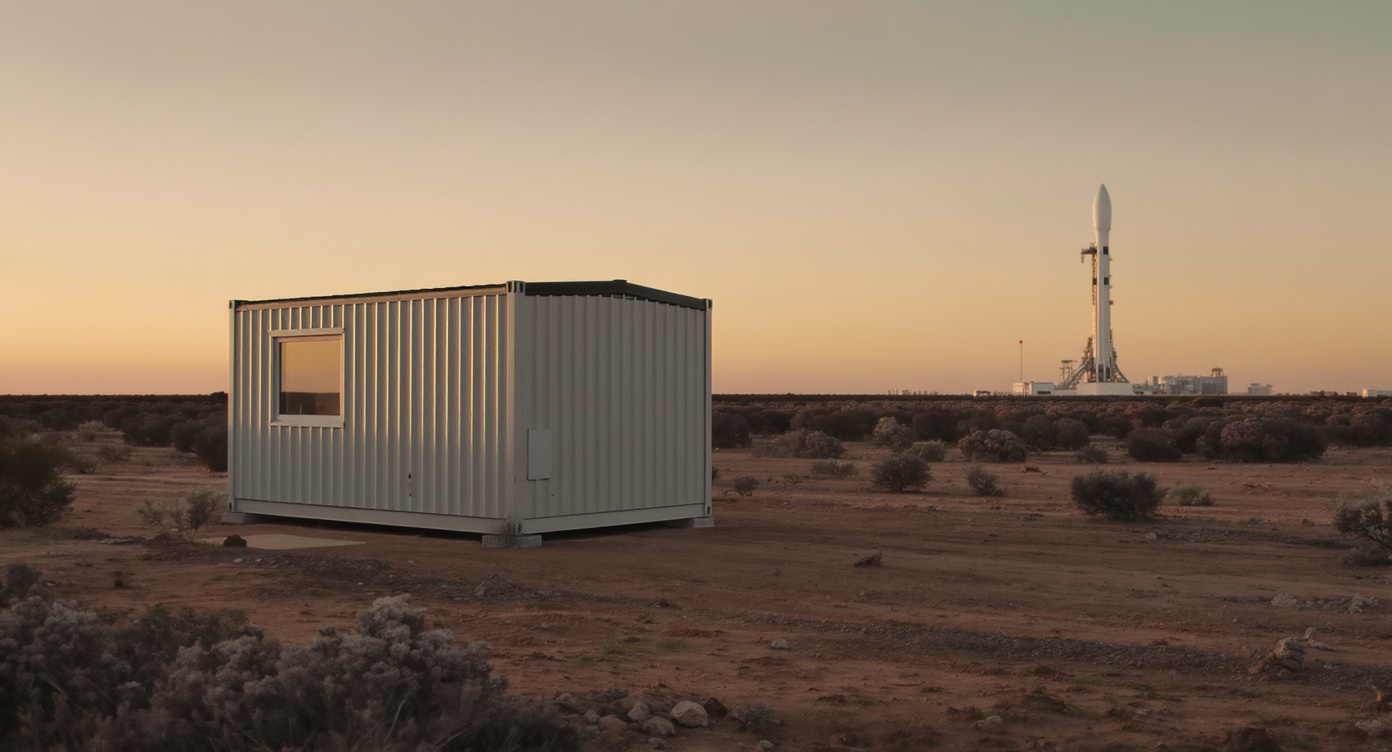
If you typed "Elon Musk tiny home" into a search bar, you probably saw the same headline I did back in 2021: the richest man on earth was living in a $50,000 prefab box next to a SpaceX facility in South Texas. The story was irresistible. A foldable house. A billionaire. A photo of a small white unit on a patch of dirt near Boca Chica. It went everywhere.
Five years later, the headline did more for a company called Boxabl than almost any paid campaign could have. It also distorted what most people now think about modular and prefab housing. So let's sort out what actually happened, what Boxabl actually is, and why the real story isn't about one factory or one billionaire — it's about the 22 million American households already living in the category the headline accidentally introduced you to.
The Original Story
In June 2021, a Boxabl marketing video featured a Casita installed on a lot near SpaceX's Starbase facility in Texas. Boxabl said in its own promotional material that it had sold a unit to a "secretive customer" in the area. The internet did the math quickly. SpaceX. Boca Chica. Famously frugal-coded billionaire who'd recently said he was selling his California mansions. The Musk-Boxabl connection became one of the most-shared housing stories of the year.
Musk himself was characteristically slippery about it. In a tweet that same month, he wrote that his primary residence was "a ~$50K house in Boca Chica" rented from SpaceX. He didn't name Boxabl. He didn't deny it either. Boxabl never officially confirmed the customer identity. That ambiguity was, in retrospect, the most valuable part of the campaign — it let every outlet write a headline with a question mark and a photo of a Casita.
By 2022, multiple reporters had visited Boca Chica and noted that the Boxabl unit appeared to be used as a guesthouse or auxiliary structure, not a primary residence. Musk's actual living arrangements in the area reportedly involved staying at homes owned by friends and SpaceX colleagues. The "Elon lives in a $50K box" story was, charitably, half true at best.
But by then it didn't matter. Boxabl had its hook.
What Boxabl Actually Is
Boxabl is a Las Vegas-based factory founded by father-and-son team Paolo Tiramani and Galiano Tiramani. Their flagship product is the Casita: a 375-square-foot foldable studio unit that ships flat on a trailer, unfolds on site in under an hour, and includes a kitchen, bathroom, and combined living/sleeping space. The published retail target was around $50,000 for the unit itself, not counting site prep, foundation, utility hookups, permits, or transport — costs that, in practice, often double the all-in price.
The company raised an enormous amount of money through equity crowdfunding on platforms like StartEngine, reportedly pulling in north of $170 million across multiple rounds from tens of thousands of small retail investors. That capital structure matters, because it shaped both the company's incentives and its public communications. When your investor base is 40,000 people who each put in a few hundred or a few thousand dollars, every viral headline is also a fundraising tool.
The Casita itself is a legitimate piece of factory engineering. The folding mechanism works. The shell is built to withstand transport. The unit ships as a finished interior, not a kit. On a pure product basis, Boxabl built something novel.
The gap, as is often the case in prefab, is between the factory and the front door.
What Happened Next
By 2026, the picture is clearer and, depending on who you ask, more sobering.
Boxabl has publicly reported delivering somewhere in the low thousands of units cumulatively, with the majority going to commercial buyers, government pilots, and bulk orders rather than individual retail customers. A widely cited order from the Department of Defense for workforce housing accounted for a significant chunk of early production. Retail availability to walk-up buyers has remained limited, with waitlists, regional restrictions, and the persistent challenge that the published $50K price doesn't include any of the things that turn a box on a trailer into a livable home.
Public reporting from outlets including the Las Vegas Review-Journal and various crowdfunding investor forums has documented complaints filed with the SEC by disgruntled investors alleging concerns about communications, delivery timelines, and the gap between marketing claims and shipped units. Boxabl has disputed characterizations of those complaints in its own statements. I'm not going to litigate that here — it's a matter of public record. What matters for a buyer is simpler: if you can't readily order one and put it on your land this quarter, it's not a housing option for you yet. It's a thesis.
This isn't unique to Boxabl. Almost every "disruptive" prefab startup of the last decade — Katerra, Veev, Plant Prefab, and others — has run into the same wall. Building a great factory is hard. Building a great factory plus a logistics network plus a permitting workflow plus a financing pathway plus a service organization is an order of magnitude harder.
The Bigger Story
Here's the part the Elon headline buried.
The category Boxabl operates in — factory-built, modular, and manufactured housing — already serves roughly 22 million Americans. That's not a projection. That's the current installed base. It's bigger than the population of Florida. It's bigger than the combined populations of New York City, Los Angeles, Chicago, Houston, and Phoenix.
These homes are built in factories in Indiana, Alabama, Texas, Georgia, and a dozen other states. They're sold through dealers, parked on land owners' lots, financed through specialty lenders, and lived in by families, retirees, workers, and small-town homeowners. The category is older than the iPhone. And it's been quietly housing roughly one in fourteen Americans for decades while the press treated it like a fringe story.
What Wall Street tried to do, starting around 2018, was consolidate this category through a viral product story. The pitch was that one factory, one design, one brand would crack the affordability crisis. Boxabl was the most photogenic version of that bet.
The 22 million households in modular and manufactured housing weren't waiting for any of them. They already live the category. What they've lacked isn't a better factory. It's a better marketplace.
Think of it the way Autotrader and Zillow think about cars and houses. The cars are already made. The houses are already built. The job of those platforms isn't to manufacture anything — it's to make the existing supply legible, searchable, financeable, and transactable. Modular housing has had a manufacturing layer for fifty years. What it hasn't had is a real consumer-facing marketplace layer.
That's the wedge.
How to Think About Modular Buying After the Hype
If you came to this article curious about a $50K tiny home and you're walking away thinking about a real prefab or modular purchase, here's the honest frame.
A finished home — modular, manufactured, or park model — installed on your land with utilities, foundation, transport, and permits, almost never lands at the headline factory price. Plan for the all-in number to be 1.5x to 2.5x the unit sticker.
A real factory delivers on a timeline you can hold them to. If the answer to "when can I receive this" is "join the waitlist," you're funding the next round, not buying a house.
A real category has resale. Modular and manufactured homes have a deep secondary market — owners selling to other owners, often without an organized place to list. That's where most of the actual transaction volume in this space lives.
A real financing path exists. There are lenders who specialize in modular, manufactured, and park-model homes — but they're not the same lenders most people use for a stick-built mortgage, and the product structures differ.
PERCH · Home made for your land.
If you're past the Elon headline and into the real question —
join the PERCH waitlistRelated guides
The weekly brief for modern modular living.
Design concepts, zoning workarounds, and market strategies — the specific ones the 22 million families in the missing middle actually need.
Under 3 minutes. Every Friday afternoon. Unsubscribe with one click.
Frequently asked questions
Did Elon Musk actually buy a Boxabl tiny home?
Where does Elon Musk actually live?
Is a Boxabl Casita actually $50,000?
Can I buy a Boxabl Casita today?
Is Boxabl a scam?
What's the difference between modular, manufactured, and prefab?
How big is the modular and manufactured housing market in the US?
What does PERCH do?
Join the conversation.
Share your take on this guide.
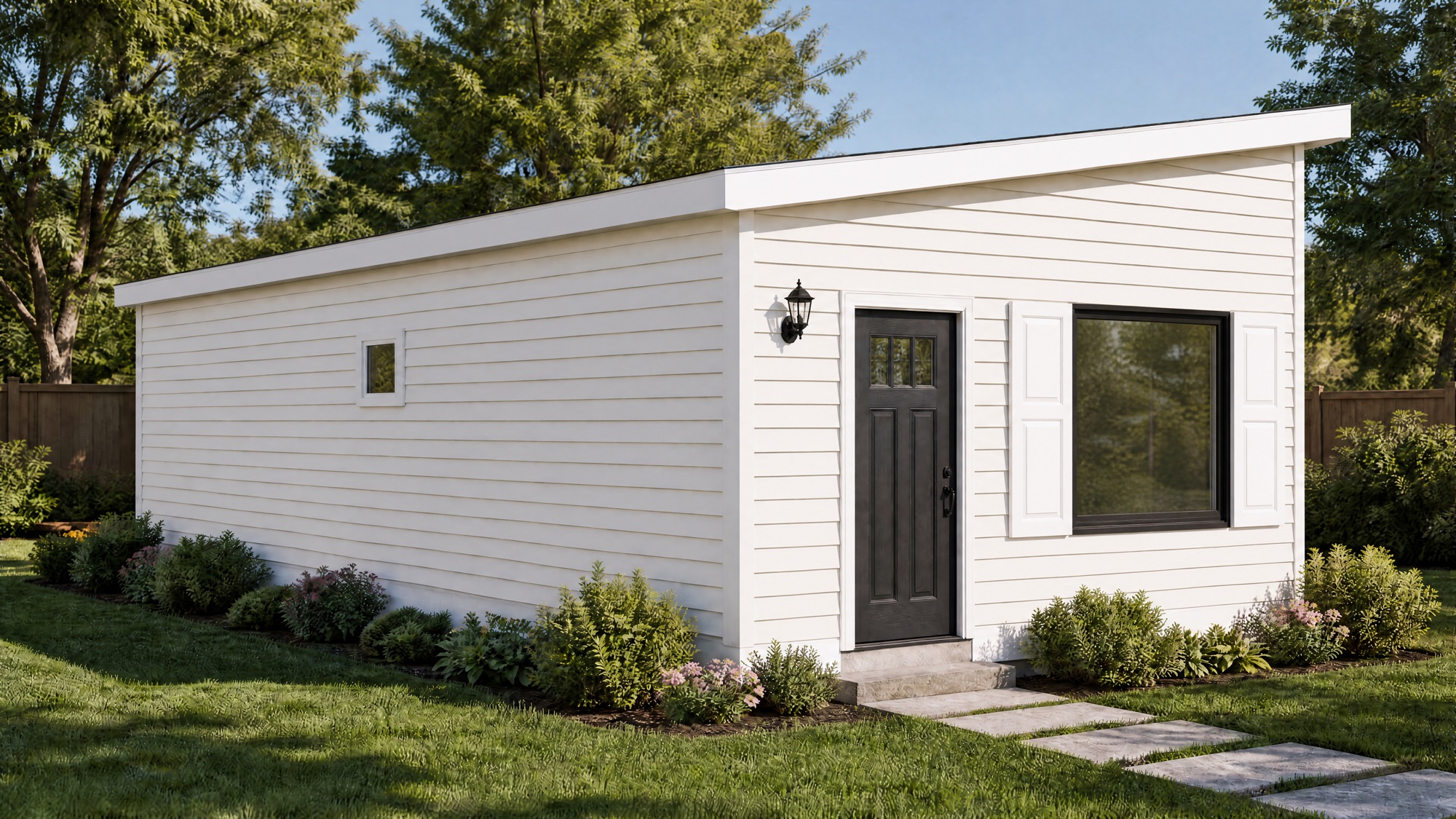 Available now
The Nest
Delivered to your parcel · 60–75 days
- PERCH-designed
- Escrow with proof
Refundable within 7 days.