Guides
Container Home Cost 2026 — The Full Price Breakdown Buyers Ask For
The advertised $10K-$35K number is the empty steel box. A finished, permitted 2026 container home runs $85K-$310K all-in — here is the honest line-item breakdown by size, region, and hidden cost.

On this page
Container home cost is the query buyers type when they are ready to spend real money, and it is also the query the industry answers worst. Most search results list a factory sticker between $10,000 and $35,000 and stop there. That number is the price of the empty steel box before it is a home. This guide is the honest 2026 breakdown — what a container home actually costs to deliver, live in, and finance, with the line items dealers usually leave off the quote.
If you have already read the PERCH pillar on what a container home actually is, this page is the compact price sheet. If you have not, this is a fine place to start.
What Drives the Real Number
Six variables move the all-in cost more than any interior finish decision.
| Cost driver | Typical range | Notes |
|---|---|---|
| Modules (structure) | $18,000 – $90,000 | 1 to 3 containers, 8×20 or 8×40 |
| Site prep + foundation | $12,000 – $45,000 | Slab, piers, or basement — soil-dependent |
| Delivery + crane | $4,500 – $18,000 | Distance from factory + rigging complexity |
| Utility hookups | $8,000 – $35,000 | Well/septic on rural land runs highest |
| Permits + engineering | $2,500 – $12,000 | Local jurisdiction sets the floor |
| Interior finish (turnkey) | $35,000 – $110,000 | HVAC, plumbing, electric, cabinets, flooring |
The lowest all-in build ever seen at PERCH inside a permitted US jurisdiction was $67,000 — a single-container 20-foot studio ADU behind a primary residence in rural Georgia, on a helical-pier foundation with existing utility stubs. The highest was $412,000 — a four-container two-story custom home on a full basement in coastal California. Both were legal and inspected. Neither was typical.
Container Home Cost by Size
The industry standard is to quote per container, but most buyers think in square feet. Here is the crosswalk for 2026 US pricing on a finished, permitted build.
| Configuration | Sq Ft | All-in cost range | Time to occupancy |
|---|---|---|---|
| 20-ft single (1 container) | ~160 sq ft | $85,000 – $135,000 | 4-6 months |
| 40-ft single (1 container) | ~320 sq ft | $110,000 – $175,000 | 5-7 months |
| Two 40-ft joined | ~640 sq ft | $145,000 – $205,000 | 6-8 months |
| Three-container L-plan | ~960 sq ft | $195,000 – $265,000 | 7-10 months |
| Four-container two-story | ~1,280 sq ft | $250,000 – $340,000 | 9-14 months |
These ranges assume municipal utility access and a jurisdiction that has permitted a container residence in the last 24 months. Rural land with a well and septic system adds $18,000-$45,000. A jurisdiction that has never permitted a container residence adds 6-14 weeks of engineering review and roughly $8,000 in additional professional fees.
The Line Items Buyers Miss
Foundation engineering. A container has a steel frame designed to sit on the deck of a cargo ship, not on soil. Every permitted container residence in the US requires a foundation designed by a licensed structural engineer for the specific site — helical piers, poured slab, pier-and-beam, or full basement. Budget $1,200-$3,500 for the engineered stamp alone.
Insulation. Steel walls conduct heat and cold aggressively. Every livable container residence in a US climate zone needs closed-cell spray foam or spray-on ceramic insulation on the interior — $6-$14 per square foot of wall surface. On a 40-foot container that is $2,400-$5,600 in insulation alone before drywall.
Site access. If the delivery truck cannot get within 40 feet of the pad, the crane has to reach farther, which changes the crane class and can double the delivery-and-set line item. Rural driveways, tree canopies, and utility easements are the top three reasons a $6,000 delivery quote becomes an $18,000 delivery quote on delivery day.
Impact fees and connections. Water, sewer, gas, and power connections are almost never included in a container home builder's base price. Municipal impact fees for a new residence run $3,000-$14,000 depending on the jurisdiction. Utility connection charges — the physical hookup — run $2,500-$18,000 depending on distance to the main line.
Post-installation permits. Certificate of occupancy inspections, final electrical and plumbing sign-off, and any required septic sign-off collectively run $600-$2,400 in most US jurisdictions.
Where Container Homes Cost the Least (And the Most)
The same 640-square-foot two-container build costs meaningfully different amounts across US metros, mostly driven by labor, permit fees, and code overlay complexity.
| Region | Typical all-in cost (640 sq ft, 2 containers) |
|---|---|
| Rural Southeast (GA, TN, SC, MS) | $128,000 – $172,000 |
| Rural Southwest (AZ, NM, TX rural) | $135,000 – $185,000 |
| Mid-cost metros (Nashville, Atlanta, Phoenix) | $152,000 – $210,000 |
| Florida Coastal (permitting overhead) | $165,000 – $225,000 |
| Colorado Front Range | $175,000 – $240,000 |
| Pacific Northwest (Portland, Seattle) | $185,000 – $265,000 |
| Coastal California | $215,000 – $340,000 |
| Northeast (MA, NY, CT) | $210,000 – $325,000 |
The regional spread is not primarily about the container itself. It is about how much a licensed electrician charges per hour, how long the permitting queue takes, and whether the local code authority has approved a container residence before.
Financing a Container Home in 2026
Most conventional mortgage lenders will not underwrite a container residence, and the ones that will require the home to be permanently affixed to a foundation and meet full IRC compliance — not the more forgiving HUD code that manufactured homes use. In practice this means three financing paths in 2026:
- Cash or 401(k) loan. By far the most common. Roughly two-thirds of the container home buyers PERCH has spoken with in the last twelve months paid in full at build sign-off.
- Construction-to-permanent loan. A regional community bank or credit union with in-house underwriting authority. Rates in mid-2026 ran roughly 100-175 bps above the prime conventional mortgage rate.
- Personal or unsecured home improvement loan. Faster to close, higher rates, capped around $75,000-$100,000 at most lenders. Common for ADU-scale builds behind an existing primary residence.
If you are financing rather than paying cash, run the PERCH financing decision tree before you sign a build contract. The wrong loan type on the right home is the top reason a container project stalls between permit and delivery.
What The Cost Does Not Include
Container home builders quote the structure, sometimes the delivery, and occasionally the interior finish. What is rarely in the quote:
- Land acquisition. Median rural US lot in 2026: $28,000-$95,000 depending on state.
- Site prep beyond a simple grading pass. Well drilling: $8,000-$18,000. Septic install: $6,500-$14,000.
- Landscaping, driveway, exterior lighting, fencing. Budget $8,000-$25,000 on a finished build.
- Furniture and appliances. Full turnkey furnishing runs $12,000-$35,000.
- Property taxes and homeowners insurance. Both run 15-30% higher on a container residence than on a comparable traditional single-family home in most US markets, due to the still-nascent comp set for insurance underwriting.
Every one of these line items shows up on the closing sheet or the first year's expenses. Buyers who budget only the container home builder's quoted number consistently underestimate the all-in by 25-40%.
Buyer Playbook — Getting to a Real Number
The fastest path to a container home cost quote you can actually trust looks like this:
- Pick a parcel. Cost math is meaningless without a specific address. Utility distance and soil type change everything.
- Confirm jurisdictional posture. Call the local code authority. Ask directly: "Has this jurisdiction permitted a container residence in the last 24 months?" If the answer is no, the timeline is 6-14 weeks longer and the fees are meaningfully higher.
- Get three engineered quotes. Not three sales-brochure quotes. Three quotes from container builders who will name the specific engineer they will use for your foundation, the specific delivery route, and the specific utility connection points.
- Add 15% contingency. Every container project in the PERCH data set that came in under budget carried at least a 15% contingency line in the initial budget. Every project that overran had none.
Related guides
When You Are Ready
When you are ready to move on a container home — as a buyer looking at a specific parcel — we will help you check the land, pick a home from our catalog, and settle through licensed escrow, wire, or ACH. Check your land → or browse homes →.
Frequently asked questions
What is the true 2026 cost of a container home in the US?
Why is the advertised price so much lower than the real cost?
Are container homes cheaper than modular or manufactured homes?
Can I finance a container home with a conventional mortgage?
How long does a container home build take?
What is the cheapest container home configuration?
Do container homes hold their value?
What states are cheapest to build a container home in?
Join the conversation.
Share your take on this guide.
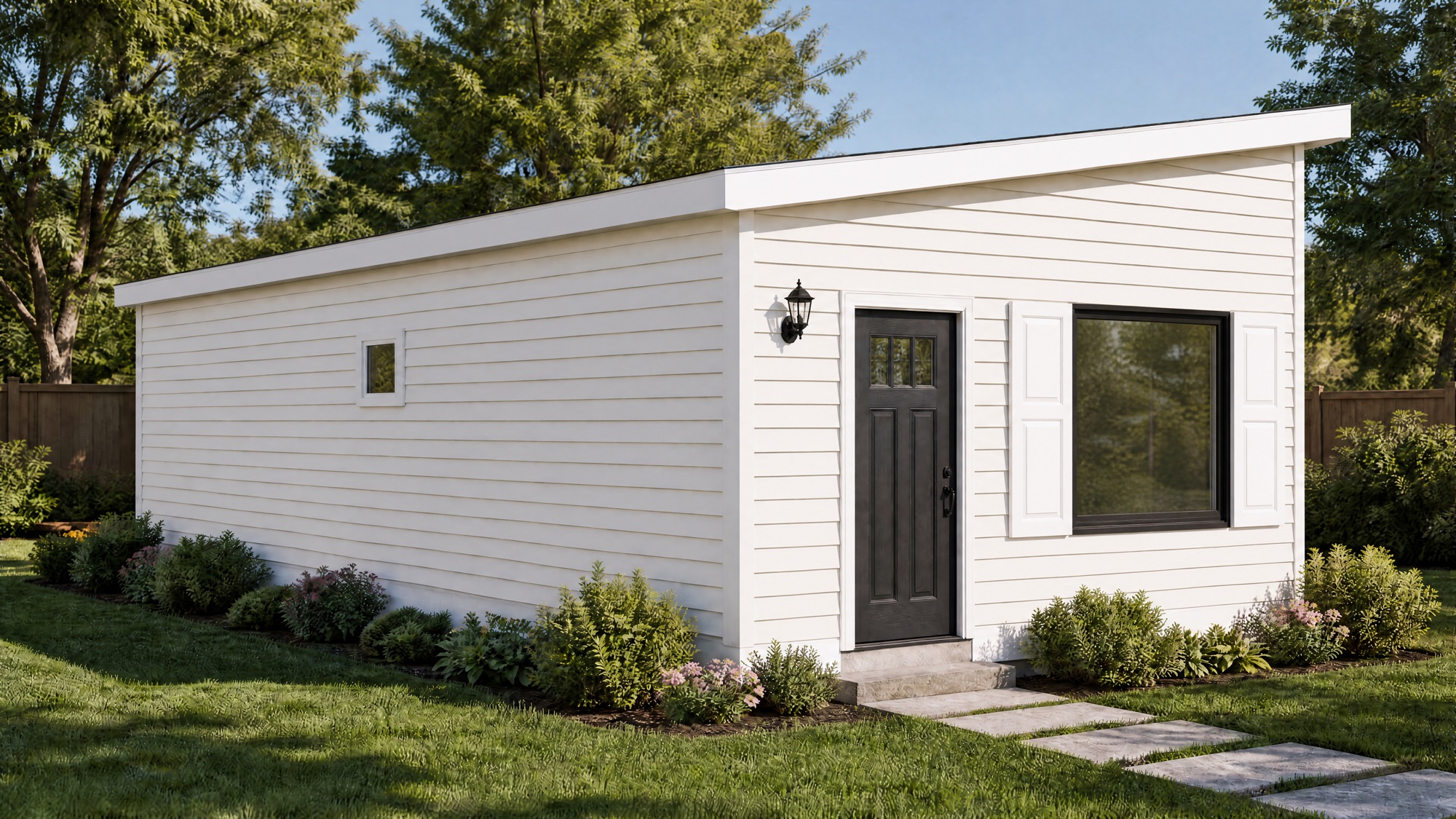 Available now
The Nest
Delivered to your parcel · 60–75 days
- PERCH-designed
- Escrow with proof
Refundable within 7 days.