Guides

Expandable Container Homes for Dallas, TX: The 2026 ADU and Affordable Housing Reference

Expandable Container Homes for Dallas, TX: The 2026 ADU and Affordable Housing Reference
On this page

    Expandable container homes have emerged as the highest-yield ADU configuration in Dallas metro in 2026 — combining the compact shipping footprint required for tight infill lots with the larger deployed footprint needed for rentable interior space. Dallas's 2024 ADU streamlining ordinance and the broader Texas SB 1412 framework support expandable container ADUs across most of the metro. This guide builds on our broader Dallas tiny home guide with specific focus on the expandable container category and the ADU income economics it produces.

    The Short Answer

    Expandable container ADUs are permitted across the City of Dallas and most surrounding Dallas County, Collin County, Tarrant County, and Denton County jurisdictions. Delivered, permitted all-in cost for a 320 to 480 square foot expandable container ADU in Dallas metro typically runs $108,000 to $195,000. Long-term rental income for a Dallas-area ADU averages $1,650 to $2,800 monthly depending on submarket. Payback period at long-term rent runs 5-8 years against a 25-30 year structural service life.

    Why Expandable Beats Standard Container in Dallas

    The 8-foot interior width of a standard container is below the minimum useful width for conventional residential furniture in primary residences — but for ADU configurations (1-bedroom rentals targeting single-occupant or couple tenants), the expandable form factor produces better outcomes:

    Tighter lot fit at shipping. Compact 20-foot footprint maneuvers into Dallas infill lots where 40-foot containers cannot reach.

    Larger deployed living area. 320-480 sq ft after expansion versus 160 sq ft for a non-expandable 20-foot — the deployed area supports more rentable configurations.

    Better setback compliance. The compact shipping footprint clears setback requirements; the deployment direction can be planned to maintain compliance.

    What an Expandable Container ADU Costs in Dallas in 2026

    For a 320 to 480 square foot expandable container ADU on permanent foundation:

    Cost componentTypical 2026 range
    Expandable container unit$54,000-$98,000
    Delivery from factory$4,200-$9,500
    Crane placement$2,800-$5,500
    Foundation (expansive clay engineering)$16,000-$32,000
    Site prep$5,500-$14,000
    Utility connections$9,500-$22,000
    Permits, plan review$3,500-$8,500
    Texas wind-code certification$4,500-$9,500
    Expansive clay engineering$4,500-$11,000

    Delivered, permitted all-in: $104,500-$210,000.

    Dallas ADU Rental Income Math

    SubmarketLong-term monthlyAnnual gross6-year payback range
    Uptown / Bishop Arts$2,200-$2,800$26,400-$33,6004-7 years
    Oak Cliff / Lakewood$1,850-$2,400$22,200-$28,8005-8 years
    North Dallas / Preston Hollow$2,000-$2,700$24,000-$32,4005-7 years
    Plano / Frisco$1,800-$2,500$21,600-$30,0005-8 years
    Garland / Mesquite$1,500-$2,000$18,000-$24,0006-9 years

    The Path Most Dallas Buyers Take

    1. Confirm parcel zoning permits ADU under 2024 Dallas ordinance
    2. Pull soil report and TDI wind zone for lot
    3. Get bids from Texas-experienced factories with expansive clay + wind-code spec
    4. Lock factory pricing
    5. Engage Texas-licensed general contractor
    6. Submit permit application
    7. Factory production parallel with site prep
    8. Delivery, set, finish, inspections, certificate of occupancy

    End-to-end timeline: 5-8 months.

    PERCH was built to surface verified Texas factories with Dallas-area compliance, real permit timelines, and concierge support.

    Ready to build an expandable container ADU in Dallas metro? Join the PERCH waitlist →.

    Related guides

    Frequently Asked Questions

    QuestionAnswer
    Are expandable container ADUs legal in Dallas?Yes — across the City of Dallas and surrounding Dallas, Collin, Tarrant, and Denton counties under Texas SB 1412 and the 2024 Dallas ADU ordinance.
    What's the typical Dallas expandable container ADU cost?$104,500-$210,000 all-in including expansive clay foundation engineering, Texas wind-code certification, and permits.
    What rental income should I expect?$1,500-$2,800 monthly long-term depending on submarket. Uptown and Bishop Arts produce highest yields per dollar of build cost.
    Why expandable instead of standard container?Compact shipping footprint fits tighter Dallas infill lots; larger deployed footprint supports better rental configurations. Best of both forms.
    Do I need owner-occupancy in Dallas?No — City of Dallas eliminated owner-occupancy requirement for ADUs in 2024 ordinance. Unincorporated counties also permit non-owner-occupied.
    What's the Dallas permit timeline?75-150 days inside Dallas city limits; 60-130 days in unincorporated counties. Plano and Frisco run longer at 90-180 days.
    Can I run short-term rental?Subject to municipal STR rules. Most Dallas-area jurisdictions permit STR with registration; some HOA-controlled areas restrict.
    ---
    PUBLISH METADATA
    
    Blog title: Expandable Container Homes for Dallas, TX: The 2026 ADU and Affordable Housing Reference
    Excerpt: Expandable container homes have become the highest-yield ADU configuration in Dallas metro. Compact shipping footprint, larger deployed area, $108-195K all-in, 5-8 year payback at long-term rent.
    SEO title: Expandable Container ADU Dallas TX — 2026 Buyer's Guide
    SEO description: 2026 Dallas expandable container ADU costs, submarket rents, payback periods, expansive clay foundations, Texas wind code. Join PERCH.
    Primary keyword: expandable container homes dallas
    Secondary keywords: dallas expandable container, dallas adu container, expandable container texas, dallas modular adu, dallas affordable housing container
    Tags: city & state, container homes, expandable homes, ADU & rental, cost & financing
    URL slug: affordable-housing-solutions-expandable-container-homes-for-dallas-texas
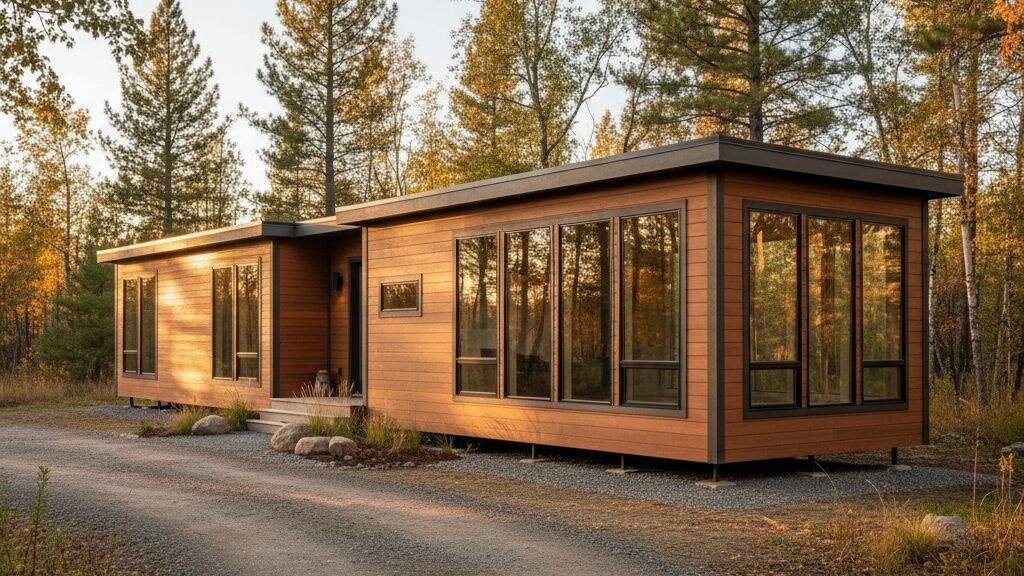
    Image prompt: A modern prefab expandable home on a private lot at golden hour — rectangular two-section deployable dwelling with warm cedar-look composite siding, dark metal trim outlining the corners and edges, large floor-to-ceiling picture windows on multiple elevations, low-profile flat roof, finished as a small permanent house (NOT a shipping container conversion — this is a factory-built prefab that ships flat inside a 40-foot container and deploys on site). Photorealistic editorial, no logos, no text, no faces, 16:9 landscape.
    Image alt text: Modern expandable container ADU in a Dallas suburban backyard at golden hour with live oaks and ranch fence.
    Internal link targets used: /guides/tiny-homes-in-dallas-affordable-sustainable-living-in-a-big-city, /guides/are-expandable-container-houses-worth-it-exploring-the-benefits-and-investment-potential, /
    External link sources used:
    Schema.org type recommended: Article
    SERP feature targeted: snippet-paragraph
    Estimated reading time: 6 min read
    ---

    · One note from the patio · Fridays ·

    The weekly brief for modern modular living.

    Design concepts, zoning workarounds, and market strategies — the specific ones the 22 million families in the missing middle actually need.

    Under 3 minutes. Every Friday afternoon. Unsubscribe with one click.

    Frequently asked questions

    How does affordability relate to rental yield?
    Yield is rent divided by property value. If a state has low rent but even lower home values, yield can still be strong. Oklahoma, Arkansas, and Missouri are examples — absolute rent is low, but home values are lower, and yield ratios end up in the top-quartile nationally.
    Is Puerto Rico really the cheapest US market to rent?
    Yes, by HUD's methodology. The 11-metro average FMR of $554 for a 2-bedroom is verifiable in HUD's FY2025 dataset. Actual market rent in PR runs 20-40% above FMR, but even at the higher figure, PR is well below any US state.
    What are the risks of investing in a low-rent state?
    Population trend is the primary risk. West Virginia and Louisiana have flat-to-declining populations, which caps long-term rent growth. Missouri, Oklahoma, and North Dakota all have stable or growing populations. Always cross-check state population trends against the 10-year yield outlook, not just the current snapshot.
    Can I finance a modular home in these states?
    Yes — every state on this list has an active specialty-lender network for modular and manufactured product. The [PERCH Financing Finder](/financing-finder) matches your deal to the right lender track (chattel, MH Advantage, FHA Title I/II, VA, USDA Rural).
    How often does HUD update this data?
    Once per year, in October, for the federal fiscal year. FY2026 FMR will publish in October 2026 and will feed the next PERCH Rental Yield Index release.
    Which of these states is the strongest for tiny home rentals?
    Arkansas, Oklahoma, and Missouri consistently show up in the top-quartile of PERCH Yield for tiny-home and ADU rentals, largely because home values in these states are low enough that a $60-90K tiny home hits attractive rent-to-value ratios in university and secondary metros.
    Share
    Reader comments

    Join the conversation.

    Share your take on this guide.

    0 / 500

    Your email stays private. Only used to notify you of replies.

    Your comment is in.

    It’ll show up under the guide once approved. Watch your inbox for replies.

    Post another →