Guides
Tiny Homes on Wheels for Sale in 2026 — Prices, Models, Movability, and the Nationwide Buyer Pool
Tiny house on wheels prices, three tiers, certifications, delivery cost, and the strategic reality that movability opens a nationwide buyer pool.
On this page
The neutral marketplace view of tiny houses on wheels. What they cost, how they compare, how movability changes the buyer pool, and how owners actually list them.
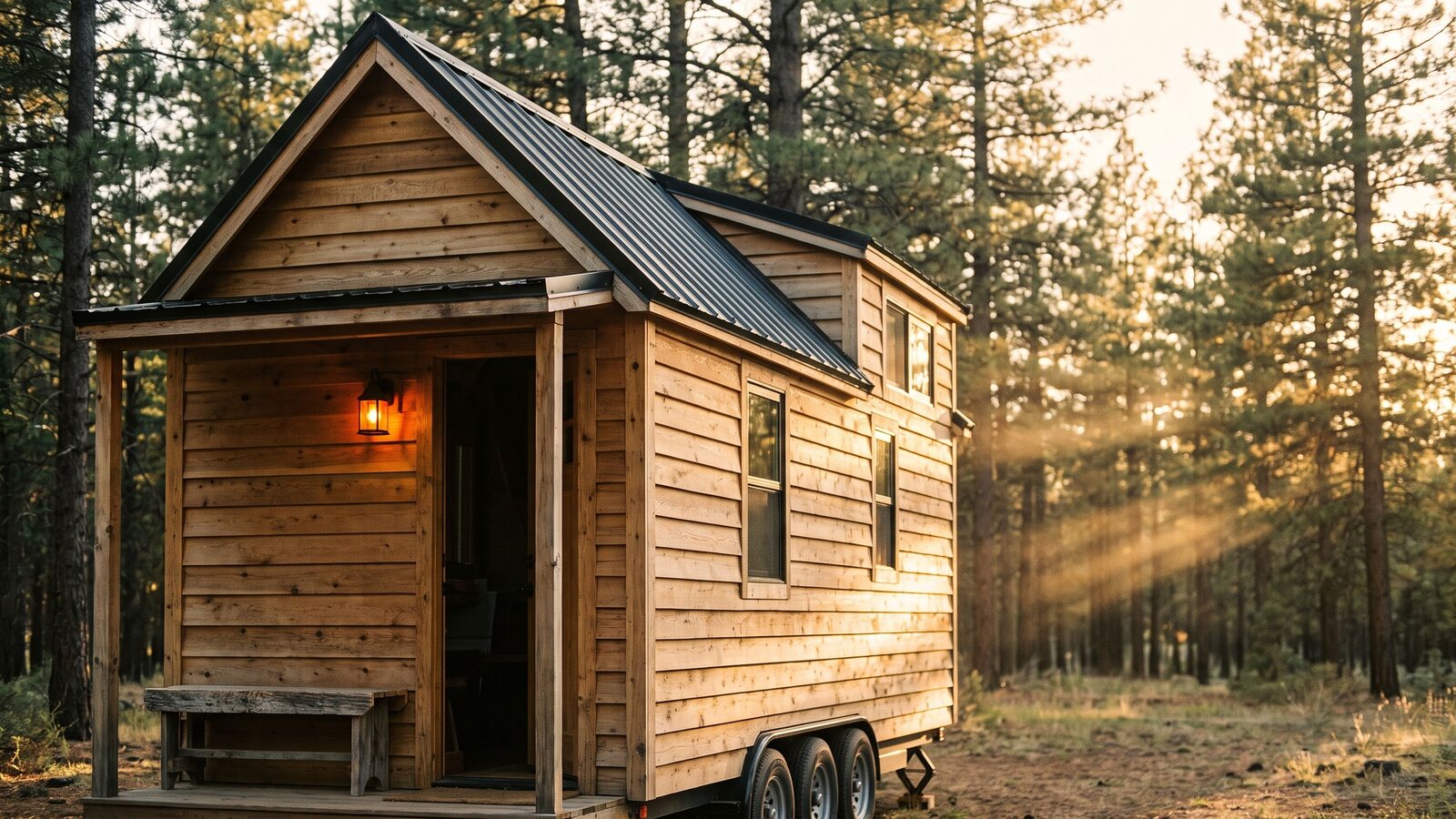
Tiny homes on wheels for sale in 2026 typically range from about $28,000 for a used entry-level THOW through $170,000+ for a fully-outfitted four-season builder-crafted model. The category has settled into three product tiers, each with its own buyer, price band, and use case. The single most under-appreciated feature of a tiny home on wheels is not the interior square footage — it is the wheels. Movability changes who the buyer is and what the home is worth.
This is the neutral view of the market — models, prices, delivery, permits, and what owners looking to sell one should know.
The short version
- Entry-level tiny homes on wheels (used, DIY, or basic new): $28,000-$55,000
- Mid-tier builder-crafted THOWs (new, 20-28 feet): $55,000-$95,000
- Premium builder THOWs (four-season, 24-30 feet, high-end finishes): $95,000-$170,000+
- Delivery runs $1.50-$3.00 per loaded mile plus $500-$3,000 for setup, and the buyer typically covers it
- The nationwide buyer pool is the strategic reality — a THOW built in Oregon can be sold to a buyer in Florida, delivered, and set up on their owned land
What "tiny home on wheels" actually means in 2026
The term covers homes built on a trailer chassis with axles and wheels, designed as a permanent-feeling residential structure rather than a recreational vehicle. The category is distinct from:
- RVs — built to RVIA standards, designed for travel, typically depreciate faster
- Park models — RV-classified but larger (up to 400 sqft), designed to sit on a leased lot with occasional relocation
- Manufactured homes — HUD-certified, delivered on a permanent chassis but not designed for regular movement
- Container homes — steel structures, typically not on wheels
A true tiny home on wheels sits somewhere between an RV and a manufactured home. Some are certified through NOAH or a similar third-party inspection program. Some are IRC Appendix Q certified (residential-code compliant). Some are RVIA-certified as recreational vehicles. Some are uncertified DIY builds.
The certification determines where the home can legally sit, how it insures, and what financing is available. Buyers should confirm certification before purchase. Sellers should have documentation ready.
The three price tiers in 2026
Tier 1: Entry-level ($28,000-$55,000)
- 16-24 feet in length
- Basic insulation, standard fixtures, simple finishes
- Often used, DIY, or basic new builds
- Best for: buyers seeking a minimum-viable tiny home for short-term use, guest space, or first-time entry to the category
- Certification varies — some uncertified, some NOAH
Tier 2: Mid-tier builder-crafted ($55,000-$95,000)
- 20-28 feet in length
- Upgraded insulation (typically R-19 walls, R-30 ceiling)
- Mid-range fixtures, engineered flooring, quality cabinetry
- Standard appliance package (mini-fridge, stove, hot water heater, HVAC)
- Best for: full-time residents in mild climates or seasonal use in colder climates
- Usually NOAH or IRC Appendix Q certified
Tier 3: Premium builder-crafted ($95,000-$170,000+)
- 24-30 feet in length
- Four-season insulation (R-30+ walls, R-50 ceiling), triple-pane windows
- Premium fixtures, hardwood floors, custom cabinetry
- Full appliance package, sometimes including washer/dryer
- Off-grid solar packages available
- Best for: full-time year-round residence in any climate
- Almost always certified
The gap between the tiers is real. A Tier 1 home does not perform like a Tier 3 home — insulation, weathertightness, and appliance quality are meaningfully different. Buyers should match the tier to the intended use.
What buyers routinely miss
The price on the listing is the home. The total to actually live in it adds:
Delivery. $1.50-$3.00 per loaded mile from the builder to the destination. A THOW built in Oregon and delivered to Florida (about 2,800 miles) runs $4,200-$8,400 in transport.
Setup. $500-$3,000 for basic setup at the destination — leveling, connection to utilities if applicable, initial inspection.
Land or lot. Most buyers do not own land at the time of purchase. Options include:
- Buying rural land (variable by state, $10,000-$100,000+ for 1-5 acres)
- Leasing a lot in a tiny house community ($400-$900/month typically)
- Placing the THOW in an existing backyard as an ADU (subject to local zoning)
- Parking at a campground or RV park (permitted-camping model, less permanent)
Permits. Highly variable by jurisdiction. Some rural counties treat a THOW as an RV and require no permit for occasional use. Others require an IRC Appendix Q inspection and a building permit for full-time residence. The Manufactured Housing Institute state fact sheets reference the state offices that determine which category applies.
Total for a $60,000 mid-tier THOW delivered and set up on owned rural land usually runs $75,000-$100,000, depending on location and land cost.
Movability — why the buyer pool is nationwide
The single defining feature of a tiny home on wheels: it moves.
That means the buyer pool for any THOW is national. A THOW built in Oregon can be delivered to a buyer in Florida. A used THOW in Texas can be sold to a buyer in Michigan. Delivery is a line item, not a barrier.
This is the strategic reality that makes THOWs different from most other housing. A single-family home has a local buyer pool. A modular home affixed to a foundation has a local buyer pool. A THOW does not.
For buyers, that means the sourcing decision is not limited to the local market. The full national inventory of manufacturers and used listings is accessible.
For owners looking to sell, that means listing to a national buyer pool typically clears the home at 20-40% higher prices than listing only locally. The buyer in a hot local market pays more for a THOW that can be delivered from anywhere.
The U.S. Department of Housing and Urban Development tracks manufactured and factory-built home data that indicates broad market trends, though tiny homes on wheels sit outside HUD certification in most cases.
Certifications — what actually matters
Three certifications a buyer should look for and a seller should document:
RVIA (Recreational Vehicle Industry Association). Certifies the home as a recreational vehicle. Best for buyers who intend to move the home frequently or park it at RV parks. Limits where the home can be full-time occupied under most residential codes.
NOAH (National Organization of Alternative Housing). Third-party certification designed for tiny homes on wheels used as residential dwellings. More jurisdictions accept a NOAH-certified THOW for long-term residential use than accept a raw uncertified build.
IRC Appendix Q (residential code). Full residential-code certification. Best for buyers who want to place the home permanently on owned land in an IRC Appendix Q-adopting jurisdiction. Allows use as a primary residence in many counties.
Uncertified. DIY builds and some smaller builder products. Usable but restrict where the home can be legally placed for full-time residence.
Buyers should confirm the certification before purchase. Sellers should have the certification documentation ready and included in the listing.
Financing — what lenders actually approve
Tiny homes on wheels sit in a narrow lending market:
- Specialty tiny home lenders — some finance builder-purchased THOWs at rates similar to RV loans (8-12% APR, 10-15 year terms)
- RV loans — apply to RVIA-certified THOWs, usually through banks that specialize in RV lending
- Personal loans — some buyers finance uncertified THOWs through personal loans, at higher rates
- Cash — a meaningful portion of THOW purchases are cash
Traditional mortgage lenders generally do not finance THOWs unless they are affixed to a foundation on owned land, at which point the home usually converts to a manufactured or modular classification.
The Consumer Financial Protection Bureau publishes guidance on financing factory-built homes, though the THOW category falls between their standard classifications.
Selling a tiny home on wheels — the owner's playbook
If you own a THOW and want to sell it, the buyer pool is national and the marketplace choice matters.
Real 2026 asking prices for used THOWs:
- Tier 1 (3-5 years old, used entry-level): $25,000-$45,000
- Tier 2 (3-5 years old, used mid-tier): $45,000-$75,000
- Tier 3 (3-5 years old, used premium): $75,000-$140,000
Add-ons that increase resale:
- NOAH or IRC Appendix Q certification (if documented)
- Off-grid solar packages
- Recent appliance upgrades
- Cold-weather insulation packages
- Documentation of prior maintenance and inspections
Marketplaces that work for THOW resale:
- Tiny House Listings — largest tiny house marketplace
- MHVillage — for manufactured-classified THOWs
- Craigslist and Facebook Marketplace — local reach
- PERCH — pre-qualified national buyer pool
The paperwork sequence:
- Purchase agreement with inspection and delivery contingencies (template guide)
- Notarized bill of sale referencing the VIN, trailer plate, and certification documentation
- Escrow settlement through a licensed escrow service — buyer's funds held until title and physical transfer
- Coordinate delivery with buyer
The FSBO seller playbook covers the pricing and marketing side in detail.
What PERCH does with tiny homes on wheels
PERCH is the marketplace for modular, manufactured, container, tiny, and small-format homes — the ones the industry stopped counting. Buyers see verified THOW listings with real 2026 pricing, certification status, and delivery estimates. Sellers get their listing routed to pre-qualified national buyers with financing already lined up, escrow settlement through licensed escrow settlement in all fifty states, and a notarizable bill of sale and purchase agreement template — provided at the point of listing.
Listing is free right now.
Or get the Seller's Field Guide — free PDF, twenty pages, everything you need to price and list. Send me the guide →
Sources
- U.S. Department of Housing and Urban Development, Manufactured Housing Programs
- Manufactured Housing Institute — state fact sheets and regulatory framework
- Consumer Financial Protection Bureau — Manufactured Home Loans guidance
- Licensed escrow settlement — money-transmitter framework, all 50 states
- Recreational Vehicle Industry Association (RVIA) — RV certification framework
Join the conversation
Comments
Reader questions get answered. Real names and a working email — that's it.