Guides
Tiny Home Communities in Seattle: A 2026 Buyer's Map of Where the Movement Actually Lives
Seattle's tiny home landscape is split between LIHI supportive-housing villages (not for sale) and a mature backyard-cottage DADU market. Here's what's real, what's available at market rate, and the DADU path most Seattle buyers actually take.

On this page
Seattle's tiny home landscape is defined by an unusual split: a nationally-covered network of "tiny house villages" run by the Low Income Housing Institute for formerly-unhoused residents, and a separate ADU market where the City of Seattle's 2019 zoning reform made backyard cottages by-right in most single-family neighborhoods. Almost none of the visible-in-media tiny home communities are open to market-rate purchase. This guide identifies what is real, what is available, and the Washington state and King County zoning rules that determine what can legally land where.
If you're searching for a tiny home community in Seattle in 2026, the real question is not "where can I find one?" — it's "which King County jurisdiction has the shortest ADU permit queue, and is a backyard cottage or a permanent-foundation tiny home the right instrument for my parcel?"
Why Seattle's Market Is ADU-Dominant
Metro Seattle combines conditions that produced this outcome: median home prices climbed 82 percent between 2015 and 2024, the city's 2019 DADU reform eliminated owner-occupancy requirements and allowed larger detached ADUs, and the nationally-covered LIHI tiny house village program filled the "purpose-built community" space with supportive-housing developments rather than market-rate ones. The result is a Seattle market where the backyard-cottage path is exceptionally mature but the deeded tiny-home-community path barely exists at market rate.
What this means for a buyer in 2026: expect to place a permitted DADU on a Seattle-area parcel, or look at the emerging tiny home developments in outer King, Pierce, and Snohomish counties.
The Washington and Seattle Rules That Determine Everything
Washington state's HB 1337 (2023) requires cities over 25,000 population to allow at least two ADUs on qualifying single-family lots. Seattle's 2019 DADU reform preceded HB 1337 and remains among the most permissive DADU codes in the western US, allowing detached ADUs up to 1,000 square feet with no owner-occupancy requirement.
For factory-built tiny homes, Washington follows the state Department of Labor and Industries manufactured housing rules for HUD-code units and IRC standards for on-site or modular builds meeting residential code.
The Real Tiny Home Communities in and Around Seattle
LIHI Tiny House Villages — Multiple Seattle Locations
The Low Income Housing Institute operates roughly a dozen tiny house villages across Seattle, providing transitional and permanent-supportive housing for formerly unhoused residents. Village locations include Camp Second Chance in West Seattle, Georgetown Tiny House Village, Nickelsville, and others. These villages are not open to market-rate purchase. Buyers researching Seattle tiny homes should understand LIHI villages as the reason Seattle looks nationally like a tiny home city — not as personal acquisition targets.
Seattle Metro DADUs (Detached Accessory Dwelling Units)
Under Seattle's mature DADU code, detached backyard cottages up to 1,000 square feet are permitted by-right on most single-family Seattle lots. This is where market-rate tiny home occupancy actually happens in Seattle. Typical delivered cost of a permitted DADU behind an existing Seattle home in 2026 lands between $185,000 and $325,000, including foundation, utilities, and permits. The cost is meaningfully higher than in most US metros due to Seattle labor rates and permitting complexity.
Emerging Communities — Outer King, Pierce, Snohomish Counties
A handful of small tiny home developments have opened in the outer ring counties in the last three years, including Bellevue-area private-lot cottage clusters and a small Pierce County community near Puyallup. These are early-stage and inventory is highly limited; buyers should track them directly with developers and expect longer wait times.
What Living in a Tiny Home in Seattle Actually Costs
The all-in cost of living in a permitted DADU or emerging community unit in metro Seattle in 2026 breaks down roughly as follows for a typical 400-square-foot unit:
| Cost component | Typical range |
|---|---|
| Unit purchase or build | $185,000 – $345,000 |
| Lot or site fee (if separate — rare in Seattle) | $95,000 – $245,000 |
| Site prep, foundation, utilities | $35,000 – $65,000 |
| Property tax (annual on ADU value increment) | $1,800 – $4,600 |
| Additional impact / SDCs | $12,000 – $28,000 |
The all-in delivered cost of a permitted DADU behind an existing Seattle home in 2026 typically lands between $185,000 and $325,000. Seattle DADUs run 25-40 percent higher than equivalent structures in Portland, primarily due to labor rates and higher system development charges.
How Seattle Zoning Actually Works for Tiny Homes in 2026
Three legal pathways for placing a tiny home in metro Seattle:
- As a detached accessory dwelling unit (DADU). The dominant path. Seattle allows one DADU up to 1,000 square feet by-right on most single-family lots, with no owner-occupancy requirement.
- As an attached ADU (AADU). A tiny home built into or attached to an existing home. Permitted under the same reform.
- As a primary residence on private land. A permanent-foundation dwelling meeting Washington residential code is permitted in most residential zones — but is rare inside Seattle city limits due to the DADU-dominant market.
Why Foundation Type Determines Everything
Across every metro Seattle jurisdiction, a home on a permanent foundation with connected utilities is a residential dwelling. A tiny home on wheels is a recreational vehicle and cannot be used as a primary residence in incorporated Seattle, Bellevue, Redmond, or Renton. Rural King, Pierce, and Snohomish county parcels allow some longer-term RV-classified tiny home occupancy with parcel-specific rules.
The Path Most Buyers Actually Take
Most Seattle-area families who want a tiny home end up doing one thing: placing a permitted DADU behind an existing home under Seattle's mature 2019 reform. The LIHI villages are not market-rate options. The emerging outer-ring communities are early-stage and limited in inventory. For most Seattle-area buyers, a DADU or a modular home on a private outer-ring parcel is the realistic path.
PERCH was built to be the honest market for both routes. We surface real listings, real comps, and real concierge support.
Ready to find yours — or list one you already own? Join the PERCH waitlist → for nationwide early access.
Related guides
Frequently asked questions
Are tiny homes legal inside Seattle city limits?
Can I buy a tiny home in a Seattle LIHI village?
What is the closest active market-rate tiny home community to Seattle?
Can I park a tiny home on wheels in my Seattle backyard?
What did Seattle's 2019 DADU reform change?
Do I need a special permit for a DADU in Seattle?
What's the average cost of a DADU in Seattle?
Join the conversation.
Share your take on this guide.
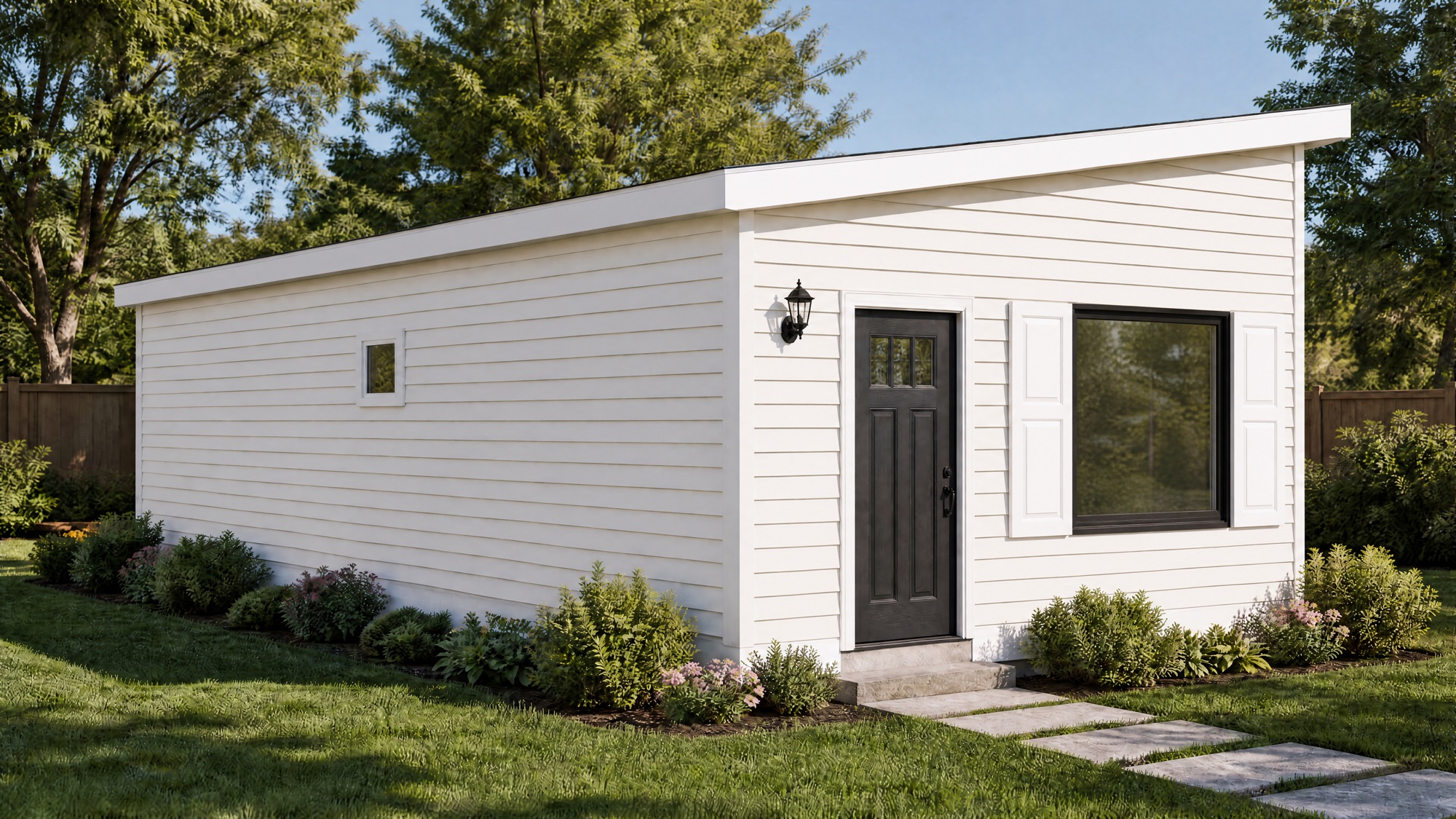 Available now
The Nest
Delivered to your parcel · 60–75 days
- PERCH-designed
- Escrow with proof
Refundable within 7 days.