Guides
The Manufactured Home Buying Process: The 2026 Six-Step Reference
Buying a manufactured home follows a different process than buying a modular or site-built home. Six steps, six decisions, six failure modes most first-time buyers encounter without knowing they are about to.
On this page
Buying a manufactured home in 2026 follows a different process than buying a modular home or a site-built home. The dealer relationship is structured differently, the financing pathways are different, the title and registration process is different, and the foundation conversion decision sits in a different place in the sequence. Buyers who arrive at a manufactured-home dealer expecting the conventional home-buying process get surprised by what is different — usually in ways that cost them money. This is the operator's six-step reference for the manufactured-home buying process in 2026.
The Six Phases
Phase 1 — Dealer or Manufacturer Selection
Manufactured homes are typically sold through dealer networks rather than direct from factory. The dealer relationship is similar in structure to a vehicle-dealership relationship — the dealer carries inventory, handles financing coordination, manages delivery and setup, and serves as the buyer's primary point of contact.
Selecting a reputable dealer is the first and most consequential decision. The dealer's installation experience in the buyer's specific jurisdiction, their track record with the manufacturers they represent, and their post-sale service capability all materially affect the buyer's experience. The PERCH mobile-home-dealer verification guide covers the dealer vetting questions.
This phase typically takes 14 to 45 days for serious evaluation.
Phase 2 — Unit Selection and Pricing
The buyer selects a specific unit configuration from the dealer's available models — manufacturer, model, floor plan, finish package, and options. Manufactured-home pricing typically presents as an itemized list of base unit plus options plus delivery plus setup, with the total varying meaningfully based on the option selections.
This phase typically takes 14 to 30 days. Comparing line-item pricing across multiple dealers for comparable configurations is essential — manufactured-home pricing has more variability than most buyers expect.
Phase 3 — Financing Application
Manufactured-home financing typically routes through manufactured-home specialty lenders (21st Mortgage, Triad Financial Services, Vanderbilt) for chattel or for HUD-Code-specific products, through FHA Title I or Title II for federally-insured paths, or through conventional mortgage products (after foundation conversion).
The financing pathway is typically initiated through the dealer, who has established relationships with multiple lenders. Buyers should verify the dealer's recommendation against independent lender comparison rather than accepting the first quoted option.
This phase typically takes 21 to 45 days.
Phase 4 — Land Readiness
The land where the unit will be installed must be prepared before delivery. If the buyer owns the land, preparation includes utility connection planning, foundation site work, and any necessary tree removal or grading. If the buyer is acquiring the land, the acquisition must close before site work can begin.
If the unit will be installed in a manufactured-home park, the land readiness phase is replaced by park-space selection and lease setup — a different process with its own considerations covered in the PERCH park-sold playbook and related guides.
This phase typically takes 30 to 90 days for private-land placement, or 7 to 21 days for park-space placement.
Phase 5 — Delivery and Installation
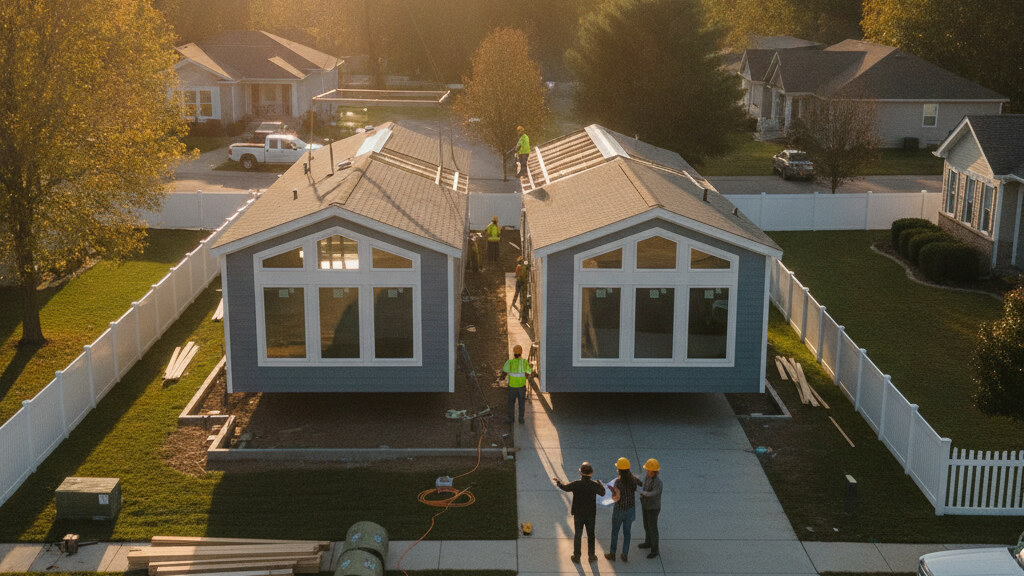
The factory produces the unit, the unit ships to the buyer's site, the unit is set on the prepared foundation, and the manufactured-home installer completes setup including utility connections, skirting, and any final exterior work.
This phase typically takes 30 to 90 days from factory production start to setup completion. Buyers should plan for the dealer to coordinate the installer; selecting the installer independently is uncommon in the manufactured-home category.
Phase 6 — Post-Installation Paperwork
After installation, the title work, registration, and any foundation conversion paperwork are completed. For units that will remain in personal-property classification, the title is registered through the state DMV or equivalent agency. For units that will convert to real property, the title cancellation and real-property conversion sequence begins.
This phase typically takes 14 to 45 days for personal-property titling, or 60 to 180 days for full real-property conversion.
What Typically Goes Wrong
Three patterns account for most failed manufactured-home purchases.
The first is dealer-related: the buyer selects a dealer on price or proximity without verifying installation experience or post-sale service, then discovers post-purchase that the dealer's after-sale service capacity is limited.
The second is financing-related: the buyer accepts the first dealer-recommended financing option without independent comparison, then discovers post-close that better terms were available through another pathway.
The third is land-related: the buyer assumes land preparation is straightforward and discovers during site work that utility connections, soil conditions, or access constraints are more expensive than expected.
For buyers wanting verification support across these decisions, PERCH's verified dealer and installer network provides documented track records and post-sale accountability that the open-market dealer landscape does not.
Where PERCH Fits
PERCH was built specifically to compress the operator-and-process work this guide describes. The verified ADU and small-home builder directory covers operators in each US region with documented installation history, real references, and traceable post-sale support. The marketplace surfaces verified inventory for buyers comparing options across configurations.
Ready to apply this to your specific project? Join the PERCH waitlist → for early access to verified operator inventory and concierge buyer support.
Join the conversation
Comments
Reader questions get answered. Real names and a working email — that's it.