Financing
FHA Title I Loans for Manufactured Homes: 2026 Rules, Limits, and Lenders
Plain-English guide to FHA Title I in 2026 — what it is, who lends it, how it compares to chattel, Title II, and conventional financing, and why most manufactured-home buyers should ask about it before anything else.

On this page
If you have been shopping for a manufactured home, you have probably hit the same wall most buyers do. The financing landscape is a maze. Conventional lenders shrug. Chattel lenders quote rates that make you wince. Then somebody mentions "FHA Title I," and you cannot tell if it is a real path or a relic.
This guide is the plain-English version: what FHA Title I actually is, what the 2026 limits look like, who lends on it, and how it compares to the other three loan paths you will be weighing.
One thing up front, because it matters: PERCH is not a lender. We run a marketplace for modular and manufactured homes and walk buyers through their financing options as educators. The actual loan comes from a bank, credit union, or HUD-approved lender. We help you understand the landscape so the conversation with that lender is shorter and sharper.
What an FHA Title I Loan Actually Is
An FHA Title I loan is a HUD-insured loan that finances the purchase of a manufactured home, the lot it sits on, or both — even when the home is personal property (not taxed as real estate). HUD insures the lender against default, which is why banks and credit unions will write Title I loans on collateral most lenders avoid, including homes on leased land in a community.
That is the answer most buyers are looking for. Now the nuance.
Title I sits in a weird middle ground. It is not a mortgage in the way FHA Title II is. Title II is what most people mean when they say "FHA loan," the 3.5%-down product used for site-built homes and for manufactured homes permanently affixed to owned land. Title I was built specifically for the manufactured housing market HUD knew banks were neglecting: chattel deals, leased-land deals, lot-only purchases, and the home-plus-lot combinations that do not fit cleanly into a real-estate mortgage box.
The program has been around since 1969. It went through a quiet stretch where very few lenders offered it. In recent years HUD has worked to revive participation, raising loan limits and pushing approved-lender outreach.
The Four Financing Paths, Side by Side
Most buyers are choosing between four products. Here is the comparison in one table.
| Loan type | Max loan (2026) | Down payment | Typical term | Originated by | Best when… |
|---|---|---|---|---|---|
| FHA Title I | Combination, home, and lot caps set by HUD; verify current limits | ~5%+ | Up to 20–25 yrs | HUD-approved Title I lenders | Home on leased land, lot-only purchase, or buyer needs HUD backing on personal property |
| FHA Title II (203(b)) | Conforming loan limits (county-based) | 3.5% | 30 yrs | FHA-approved mortgage lenders | Home permanently affixed to land you own and titled as real estate |
| Chattel loan | Varies by lender (often up to $150K–$275K) | 5%–20% | 15–23 yrs | Manufactured-home specialty lenders | You want speed, home is personal property, FHA option is not available |
| Conventional (Fannie MH / Freddie CHOICEHome) | Conforming limits | 3%–5% | 30 yrs | Conventional mortgage lenders | Strong credit, CrossMod-style home on owned land taxed as real estate |
Save that table. It is the whole map.
2026 FHA Title I Loan Limits
HUD sets statutory maximums for Title I loans and updates them on its own schedule. As of the most recent HUD guidance entering 2026, the program covers:
- Manufactured home only — a single statutory maximum loan amount
- Manufactured home lot only — a separate, lower statutory maximum
- Combination (home and lot) — the highest cap of the three
I am not going to drop a specific dollar figure here because the moment I do, HUD will update it and I will have lied to you. Pull the current limits directly from the HUD Title I program page before you build a budget.
HUD raised these limits meaningfully in recent years to reflect the actual cost of new manufactured homes. The new ceilings make Title I a viable path for entry- and mid-tier manufactured purchases again, though they still fall short for higher-end multi-section homes.
A few things to flag. These are maximums HUD will insure, not what every lender will write — individual lenders set their own internal caps, often lower. The limits apply to the loan amount, not the home's price. Loan terms max out at 20 years for a manufactured home only or a single-section home-and-lot combination, and 25 years for multi-section home-and-lot combinations or a manufactured home lot alone with a suitably affixed structure. Check the current HUD handbook for the precise term schedule before you sign anything.
Who Actually Lends on FHA Title I
This is the question we get most, because the HUD approved-lender list is long but participation is uneven. Many banks technically hold a Title I license but rarely write the loans. A smaller group originates them regularly.
The names that come up most often for active Title I origination include:
- 21st Mortgage Corporation — one of the largest manufactured-home lenders in the country
- Vanderbilt Mortgage and Finance — affiliated with Clayton Homes
- Triad Financial Services — long-standing manufactured-home lender
- Cascade Financial Services — Western and national footprint
- Credit Human (formerly San Antonio Credit Union) — credit union with significant Title I volume
Treat this list as a starting point, not gospel. HUD maintains a searchable approved-lender database, and the active-participant subset changes. Some buyers get the best terms from a regional credit union that quietly carries the license. Always confirm current participation by phone before you submit an application.
And to repeat the boundary: PERCH does not originate these loans. We do not fund them, we do not underwrite them, we do not earn lender commissions. We walk you through the landscape so you can pick a lender confidently.
PERCH · Home made for your land.
Want all four loan paths in one printable PDF?
Join the PERCH waitlistFHA Title I Down Payment Requirement
Title I down payments are set by HUD's minimums and your lender's overlay. Plan for 5 percent minimum for the manufactured home or combination loan in many lender programs. Higher down payments (10–20 percent) if your credit is thinner or the lender applies overlays. Lot-only loans sometimes require a larger down payment because the collateral is land without an income-producing structure.
A handful of lenders run promotional programs with as little as 3.5 percent down for strong-credit borrowers. Confirm in writing — and confirm whether any borrower-paid mortgage insurance equivalent applies.
The HUD insurance fee on Title I is separate from FHA Title II's MIP structure. Title I lenders typically embed an insurance charge into the loan; ask your lender to break it out so you can compare apples to apples against a chattel quote.
FHA Title I Lot-Only Loan
This is one of the most underused corners of the program. If you already own a manufactured home but need to finance the lot — either to buy out of a community, purchase land for a new placement, or take ownership of a rented site — Title I has a dedicated lot-only product.
The lot-only cap is the constraint. In high-cost markets, it will not cover much. In a lot of secondary markets and rural areas, it covers exactly what is needed for a small in-fill parcel or community-conversion buyout.
Combined home-and-lot Title I loans can finance the home and the dirt under it in one product, which simplifies closing and often delivers better terms than two separate notes.
Chattel vs. FHA Title I: Which One to Pick
Most buyers comparing manufactured financing land on this exact question.
Pick chattel when: you need to close fast and the home is moving from a dealer lot; the home value exceeds Title I caps and you can absorb a higher rate; your credit profile is strong enough that the chattel rate is not punitive; the community or seller will not wait for the Title I underwriting timeline.
Pick FHA Title I when: the home falls under Title I loan caps; you want a longer term and a lower rate than a comparable chattel quote; the home will sit on leased land in a community where Title II is not available; you are financing a lot-only purchase or a combination home+lot deal.
The honest read: Title I is usually the better deal when the numbers fit. The HUD insurance lets lenders price it more attractively than a comparable chattel note. The friction is approval timeline and the smaller pool of active lenders. Chattel wins on speed and on higher loan amounts.
PERCH walks you through both. We do not lend the money — the bank does — but we will lay out the trade-offs in plain English so you walk into the lender conversation knowing which product you are actually shopping for.
FHA Title II for Manufactured Homes — A Quick Detour
Worth a quick detour, because a lot of buyers confuse the two. FHA Title II (specifically the 203(b) program) is the standard FHA mortgage — 3.5 percent down, 30-year term, conforming loan limits. It works for manufactured homes only when the home is permanently affixed to a foundation on land the borrower owns, titled as real estate (the title has been surrendered to be combined with the land), built after June 15, 1976 (HUD code compliant), at least 400 square feet, and designed as a residential dwelling.
If those conditions are met, Title II is usually the most attractive financing in the room. The catch: a meaningful share of manufactured homes do not meet them, either because they sit on leased land, were not permanently affixed, or were never re-titled as real property. Title I exists for exactly those situations.
Authoritative Sources to Verify Before You Apply
Do not take any single article's word — including this one — for current HUD figures. Pull the numbers from primary sources before you commit. HUD's Title I program page is the official program rules and current loan limits. The HUD approved-lender lookup is a searchable database of active Title I lenders. The Consumer Financial Protection Bureau publishes manufactured housing finance guidance and rate disclosures. The Manufactured Housing Institute publishes industry policy briefs on FHA Title I usage and reform.
These four will keep you grounded when a lender pitches a number that does not match the program.
Related guides
The weekly brief for modern modular living.
Design concepts, zoning workarounds, and market strategies — the specific ones the 22 million families in the missing middle actually need.
Under 3 minutes. Every Friday afternoon. Unsubscribe with one click.
Frequently asked questions
What is the maximum FHA Title I loan amount in 2026?
Can I use an FHA Title I loan for a manufactured home on leased land?
What is the minimum down payment on an FHA Title I loan?
What is the difference between FHA Title I and FHA Title II?
Is chattel cheaper than FHA Title I?
How long can the loan term be on an FHA Title I manufactured home loan?
Who are the top FHA Title I approved lenders in 2026?
Can I use an FHA Title I loan to buy land only?
Does PERCH originate FHA Title I loans?
What credit score do I need for an FHA Title I loan?
Join the conversation.
Share your take on this guide.
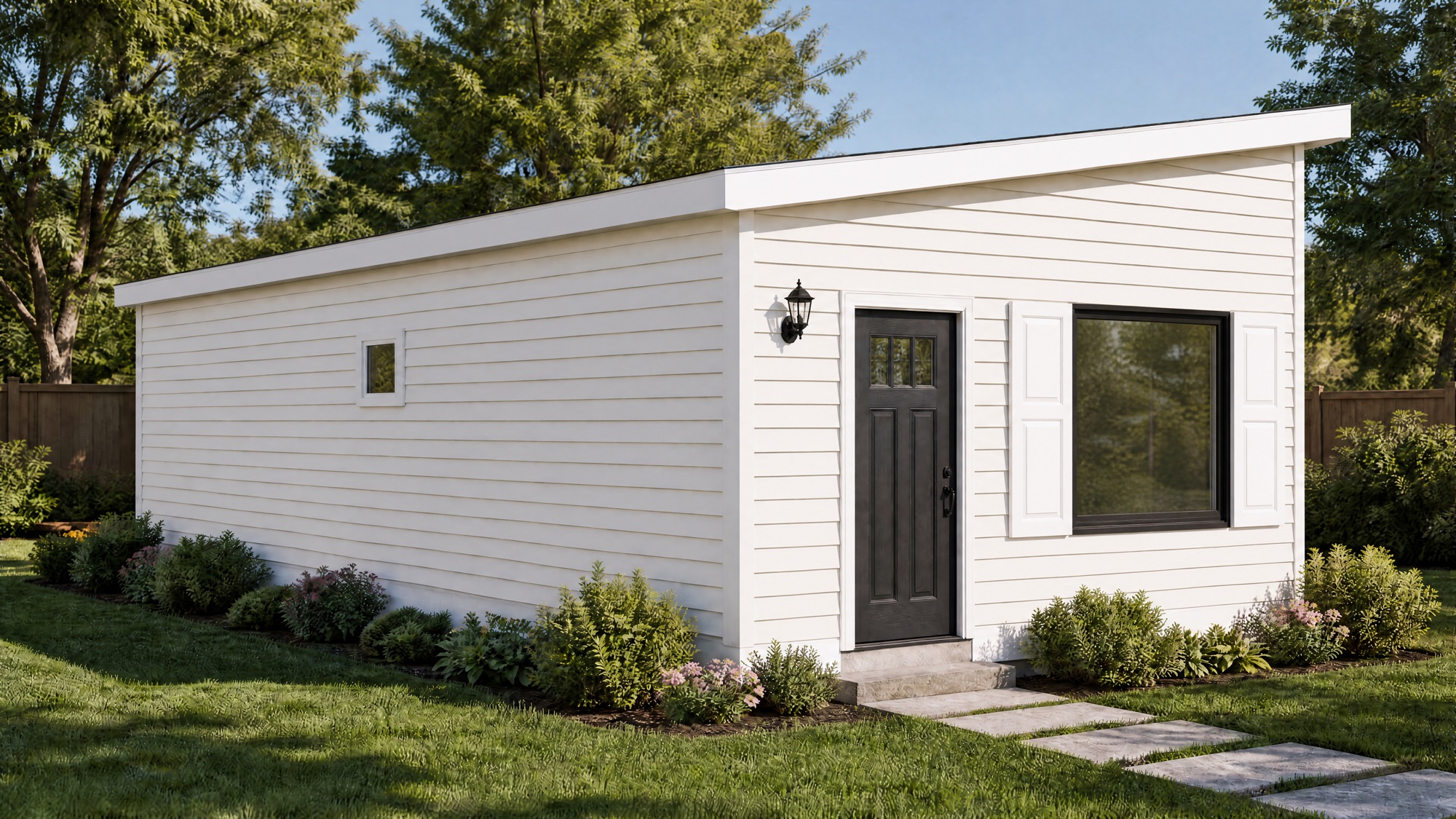 Available now
The Nest
Delivered to your parcel · 60–75 days
- PERCH-designed
- Escrow with proof
Refundable within 7 days.