Guides
Kit Home vs. Modular Home: The 2026 Comparison
On this page
Pre-cut lumber package versus factory-finished sections. Same code. Very different sweat equity.
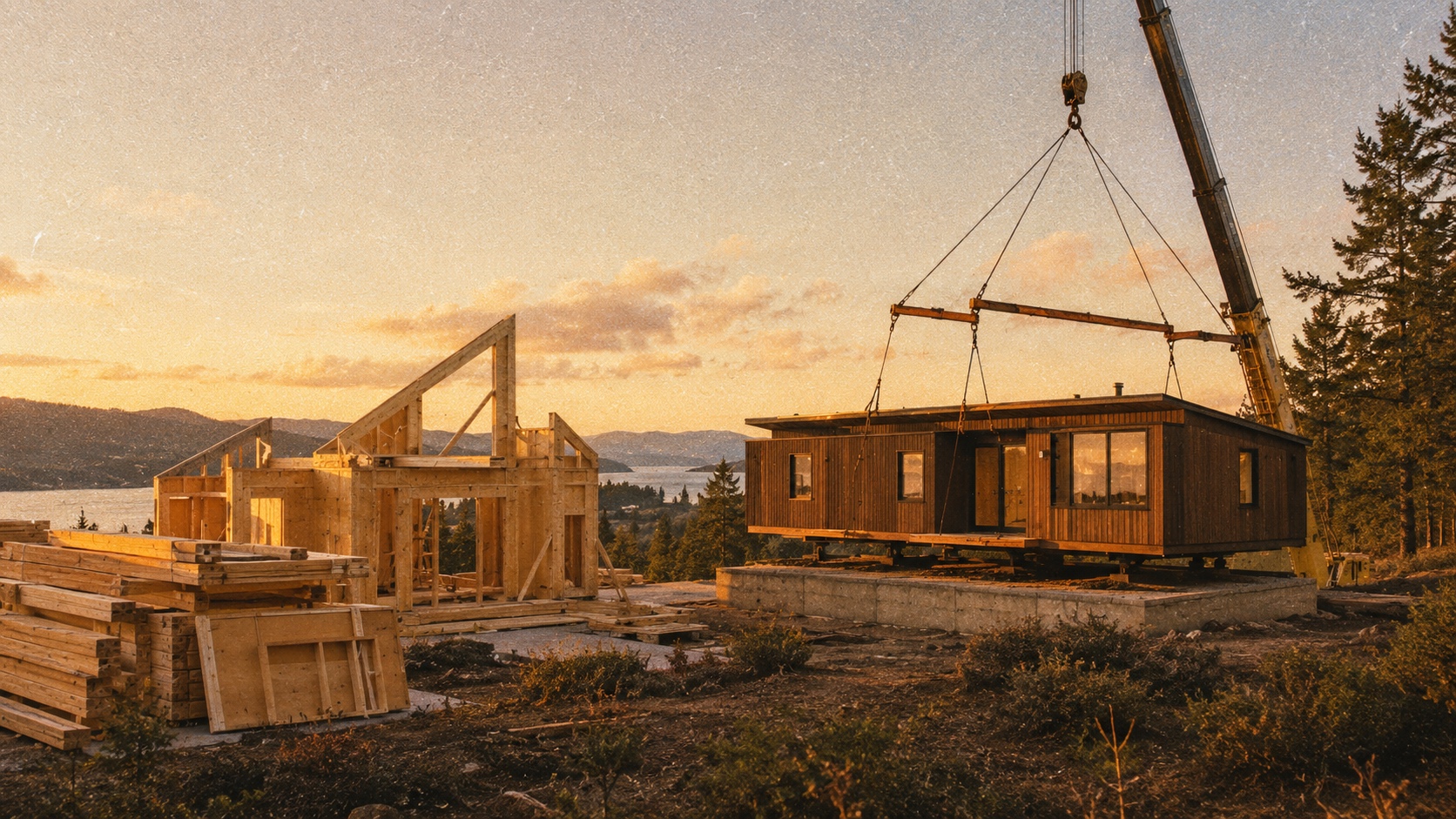
Kit homes ship as bundles of pre-cut lumber, trusses, and materials for the buyer or contractor to assemble on-site. Modular homes ship as factory-finished sections. Kit is cheaper; modular is faster and lower-friction.
Why this makes sense right now
Kit home starts: ~2,500 in 2024 per National Association of Kit Home Manufacturers. Modular: 68,000+. Kit is a niche, cost-sensitive category. Modular is the mainstream prefab option.
The layout — head-to-head
Shipping
- Kit: pre-cut lumber package flat-packed
- Modular: complete finished sections on flatbed truck
Assembly
- Kit: buyer, contractor, or hybrid
- Modular: crane onto foundation, finish work only on-site
Cost per sq ft (2026)
- Kit: $100-$180
- Modular: $180-$280
Build time
- Kit: 6-12 months
- Modular: 4-9 months
Financing
- Kit: construction loan; sweat equity possible with some lenders
- Modular: standard construction-to-perm
Quality control
- Kit: contractor-dependent
- Modular: factory QC
Design flexibility
- Kit: high — pick plan, buyer modifies
- Modular: constrained by factory options
Warranty
- Kit: builder warranty on assembly, kit manufacturer on materials
- Modular: unified factory + builder warranty
Two kit home manufacturers in 2026: Shelter-Kit — panelized kits from $70K, buyer-assembled. Timberhaven Log & Timber Homes — traditional kit + custom, $150-$220/sq ft. Two modular: Plant Prefab, Method Homes.
Financing math
$180K kit home construction loan at 7.5% = $1,260/month P+I. $250K modular at 6.5% = $1,580/month. Kit saves $320/month for 30 years if the buyer accepts the extra build time and sweat equity.
Choose kit home if...
- Comfortable with construction management or self-build
- Cost sensitivity is high
- Timeline flexible (6-12 months acceptable)
- Rural lot with local contractor experience
Choose modular if...
- Turnkey solution preferred
- Timeline tight (4-9 months)
- Factory quality control matters
- Standard financing preferred
The quiet part.
The kit home is a category for buyers who want to be involved. Not everyone should be involved in their own home construction. The savings are real (typically 30-40% vs. modular) — but they compound with sweat equity, construction management time, and the risk of mid-build cost overruns.
Modular is the answer for buyers who want a house. Kit is the answer for buyers who want a project.
Join the conversation
Comments
Reader questions get answered. Real names and a working email — that's it.