Guides
Converting an Empty Nest into an ADU Rental
On this page
The empty nest, filled differently.
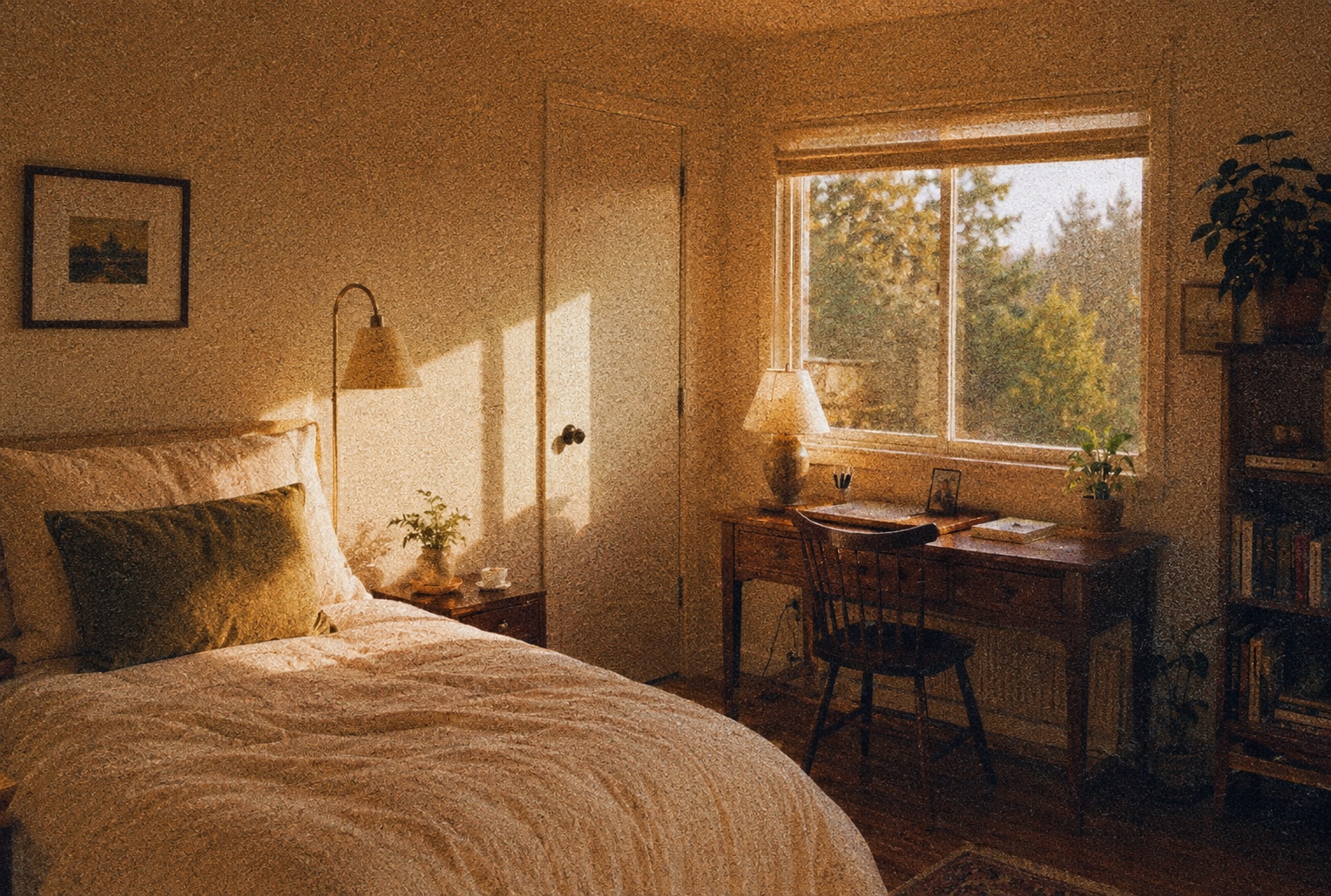
The kids' rooms are still there. The framed photos on the wall are still there. The lamp your daughter picked out in tenth grade is still there. And now — because you designed it thoughtfully — the space is also a permitted, rented, income-producing accessory dwelling unit. Both things at once.
Why this makes sense right now
Empty nesters over 55 own the largest untapped rental supply in America. U.S. Census Bureau 2024 data shows that 68% of Americans over 55 live in homes with at least three bedrooms, and 42% report they no longer use one or more of those bedrooms. That's roughly 22 million rooms sitting empty across the country. Nobody counts those in the housing shortage math.
Meanwhile, the single-family rental market grew 6.2% year-over-year in 2025, per Zillow Observed Rent Index. The median rent for a one-bedroom in the top 50 metros hit $1,653 in mid-2026. In the top 15, above $2,400. A converted empty nest with its own entrance is a one-bedroom in every metro. The math is not close.
Zoning caught up. 38 states permit ADUs by right on single-family lots as of 2026, and most cities now explicitly allow attached or interior ADUs (also called "junior ADUs" or "JADUs") with lighter permit requirements than detached builds. Garage conversions specifically have become the fastest-growing category — they're 60% cheaper than a new detached ADU and typically require only a modest permit.
The layout — three paths, three price bands
Path 1: Attached conversion (interior ADU or JADU). Convert a portion of the main house — usually a wing or a floor — into a self-contained unit with its own kitchen, bath, and entrance. Costs: $30K-$85K depending on the amount of new construction (kitchen build, plumbing runs, entry doorway). Best when the primary has an unused wing or a walk-out basement.
Path 2: Garage conversion. Convert an existing attached or detached garage into a permitted ADU. Costs: $65K-$140K. Best when the garage is already at code (foundation, structural), which many are.
Path 3: Detached new build. Add a purpose-built ADU in the backyard. Costs: $150K-$310K. Best when the primary has no convertible unused space and the lot is large enough to accommodate a detached unit.
The right path depends on your existing structure. Most empty nesters have Path 1 or Path 2 available; a smaller share have Path 3 as the best economic option.
Two builders in 2026 doing empty-nest conversions well: Villa — California-focused, 500 to 800 sq ft factory-built ADUs, $190K-$310K turnkey. Connect Homes — California, Washington, Colorado, Utah, 500 to 900 sq ft with dedicated rental-optimized floorplans.
Financing — how the numbers actually work
HELOC on the primary. Most common structure. Q3 2026 rates 8.25%-9.75%. Fast, low fees. Works for all three conversion paths.
Fannie Mae HomeStyle Renovation loan. Rate ~0.25-0.5% above conventional. Rolls conversion cost into a primary refinance. Best for Path 3 (detached new build).
Cash-out refinance. Only makes sense if your existing mortgage rate is above 7%. Otherwise burns your low rate.
Cash from a taxable brokerage. For higher-net-worth families. Clean, no debt, and the rental income flows to the owner from day one.
Cash flow math for a converted attached ADU: $65K conversion cost at 8.75% HELOC = ~$475/month interest. Market rent for a converted one-bedroom in most metros: $1,200-$2,000/month. Net monthly cash flow after debt service and expenses: $500-$1,300/month. Payback: typically years four to six.
Cash flow math for a detached new build: $220K build at 8.75% HELOC = ~$1,600/month interest. Market rent: $1,400-$2,200/month. Payback: typically years six to nine, then perpetual positive cash flow.
The quiet part.
The empty nest was never really empty. It was full of framed photos, lamps your kids picked out, the shirt your son forgot the summer before college. What was missing wasn't things — it was purpose.
Converting the space to a permitted rental gives the empty nest a purpose that isn't nostalgia. The kids' rooms don't have to become a museum. They can become someone else's home. The lamp stays. The frames stay if you want them to. The wallpaper your daughter picked out in tenth grade can go into the closet with the family albums, right where it belongs. The room welcomes a young couple who reminds you a little of who you were in 1994 — and pays you $1,800 a month for the privilege.
That's a good sentence to think about in December, sitting on your paid-off couch, in your unchanged living room, quietly benefiting from a decision you made two years ago.
Related guides
- ADU for Adult Children: Independent Living Guide — For the kids who want their own front door
- Backyard Cottage vs. Home Addition: Full Comparison — The addition that doesn't require permits, plumbing, or divorce
- ADU Rental Income: Financing & Return Guide — The ADU that pays for itself. And the marriage.
Join the conversation
Comments
Reader questions get answered. Real names and a working email — that's it.