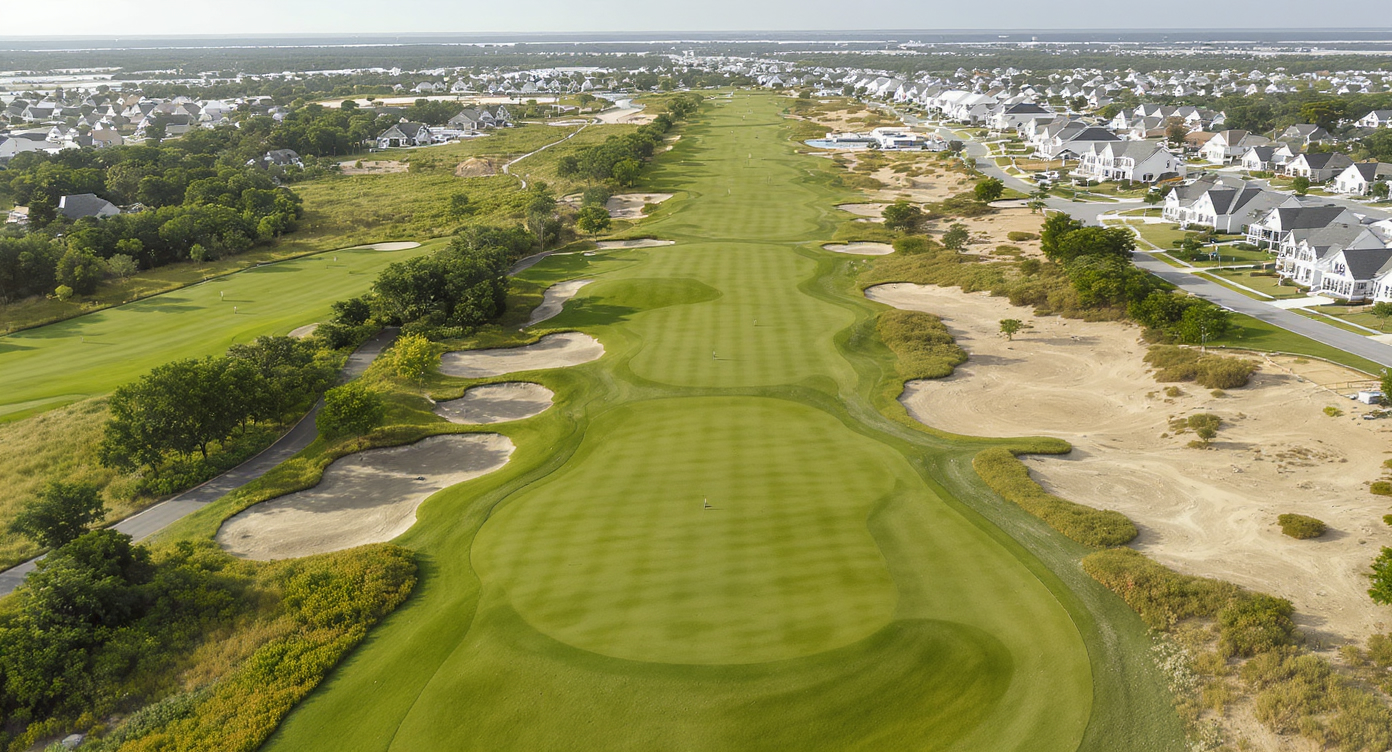
Nevada Golf Course Redevelopment Addresses Housing Shortage
Nevada is exploring an unconventional approach to increase housing availability by repurposing underutilized golf courses. This initiative aims to create new residential communities on land previously dedicated to recreation, offering a potential model for other regions facing similar housing pressures.
Repurposing Fairways for Homes
A significant housing development in Nevada is underway on land formerly occupied by a golf course. This project, as reported by Vox, signifies a shift in how communities are planning for growth and addressing housing deficits. The initiative seeks to leverage existing infrastructure and large tracts of land to build new homes, potentially easing pressure on the housing market.
The conversion of golf courses into residential areas is a strategy gaining attention in areas where recreational land may no longer be economically viable or aligns with evolving community needs. This approach not only creates new housing stock but also reclaims land for productive use, contributing to urban infill and density goals.
Housing Solutions Through Land Reuse
The Nevada project highlights a broader trend of seeking innovative solutions to housing affordability and availability. By re-evaluating land use, particularly in areas with ample recreational facilities that may be underused, policymakers and developers can unlock new potential for residential development. This is particularly relevant for factory-built housing, where larger sites can accommodate efficient, scaled production. Buyers can explore PERCH's buying guides to understand various construction methods suitable for different land types.
This strategy could prove beneficial for regions experiencing rapid population growth or facing significant housing shortages. It offers a way to increase density and provide diverse housing options without necessarily encroaching on undeveloped natural areas.
The PERCH Read
We view this Nevada initiative as a promising example of adaptive land use that can directly benefit the housing sector. The large parcels associated with golf courses are well-suited for modular and prefab construction, allowing for streamlined development and potentially faster delivery of homes. This approach could serve as a blueprint for other municipalities looking to creatively expand their housing supply. Builders interested in large-scale projects can apply to the PERCH-Certified builder network to connect with opportunities.
Frequently asked
Why are golf courses being converted to housing?
Golf courses are being converted due to factors such as declining popularity, high maintenance costs, and the pressing need for more housing in many areas. This repurposing offers a way to utilize large, often centrally located, parcels of land for residential development.
What are the benefits of this approach?
The primary benefits include increasing housing supply, potentially improving affordability, and making productive use of underutilized land. It can also lead to more integrated community planning by incorporating new residential areas into existing neighborhoods.
How does this relate to modular and prefab construction?
Large land areas, like those of former golf courses, are ideal for the scaled production and efficient assembly that modular and prefab construction offers. This allows for more predictable timelines and can contribute to faster delivery of new homes compared to traditional site-built methods.