Guides
Tiny Home Communities in Raleigh: A 2026 Buyer's Map of Where the Movement Actually Lives
The Raleigh-Durham-Chapel Hill Triangle is demand-rich for tiny homes but supply-short on communities. Here are the real communities within reach, what they cost, and the ADU path most Triangle buyers actually take.

On this page
The Raleigh-Durham-Chapel Hill Triangle is one of the strongest tiny home demand markets in the Southeast on paper — high-education, high-earning, and increasingly priced out of traditional single-family housing — but the actual supply of purpose-built tiny home communities is still catching up. This guide identifies the real communities operating in and near the Triangle, the North Carolina zoning rules that determine where a tiny home can legally land, and the accessory-dwelling-unit path most Raleigh-area buyers actually take.
If you're searching for a tiny home community in Raleigh in 2026, the real question is not "where can I find one?" — it's "which Triangle jurisdiction will approve a tiny home on private land, and how far outside the beltline am I willing to look?"
Why the Triangle Is a Demand-Rich, Supply-Short Market
The Raleigh-Durham-Chapel Hill metro combines conditions that create strong demand: median home prices climbed 76% between 2015 and 2024, land is available in outer Wake, Johnston, Chatham, and Franklin counties, and North Carolina's statewide Appendix Q adoption gives every jurisdiction a common framework. What has been missing is developer activity — no major tiny home community inside the Triangle has reached full build-out.
What this means for a buyer in 2026: expect to place a tiny home on private land or wait for the emerging developments to open lots. The Falling Waters community south of Raleigh remains the most accessible active option.
The 400-Square-Foot Rule and Appendix Q
North Carolina adopted IRC Appendix Q, giving every local code authority a permitting framework for dwellings 400 square feet or less on a permanent foundation with utilities. Reduced loft-ceiling minimums, alternate stair-and-ladder specifications, and simplified emergency-egress rules all apply.
For accessory dwelling units, the city of Raleigh's Unified Development Ordinance permits ADUs by-right in most residential zones, subject to minimum lot size, setback, and utility rules. Wake, Durham, and Orange counties follow similar patterns.
The Real Tiny Home Communities Within Reach of Raleigh
The Tiny House Community at Falling Waters — Sanford
Falling Waters sits in Lee County near Sanford, roughly 45 minutes south of downtown Raleigh. The community is built specifically around tiny homes on permanent foundations, with shared green space and a small clubhouse. Homes typically list between $165,000 and $285,000 depending on configuration, and lots when available run $42,000-$78,000. The community accepts new residents and inventory turns over several times per year.
Falling Waters is the closest active tiny home community to the Triangle. The tradeoff is the 45-minute drive from downtown Raleigh — this is a slower-paced Sandhills lifestyle, not a walk-to-office commute.
Boundary Waters — Wake County (Under Development)
Boundary Waters is a planned tiny home development in eastern Wake County, roughly 25 minutes from downtown Raleigh, currently accepting reservation deposits for early-stage lots. Initial homes are expected to list between $185,000 and $325,000 when the first phase opens. Buyers who want to be in a Triangle-adjacent purpose-built community and can tolerate a 2026-2027 delivery timeline should track this project directly with the developer.
Triangle ADU Placements
Inside Raleigh proper and most of Wake, Durham, and Orange counties, the primary path for tiny home occupancy is a permitted ADU behind a primary residence. Typical delivered cost of a permitted tiny-home ADU behind an existing Triangle-area home in 2026 lands between $125,000 and $225,000 all-in.
What Living in a Tiny Home Community Actually Costs
The all-in cost of living in a permitted tiny home community within reach of Raleigh in 2026 breaks down roughly as follows for a typical 400-square-foot unit:
| Cost component | Typical range |
|---|---|
| Unit purchase or build | $115,000 – $245,000 |
| Lot or site fee (if separate) | $42,000 – $78,000 |
| Site prep, foundation, utilities | $18,000 – $36,000 |
| HOA or community fee (annual) | $1,500 – $3,800 |
| Property tax (annual) | $1,200 – $3,100 |
The all-in delivered cost of an entry-level unit in a Triangle-area community in 2026 typically lands between $175,000 and $305,000. An ADU behind a primary residence inside the Triangle proper is meaningfully less at $125,000-$225,000 all-in.
How Raleigh Zoning Actually Works for Tiny Homes in 2026
Three legal pathways for placing a tiny home in the Triangle:
- Inside a permitted community. The community holds the zoning approval and sites homes under a master plan.
- As an accessory dwelling unit. Raleigh, Durham, Chapel Hill, and most surrounding jurisdictions allow one ADU per single-family parcel in most residential zones, with utilities and minimum lot size.
- As a primary residence on private land. Under Appendix Q, permitted throughout most Triangle jurisdictions on a permanent foundation with utilities. Some rural counties in the outer ring still require minimum-livable-square-footage overlays.
Why Foundation Type Determines Everything
A tiny home on a permanent foundation with utilities is a residential dwelling across every incorporated Triangle jurisdiction. A tiny home on wheels is a recreational vehicle and cannot be used as a primary residence in incorporated Raleigh, Durham, Cary, or Chapel Hill. Rural areas of Chatham, Franklin, Johnston, and Lee counties allow longer-term RV-classified tiny home occupancy with time-based limits.
The Path Most Buyers Actually Take
Most Triangle-area families who want a tiny home end up doing one of two things.
The first is to buy into Falling Waters near Sanford, or take a deposit position at Boundary Waters and wait for early-phase lots to open.
The second, and more common, is to place a permitted tiny-home ADU behind an existing home inside Raleigh, Durham, or Chapel Hill, or a modular or manufactured home as a primary residence on a private outer-ring parcel. This delivers more inventory, better financing, and stronger long-term economics.
PERCH was built to be the honest market for both routes. We surface real listings, real comps, and real concierge support.
Ready to find yours — or list one you already own? Join the PERCH waitlist → for nationwide early access.
Related guides
Frequently asked questions
Are tiny homes legal inside Raleigh city limits?
What is the closest active tiny home community to Raleigh?
Can I park a tiny home on wheels in my Raleigh backyard?
What is IRC Appendix Q and why does it matter in North Carolina?
Do I need a special permit for a tiny home ADU in Raleigh?
What's the average cost of a tiny home ADU in the Triangle?
Is Boundary Waters open for occupancy yet?
Join the conversation.
Share your take on this guide.
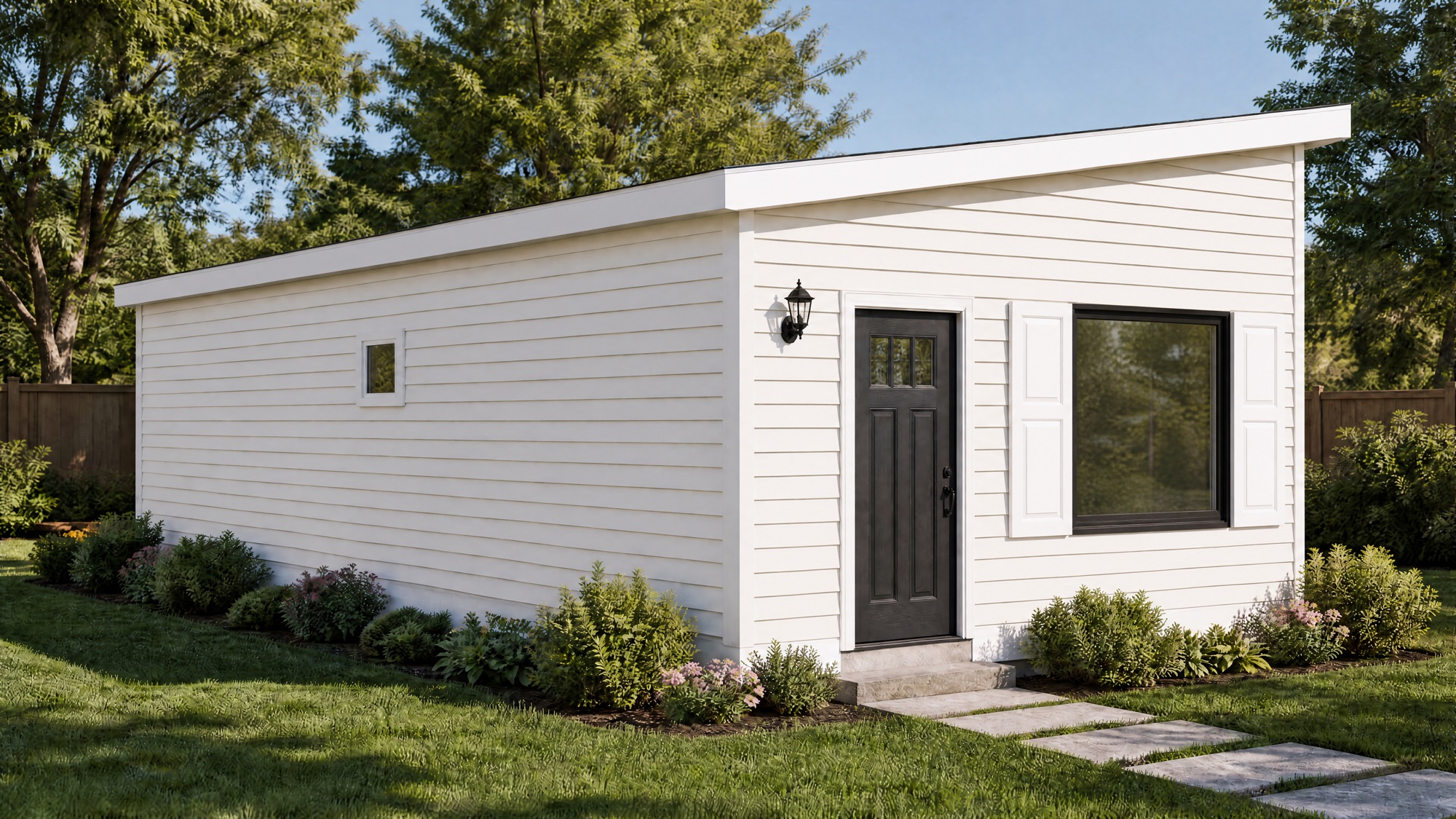 Available now
The Nest
Delivered to your parcel · 60–75 days
- PERCH-designed
- Escrow with proof
Refundable within 7 days.