Guides
Site Selection for Prefab and Modular Placement: The 2026 Buyer's Reference
The single most consequential decision in a prefab or modular project is the parcel selection. Six factors determine whether a specific parcel will actually work for a specific factory-built unit. Most buyers ignore four of them.
On this page
The single most consequential decision in a prefab or modular project is the selection of the parcel the unit will be installed on. The parcel determines what factory unit can physically be delivered to the site, what foundation type is workable, what utility connections are available, what zoning posture applies, and what total project cost the buyer realistically faces. Buyers who pick the unit first and search for a parcel that fits it usually struggle. Buyers who pick the parcel first and choose a unit that fits the parcel finish on time. This is the operator's reference for site selection.
The Six Factors
Factor 1 — Utility Availability
The single largest cost variable in most prefab and modular projects. Parcels with municipal water and sewer at the lot line typically run at the low end of the utility-connection cost range. Parcels requiring well drilling, septic installation, extended electrical service, or new gas service typically run at the high end — sometimes adding $25,000 to $40,000 to the project compared to a fully-serviced parcel.
The utility availability check is the first parcel-evaluation step. A walk of the parcel with a utility service map and a confirmation conversation with each utility provider is the minimum due diligence.
Factor 2 — Soil and Slope Conditions
The foundation type that can be installed on a specific parcel depends on the soil conditions and the slope. Expansive clay soils, high water tables, shallow bedrock, and steep slopes all add cost to the foundation work and may rule out specific foundation types.
A soil report (typically $1,500 to $3,500 from a geotechnical engineer) is the definitive evaluation. A walk of the parcel by an experienced modular operator can usually identify whether a soil report is necessary or whether the conditions are obvious enough to skip the report.
Factor 3 — Zoning and Deed Restrictions
The local zoning ordinance determines what configurations are permitted on the parcel. Deed restrictions (where applicable) may impose additional constraints beyond the zoning ordinance. Both must be reviewed before any commitment to the parcel.
The zoning check is typically a 30-minute review of the local zoning code and a confirmation conversation with the local building department. The deed restriction check requires pulling the parcel's recorded deed and any subdivision restrictions from the county clerk's office.
Factor 4 — Delivery and Access Dimensions
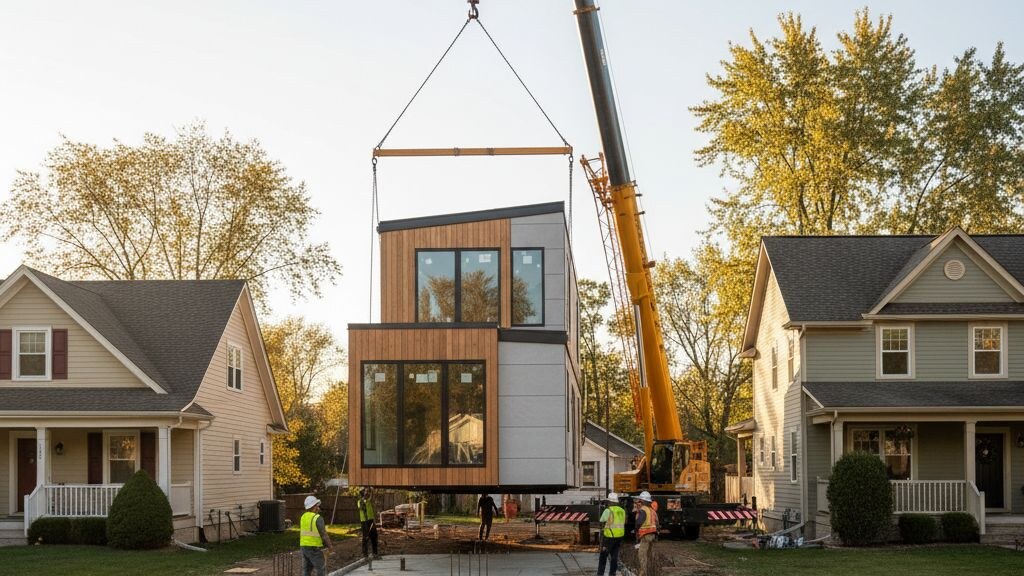
The factory-built unit must be physically deliverable to the installation site. Truck dimensions for delivery, crane access for setting, and any low-clearance obstacles along the delivery route all matter. Parcels with narrow access roads, low-clearance bridges, mature tree canopy overhanging the access route, or tight site geometry may rule out larger modular configurations even when zoning permits them.
The delivery access check requires the operator's evaluation — typically a site visit with the manufacturer's delivery requirements as the reference.
Factor 5 — Regional Code Requirements
Wind, snow, seismic, and energy code requirements vary meaningfully by region. The specific requirements that apply to the parcel determine which factory configurations are workable. A unit built to a non-applicable spec will fail final inspection regardless of how well it is installed.
Major regional considerations: Gulf Coast and Atlantic hurricane wind requirements, Pacific Coast seismic requirements, Mountain West snow load requirements, and California Title 24 energy requirements.
Factor 6 — Surrounding-Context Resale Comparability
The parcel's surrounding residential context affects long-term appraisal and resale outcomes. A modular home on a parcel surrounded by site-built comps typically appraises favorably; the same unit on a parcel surrounded by manufactured-home comps typically appraises against the manufactured-housing curve.
This factor matters most for buyers planning long-term ownership and eventual resale. For buyers with shorter holding periods, it matters less.
How to Evaluate a Specific Parcel
The realistic 2026 evaluation sequence:
Step one is the utility check — typically 1 to 2 hours of phone calls and a parcel walk. Either the parcel has workable utility infrastructure or it does not; the answer is binary and immediate.
Step two is the zoning and deed restriction check — typically 1 to 4 hours of records review and a building-department conversation. Either the planned configuration is permitted or it is not.
Step three is the operator site visit — typically 1 to 2 hours with a verified modular or ADU operator. The operator evaluates delivery access, foundation feasibility given soil and slope, and any specific concerns for the buyer's planned configuration.
Step four is the regional code check — typically a 30-minute conversation with the local building department to confirm the applicable wind, snow, seismic, and energy requirements.
Step five is the comparability check — typically a brief review of recent sales on comparable nearby parcels to confirm the parcel's resale market context.
Total time investment: typically 8 to 16 hours of buyer time spread across one to two weeks. The investment prevents most of the parcel-related friction that derails prefab and modular projects.
PERCH was built precisely to compress this site-selection process. Verified operators in each region can perform the parcel-level feasibility evaluation as a service rather than as the buyer's own project.
Where PERCH Fits
PERCH was built specifically to compress the operator-and-process work this guide describes. The verified ADU and small-home builder directory covers operators in each US region with documented installation history, real references, and traceable post-sale support. The marketplace surfaces verified inventory for buyers comparing options across configurations.
Ready to apply this to your specific project? Join the PERCH waitlist → for early access to verified operator inventory and concierge buyer support.
Join the conversation
Comments
Reader questions get answered. Real names and a working email — that's it.