Guides
How to Read a Manufacturer's Data Plate: The 2026 Buyer's Reference
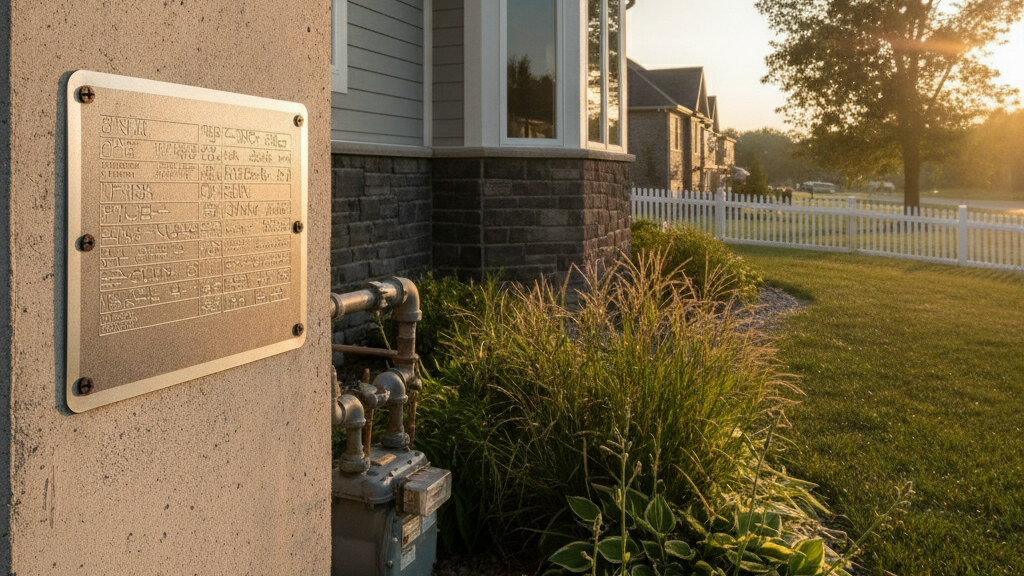
The data plate on a factory-built home is the single most important document for verifying its construction standard, wind/snow/seismic rating, and certification status. Most buyers never look at it. The buyers who do avoid most of the worst-outcome purchases.
On this page
The manufacturer's data plate is the single most important document attached to any factory-built dwelling. It records the construction standard the unit was built to, the date and location of manufacture, the wind, snow, and seismic load ratings the unit meets, the model and serial number, and the certification authority that approved the build. The data plate is the document a lender will request, an insurer will verify, a permitting office will check, and a future buyer's appraiser will reference. Most first-time buyers never look at it. The buyers who do — and who know what to look for — avoid most of the worst-outcome purchases in the category.
What the Data Plate Records
The specific information varies by construction standard, but every certification plate records at minimum:
The manufacturer name and factory location. The model number and serial number (which uniquely identify the specific unit). The manufacture date. The construction standard the unit was built to and the version of that standard. The certifying authority that approved the build. The wind, snow, and seismic load ratings the unit meets. The thermal performance rating. The fire safety classification.
For HUD-Code manufactured homes specifically, the data plate also records the Wind Zone (I, II, or III) the unit meets, the Roof Load Zone, the Thermal Zone, and the installation manual reference.
For IRC modular homes, the state modular certification label records the state of certification, the state-amended IRC version, and the third-party inspection agency.
For ANSI A119.5 park model RVs, the ANSI compliance label records the standard version and the certifying third-party agency.
Where to Find the Data Plate
The data plate is typically affixed in one of three locations, depending on the standard.
HUD-Code units: the data plate is typically near the electrical panel, on the inside of a kitchen cabinet door, or in a master bedroom closet. The plate is paper-printed and laminated. The red HUD certification label is affixed to the exterior, typically on the rear or side at the chassis level.
IRC modular units: the state modular certification label is typically affixed to the exterior in a visible location, often near the front door or on a side panel. Internal documentation may be in a panel labeled with the manufacturer's literature packet.
ANSI A119.5 park model units: the ANSI compliance label is typically affixed near the door or hitch area.
What to Verify Before Purchase
Five verifications matter most.
First, that the data plate exists and is legible. A missing or illegible plate is a significant red flag — it suggests the unit was either built without proper certification or the certification documentation has been compromised.
Second, that the construction standard matches what the seller represents. A unit marketed as a "modular home" that has a HUD data plate is actually a manufactured home — different category, different pathway. A unit marketed as a "tiny home" that has an ANSI label is actually a park model RV.
Third, that the wind, snow, and seismic ratings match the buyer's intended installation location. A HUD-Code unit built to Wind Zone I cannot be permitted in a Wind Zone III coastal jurisdiction. A unit built without seismic rating cannot be permitted in a high-seismic-zone California location.
Fourth, that the model and serial number can be cross-referenced with the manufacturer's records. A reputable manufacturer can confirm a specific serial number was produced at a specific factory on a specific date. Inability to confirm is a red flag.
Fifth, that the manufacture date is reasonable for the unit's apparent condition and the seller's representation of provenance. A unit dated 1995 sold as "newer construction" is misrepresented.
Why Most First-Time Buyers Skip This Step
The data plate verification is unfamiliar to buyers coming from a site-built residential background. Site-built homes do not have data plates because the unit's documentation lives in the permit and inspection records held by the local jurisdiction. Factory-built homes carry their certification with the unit because they were not built at the location where they are installed.
The data plate verification takes approximately ten minutes for a buyer who knows what to look for. It prevents most of the worst-outcome purchases in the category — units that cannot be permitted, cannot be financed, cannot be insured, or were misrepresented at sale.
For buyers working with a verified ADU and small-home builder through PERCH, the data plate verification is part of the standard pre-purchase due diligence performed by the verified operator. For buyers shopping owner-resales or unverified-dealer inventory, it is the buyer's responsibility.
Where PERCH Fits
PERCH was built specifically to compress the operator-and-process work this guide describes. The verified ADU and small-home builder directory covers operators in each US region with documented installation history, real references, and traceable post-sale support. The marketplace surfaces verified inventory for buyers comparing options across configurations.
Ready to apply this to your specific project? Join the PERCH waitlist → for early access to verified operator inventory and concierge buyer support.
Join the conversation
Comments
Reader questions get answered. Real names and a working email — that's it.