Guides
Average Backyard Size in Michigan: The 2026 Reference
Average backyard size in Michigan reflects the state's specific subdivision-era, density, and rural-acreage pattern. Here's the 2026 reference with the ADU planning math.
On this page
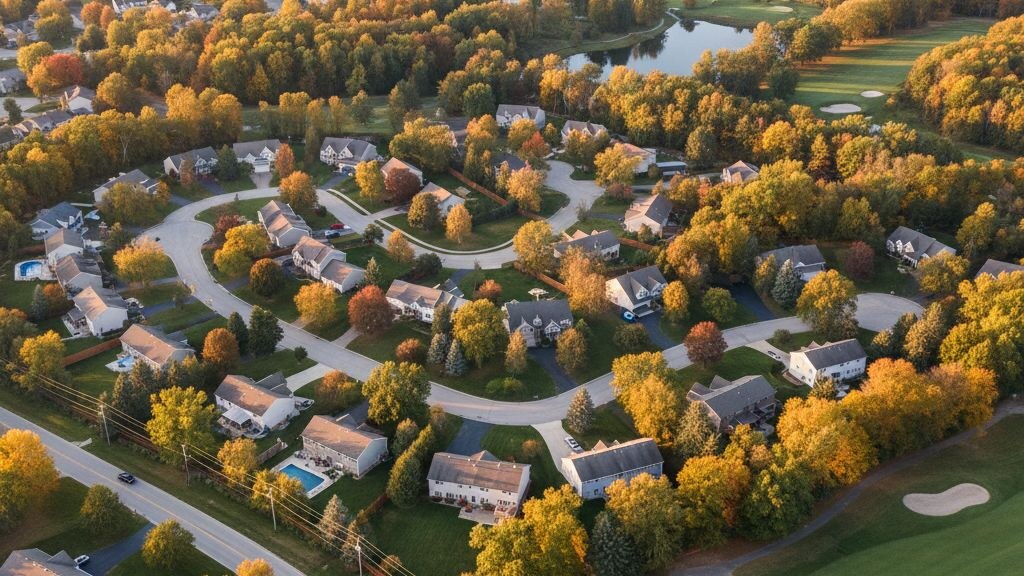
Average backyard size in Michigan is broadly comparable to the US national median, with most single-family residential lots producing rear yards in the 3,000 to 7,500 square foot range in 2026. The state-specific pattern is shaped by Detroit and Grand Rapids metros with mid-century suburban patterns, large rural acreage common in the Upper Peninsula and northern Lower Peninsula. For a buyer planning an ADU placement, a pool installation, a workshop build, or any other meaningful rear-yard addition, the state-level pattern is a starting reference rather than a precise descriptor of any specific parcel — but it does meaningfully shape what configurations are common in the Michigan market.
If you are asking how big the average backyard is in Michigan, the question almost always sits underneath another question — what configuration of additions does your specific parcel support — and the right answer combines the state pattern with parcel-level evaluation.
What Drives the Michigan Pattern
Four factors shape the Michigan backyard size pattern. The dominant era of housing-stock development in the state's major metros, the underlying land cost and density patterns, the regulatory frame including minimum-lot-size requirements, and the share of housing in attached versus detached configurations.
For Michigan specifically, Detroit and Grand Rapids metros with mid-century suburban patterns, large rural acreage common in the Upper Peninsula and northern Lower Peninsula.
What This Means For ADU Planning
The single most common reason buyers research backyard size is ADU planning. The 2026 reality for Michigan:
A detached ADU under 750 square feet — the typical maximum permitted in most US jurisdictions' ADU frameworks — requires a usable rear yard area of approximately 1,200 to 2,000 square feet at minimum after setbacks, primary-residence-distance requirements, and required path-and-access clearances.
In Michigan, the typical median single-family parcel typically supports a detached ADU configuration with moderate remaining outdoor space. The specific buildable footprint depends on the parcel's specific dimensions, the primary residence location, and the local setback requirements.
How to Find Your Specific Parcel's Numbers
Three methods produce a usable estimate for any specific Michigan parcel.
The first is pulling the parcel record from your county assessor's office. The recorded lot dimensions and the house footprint together give a calculable residual-yard area.
The second is using a satellite-imagery tool like Google Earth to trace the actual outline of your rear yard area.
The third is a physical measurement on the ground with a long tape or wheel measure.
For ADU planning specifically, a parcel-level evaluation by a verified Michigan ADU builder is the most reliable way to determine the actual buildable footprint after setbacks, easements, slope, and tree-protection compliance.
Ready to evaluate what your Michigan parcel supports? Join the PERCH waitlist → for early access to verified Michigan ADU and modular planning support.
Join the conversation
Comments
Reader questions get answered. Real names and a working email — that's it.