The downtown Indianapolis skyline seen from the north west across low rooftops

IndianapolisModular homes for the developers building it.

Send a site plan. Get back only the standard homes that fit, priced through delivery and set.

Send your site plan

Photo: Chris Bowman, CC BY 2.0

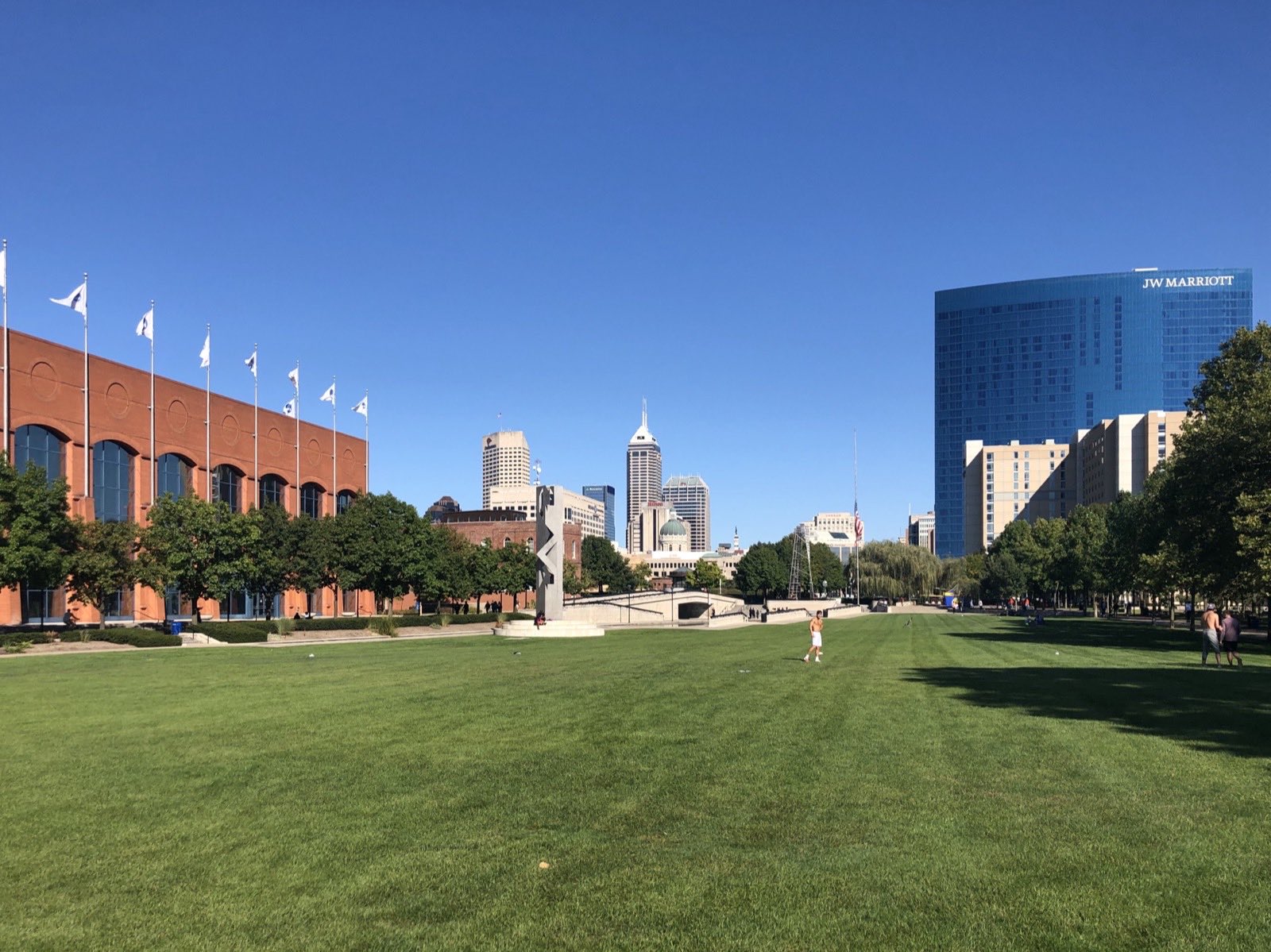
White River State Park in the foreground with the downtown Indianapolis skyline behind it
White River State Park and downtown. Photo: Momoneymoproblemz, CC BY-SA 4.0

The city

An affordable metro that cannot build an affordable home.

Greater Indianapolis is one of the more reasonably priced big metros in the country, and it still prices most of its own households out of a new home. The median existing home sold for $310,0001 in March 2026 and the median new build for $404,9451, against a median household income of $80,2391. About 39 percent1 of metro households cannot afford the existing median. About 51 percent1 cannot afford the new one. A separate series built from listings rather than local sales records puts the metro median at $305,0008 as of October 2026, which is the same market read a different way.

This is a price problem rather than a scarcity problem. Frictional vacancy ran at about 8.5 percent1 in 2024, with just over 77,000 units1 vacant or newly built against the roughly 14,000 households1 formed that year. There are homes. They sit above the price the local workforce can carry, and closing that distance is what a standard, repeatable home is for.

“We want to take vacant spaces and turn them into vibrant places.”

Megan Vukusich, Director, Department of Metropolitan Development, City of Indianapolis, September 2025

In their words

Nobody is building at the price most people can pay.

Builders in the metro put up zero homes1 under $225,000 in 2026 and about 3001 priced between $225,000 and $275,000, against roughly 60,000 households1 whose incomes support that range.

  1. “Housing affordability cannot improve meaningfully if supply remains constrained”

    Sara Coers, Lecturer in Real Estate, Kelley School of Business, and Director-Indianapolis, IU Center for Real Estate Studies · Indiana Business Review, Spring 2026

  2. “Our wages are simply not keeping up across the board, compared to our Midwest neighbors.”

    Aspen Clemons, Executive Director, Prosperity Indiana · WFYI Public Media, February 2026

  3. “these are largely unaffordable for most of our renters”

    Amy Nelson, Executive Director, Fair Housing Center of Central Indiana, on the new units reaching the market · WFYI Public Media, November 2025

Brick storefronts and low buildings along Massachusetts Avenue in downtown Indianapolis
Massachusetts Avenue, Indianapolis. Photo: Jordan Ewbank, CC BY-SA 2.0

The gap

Nearly 190,000 households1 here cannot afford an entry-level new home.

Set the entry price of new construction against the local income distribution and the mismatch is roughly 200 households1 for every new home in that price band. The logistics and retail jobs that employ about 18 percent1 of the workforce typically pay $40,000 to $60,0001, which supports a home priced between $198,000 and $296,0001.

HUD reached the same conclusion from a different dataset. Its market analysis of the Indianapolis area found an average new home price of $431,1007 against $293,4007 for an existing home, and while 82 percent7 of existing sales cleared below $400,000, only 53 percent7 of new home sales did. Two sources, two methods, one spread: the homes being built start above the band most of the demand sits in.

The rental side tells the same story from below. Prosperity Indiana and the National Low Income Housing Coalition count 34 affordable and available rental homes3 for every 100 extremely low-income households in Indiana, a statewide deficit of 137,138 units3. Across the metro, average market-rate apartment rent has climbed nearly 50 percent6 in ten years, from about $899 to $1,339 a month.

Indianapolis housing figures with sources
Median existing home price, Indianapolis metro, March 2026MIBOR via the Indiana Business Review; $226,500 in March 2021$310,000
Median new construction home priceSame analysis; about 51% of households cannot afford it$404,945
New homes being built under $225,000 in 2026About 300 were being built between $225,000 and $275,000zero
Households that cannot afford entry-level new constructionRoughly 200 such households for every new home in that price bandnearly 190,000
Statewide shortfall of rental homes for extremely low-income householdsProsperity Indiana and the National Low Income Housing Coalition, 2026; 34 homes per 100 households137,138
Marion County rental vacancy rate, 2024A 15-year low; half of all Marion County renters are cost burdened3.9%
Average new home price against average existing home price, Indianapolis areaHUD Comprehensive Housing Market Analysis, 12 months ending September 2023, on CoreLogic data$431,100 against $293,400
Share of new home sales priced below $400,000Same analysis; 82% of existing home sales cleared that line53%
Median listing price, Indianapolis metro, October 2026Realtor.com via the Federal Reserve Bank of St. Louis, independent of local sales records$305,000

What the rules say

Indiana releases the design. The local official supervises the siting.

The state reviews and releases the system, then seals each unit

Indiana runs an Industrialized Building Systems certification programme through the Indiana Department of Homeland Security. It covers the review and release of plans for each system plus in-plant inspection, and each unit must be inspected at one point during construction to qualify for a certification label. Modular units carry the gold P seal, usually inside the electrical panel cover.4

The local scope is the siting, stated plainly

The state's own guidance says supervision of the work undertaken to site or install these units is the responsibility of the local building official. That is the split to plan against: the home arrives released and sealed by the state, and the city reviews the ground it lands on.4

Modular homes are built to the same residential code as anything else here

Modular residential units are reviewed, constructed and inspected to the Indiana One- and Two-Family Dwelling Code. It is the same code a site-built house answers to, which is the sentence worth having in front of a lender or a plan reviewer who has not seen one before.4

The city is selling its own infill lots

Vacant to Vibrant moves city-held property back to the private market through the Department of Metropolitan Development. By the end of 2025 the department had acquired 140 properties5 and sold 1155 back over two years. Affordable sales and rentals are capped at 80 percent5 of area median income, applications close the first Friday of each month, and review runs two to three months.5

Zoning already allows more than the market uses

Indy Rezone, adopted in 2015, legalized accessory dwelling units. The constraint reported by the city's own development director is demand meeting cost rather than permission, and density is still read against neighborhood character parcel by parcel. Confirm your lot before you plan around it.2

How it works here

How you build here.

You send a site plan. We come back with the homes that fit, priced through delivery and set.

  1. Send the site plan

    A survey, a plat or a sketch with dimensions. Whatever you already have for the parcel.

  2. We fit and price

    Code and lot geometry decide what fits, not a salesperson. You get back only the homes that do, within 3 business days.

  3. Hold the plant slot

    The capacity fee holds the slot and locks the price on the homes.

  4. Delivered and set

    Your local site contractor pours the foundation and brings utilities. We deliver and set the homes on it.

PERCH is not your general contractor. Site work stays with your local team, and your local contractor's bid is the price.

Questions

Before you send a plan.

How is a factory-built home approved in Indiana?

Through the Indiana Department of Homeland Security. The state reviews and releases the plans for each system, inspects the units in the plant, and seals them. A modular unit carries the gold P seal, usually inside the electrical panel cover.4

What code does a modular home here meet?

Modular residential units are reviewed, constructed and inspected to the Indiana One- and Two-Family Dwelling Code, the same code a site-built house answers to.4

What does the local building department still review?

The siting. The state's guidance puts supervision of the work undertaken to site or install the units with the local building official, and zoning stays local as well.4

Is Indianapolis short of land?

Less than most growth markets, which is the point. The city's Department of Metropolitan Development had acquired 140 properties5 for its Vacant to Vibrant programme by the end of 2025 and had sold 1155 of them back to the private market over two years. The harder question here is price, and that is where a standard home with a known cost does its work.

Who does the site work?

Your own local site contractor. They handle zoning and any rezoning, site permits, grading, the foundation and utilities, and the local inspections of the site and the connections between units. Their bid is the site price.

Does PERCH price the site work?

No. PERCH prices the homes through delivery and set. Your site contractor bids the grading, foundation and utilities, and that bid is the site price.

What should I send?

Your site plan. A plat or survey with lot lines and setbacks is enough to start, and we return the standard homes that fit each lot and the price.

Sources (8)
  1. Indiana Business Review, Indiana Business Research Center, Kelley School of Business, “The Indianapolis housing market has an affordability problem we can't build our way out of, by Sara Coers, Volume 101 No. 1”, 2026. ibrc.indiana.edu Back to text
  2. WFYI Public Media, “Indianapolis faces a housing shortage. Why is it so hard to build more?, by Benjamin Thorp”, 2026-02-01. wfyi.org Back to text
  3. Prosperity Indiana, “Indiana is Now Tied for the Midwest's Lowest Rate of Affordable and Available Homes for Vulnerable Renters, reporting The Gap 2026 with the National Low Income Housing Coalition”, 2026-03-05. iaced.wildapricot.org Back to text
  4. Indiana Department of Homeland Security, “Industrialized Building Systems and Modular or Mobile Structures, Code Enforcement”, 2026. in.gov Back to text
  5. Mirror Indy, “Vacant to Vibrant: What to know about those new for sale signs in Indy, by Tyler Fenwick”, 2025-09-05. mirrorindy.org Back to text
  6. WFYI Public Media, “Fair housing report highlights growing rental burden in Indianapolis, by Erika Kovach, reporting the Fair Housing Center of Central Indiana”, 2025-11-08. wfyi.org Back to text
  7. U.S. Department of Housing and Urban Development, Office of Policy Development and Research, “Indianapolis-Carmel-Anderson, Indiana Comprehensive Housing Market Analysis as of October 1, 2023, Sales Market Conditions”, 2023-10-01. huduser.gov Back to text
  8. Federal Reserve Bank of St. Louis (FRED), from Realtor.com, “Housing Inventory: Median Listing Price in Indianapolis-Carmel-Anderson, IN (CBSA), series MEDLISPRI26900”, 2026-11-05. fred.stlouisfed.org Back to text
The Indianapolis Canal Walk running between brick walls and low buildings downtown

Build here.

Send your Indianapolis site plan and get back only the homes that fit, priced through delivery and set.

Site plan

Your plan stays private. We reply by email.

Photo: Michaela Pereckas, CC BY 2.0