Guides
Homebuilder Marketing Strategies for a Discerning Clientele
Move beyond traditional tactics with marketing strategies designed for modern, systems-built homebuilders.
On this page
In a market saturated with conventional offerings, builders of modular, prefab, and other systems-built homes must adopt a different approach to marketing. The standard methods are insufficient for a product that is, by its nature, more considered and a process that demands more trust. This guide outlines a marketing philosophy for homebuilders centered on brand integrity, client education, and operational transparency.
Beyond the Blueprint: Establishing Your Brand Identity
Marketing is the sum of all perceptions a potential client has of your business. It is not a department or a discrete activity, but the ethos that informs every decision, from the design of your website to the conduct of your crew on a job site. For builders in the specialized field of factory-built housing, a strong brand identity is the foundation upon which all other marketing efforts are built. It is the answer to the question, "Why should I trust you to build my home?"
Your first task is to define your position with clarity. You cannot be all things to all people. Are you the premier builder of high-performance, Passive House-certified modular homes? Do you specialize in affordable, elegantly designed ADUs for dense urban neighborhoods? Or is your focus on rugged, off-grid cabins for remote properties? This choice of specialty informs every subsequent marketing decision. A focused identity attracts clients who are already looking for your specific solution, simplifying the sales process and ensuring a better fit between builder and homeowner.
Once defined, this identity must be expressed consistently. Your brand is a promise of quality and experience. This promise is communicated through your visual identity—logo, typography, and color palette—which should reflect the quality and aesthetic of the homes you build. It is present in the tone of voice used in your emails and on your website, which should be as considered and professional as your architectural plans. Most importantly, it is demonstrated in your work. The quality of your materials, the precision of your assembly, and the satisfaction of your past clients are the most powerful brand statements you can make.
Finally, a compelling brand tells a story. Buyers of architecturally significant or systems-built homes are not merely purchasing a commodity; they are investing in a vision for their life. Your marketing should connect with this aspiration. Share the story of your company's founding. Create detailed case studies of completed projects, focusing not just on the technical specifications but on the homeowner's experience. According to reporting from Builder Magazine, storytelling that helps buyers envision themselves in a home is a crucial element for connecting with a new generation of homeowners. Testimonials, presented as thoughtful interviews rather than simple quotes, can provide the social proof needed for a buyer to make a commitment.
The New Showroom: A Deliberate Digital Presence
For today's homebuyer, the research process begins online. Your website is your virtual model home, your primary sales office, and your educational library. It must be treated as the most critical piece of marketing infrastructure you own. A slow, confusing, or unprofessional website signals a lack of attention to detail—a fatal flaw for a business predicated on precision and project management. The user's experience on your website is a direct reflection of the client experience they can expect from your company.
Visuals are the lifeblood of architectural marketing. Professional, high-resolution photography is not an indulgence; it is a fundamental requirement. Your portfolio should showcase your best work in the best possible light. This means hiring an architectural photographer, staging the home, and capturing it at different times of day. Drone photography can illustrate how a home sits on its site, while video tours can provide a sense of flow and space that static images cannot. These visuals should populate your website, your project case studies, and your social media channels, creating a consistent and compelling visual narrative around your brand.
Beyond a simple gallery, your website should serve as an educational resource for a discerning audience. Buyers of prefab and modular homes are often highly informed and research-driven. They are seeking not just inspiration, but information. By creating content that answers their questions, you position your firm as an authority and a trusted guide. This content can take many forms: detailed articles on your specific building process, explanations of the benefits of controlled-environment construction, or guidance on navigating local zoning for an accessory dwelling unit. For example, while a homeowner can use an online tool to check the specific ADU regulations for their property, a builder's guide that explains the nuances of permitting in their service area provides immense value and builds trust.
A robust digital presence requires a thoughtful allocation of resources. Not all platforms are equally effective. The key is to choose the channels where your target clients are actively seeking information and inspiration.
| Marketing Channel | Primary Purpose | Effort Level | Typical Cost | PERCH POV |
|---|---|---|---|---|
| Professional Website | Foundational Hub | High (Initial) | $ - $$ | Non-negotiable. This is your digital home base. |
| Architectural Photography | Visual Proof | Medium (Per Project) | $$ | An investment, not an expense. The ROI is immense. |
| Content Marketing (Blog/Guides) | Education & SEO | High (Ongoing) | $ - $ | Establishes authority and attracts qualified leads. |
| Email Newsletter | Lead Nurturing | Medium (Ongoing) | $ | Maintains top-of-mind awareness with a warm audience. |
| Instagram / Pinterest | Inspiration & Brand | Medium (Ongoing) | $ | Excellent for visual storytelling and reaching design-focused buyers. |
| Paid Search (Google Ads) | Lead Generation | Medium (Ongoing) | $ - $$ | Effective for capturing high-intent searches in your service area. |
| Third-Party Marketplaces | Qualified Leads | Low (Profile Setup) | Varies | Can provide a stream of pre-vetted, high-intent buyers. |
Nurturing Leads Through Transparency
The path from initial inquiry to a signed contract for a new home is long and complex. A potential client may research for months or even years before they are ready to commit. A marketing strategy that focuses only on immediate conversion will fail. The goal is to build a system that nurtures relationships over time, maintaining a connection and demonstrating value at every stage. A Customer Relationship Management (CRM) platform is an essential tool for this, allowing you to track interactions and provide timely, relevant follow-up without letting potential clients fall through the cracks.
One of the most effective tools for long-term nurturing is a simple email newsletter. This is not a place for high-pressure sales tactics. Rather, it is a regular, low-stakes communication that shares project updates, new designs, interesting articles, or a behind-the-scenes look at your process. A well-crafted newsletter keeps your company top-of-mind, so that when a prospect is finally ready to move forward, your name is the first one they think of. It reinforces your expertise and continues the educational process that began on your website.
Perhaps the single greatest source of friction in the homebuilding process is pricing. While the custom nature of homebuilding makes it impossible to provide a single, fixed price online, a commitment to transparency can be a powerful differentiator. The National Association of Home Builders notes that today's buyers demand more information upfront. Rather than hiding behind a "call for pricing" gate, consider a tiered approach. Provide general cost-per-square-foot ranges for your builds, with clear caveats about what factors influence the final cost. Offer detailed pricing on a few pre-designed models to serve as concrete examples. Explain your pricing process itself: what is included in a preliminary estimate versus a final, fixed-price contract. This honesty builds profound trust and filters for clients for whom your work is a good financial fit.
Builders who operate with this level of integrity and transparency are a natural fit for curated platforms that connect discerning buyers with vetted professionals. Participating in a marketplace like PERCH can supplement a builder's direct marketing efforts, providing access to a stream of qualified leads who have already been educated on the benefits of modern construction methods. Builders who align with this philosophy of transparency and quality may find it beneficial to apply to join the PERCH network to connect with this audience.
The Physical Connection and Client Experience
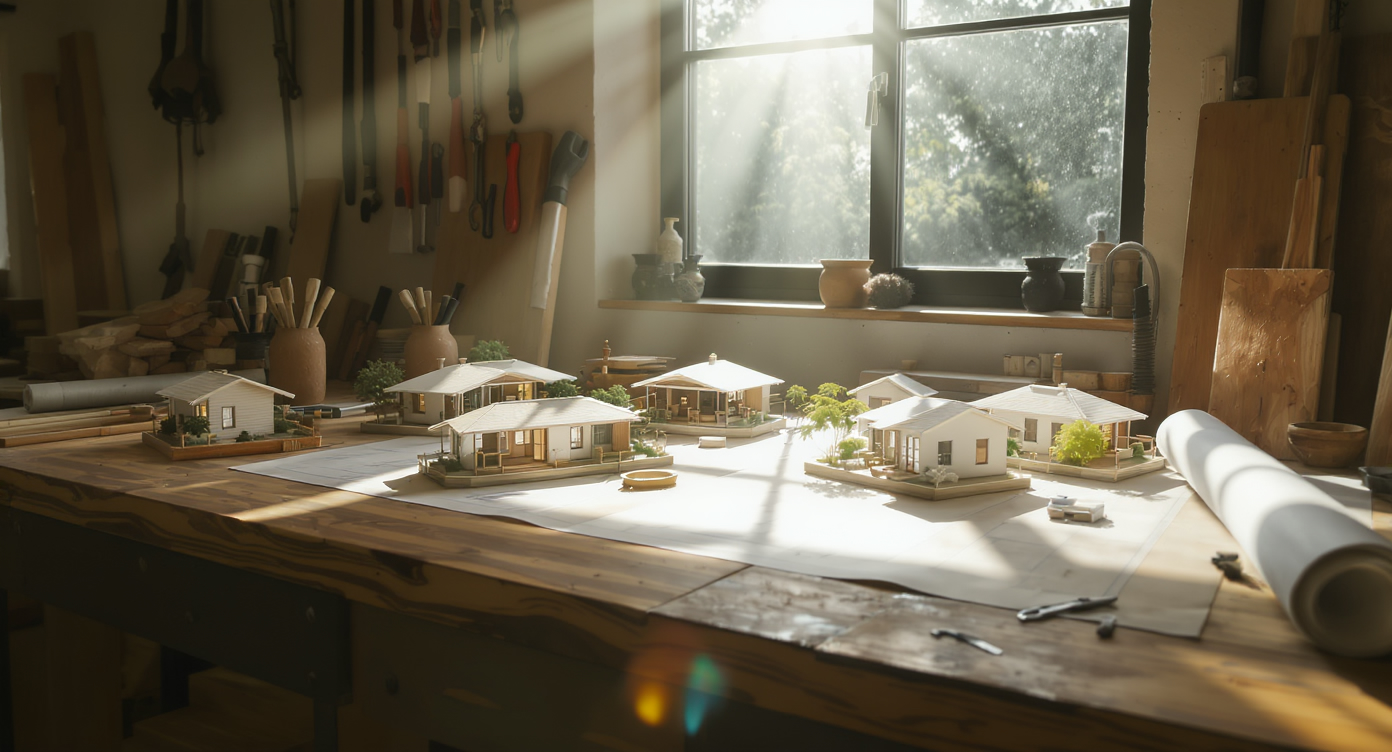
In an increasingly digital world, the tangible holds immense power. While a website can inform and inspire, the physical experience of a space or a material sample can seal the deal. A model home or a show suite remains one of the most effective marketing tools in a builder's arsenal. It allows clients to experience the quality of construction, the feel of the materials, and the volume of the spaces in a way that no photograph can replicate. For modular builders, a well-organized and safely conducted factory tour can be equally powerful, demonstrating the precision and efficiency of your process.
If a full model home is not feasible, a "vignette" or a small-scale sample can be highly effective. This could be a beautifully finished kitchen and bath display in your office, or a full-scale wall assembly cross-section that you can bring to home shows. These tangible artifacts make the abstract promises of "quality" and "performance" real. Providing potential clients with material samples—a piece of the flooring they're considering, a swatch of the cabinet finish—allows them to take a piece of their future home with them, keeping the project top of mind.
Ultimately, your best marketing program is an exceptional client experience. The process of building a home is a long and intimate one. A builder who communicates clearly, meets deadlines, manages the budget responsibly, and treats the client with respect will be rewarded with the most valuable marketing asset of all: a referral. A happy homeowner's endorsement to their friends, family, and colleagues is more credible and more effective than any advertisement. This process doesn't end when you hand over the keys. A structured post-occupancy follow-up to address any minor issues and a simple, direct request for a testimonial or review can formalize this process and generate a steady stream of powerful marketing content for years to come.
Join the conversation
Comments
Reader questions get answered. Real names and a working email — that's it.